
British Equestrian Art
British equestrian art captures the enduring power of horses and field sports through centuries of oil paintings, watercolours and etchings.
British Equestrian Art
British equestrian art encompasses oil paintings, watercolours, etchings and prints depicting horses, hunts and rural coaching scenes from the nineteenth and twentieth centuries.
Buyers encounter Victorian sporting canvases alongside Edwardian coaching oils and mid-century depictions of ponies and racing.
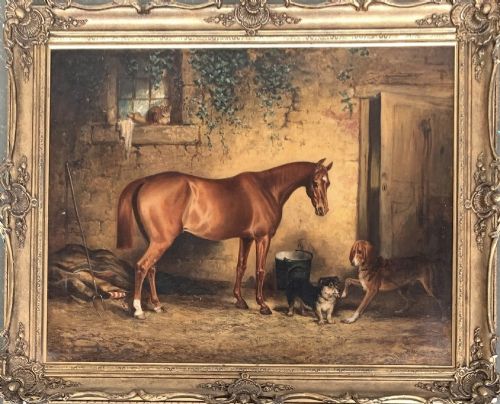
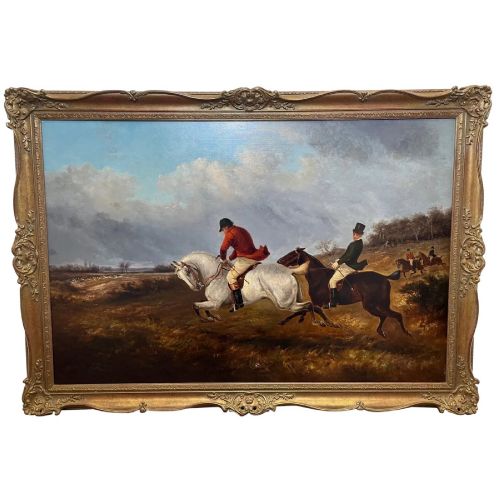
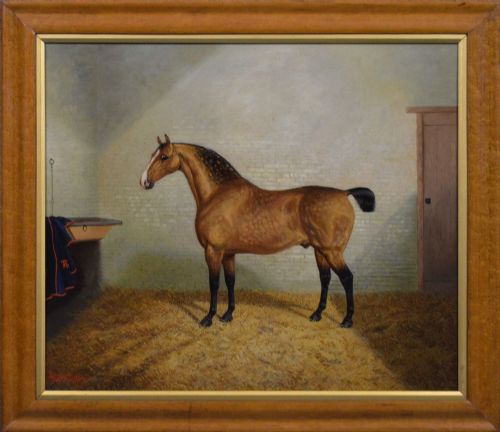
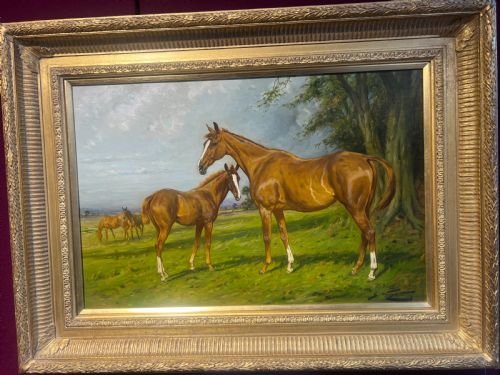
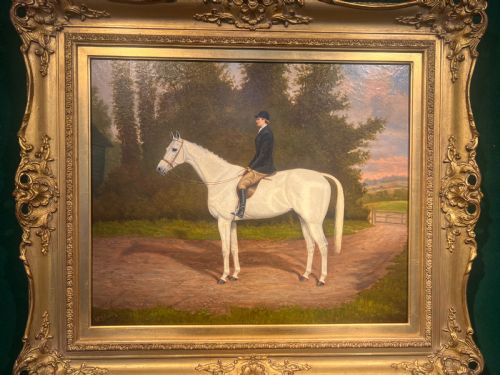
Works range from detailed portraits of named hunters and racehorses to sweeping landscape scenes featuring hounds and riders.
Materials and methods
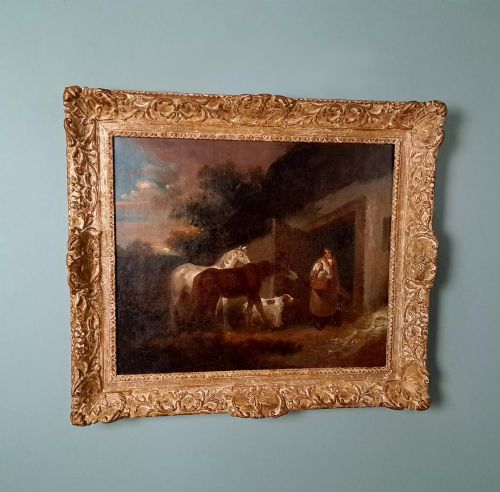
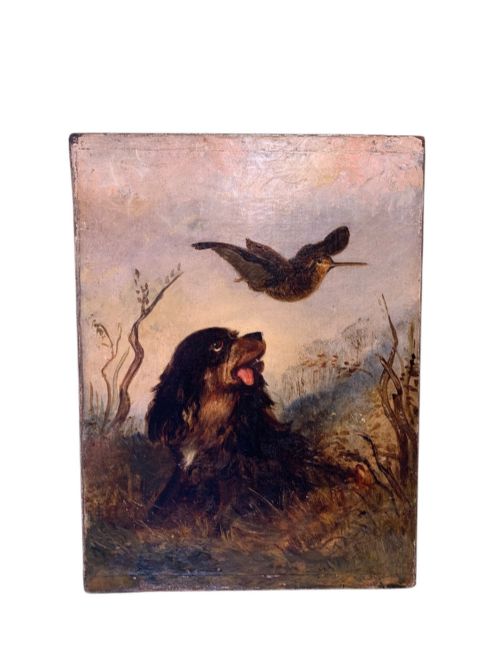
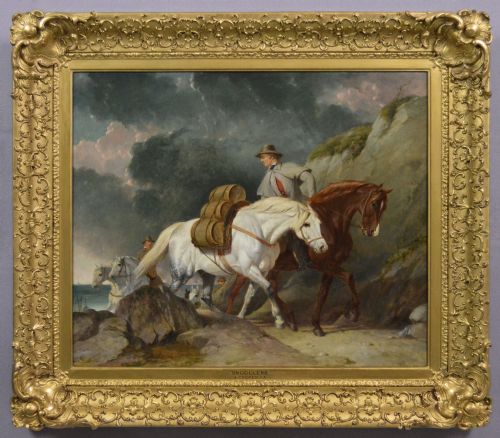
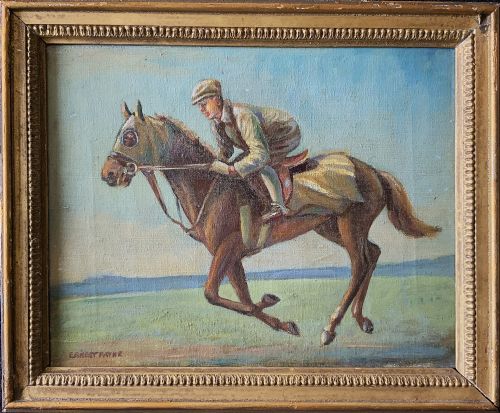
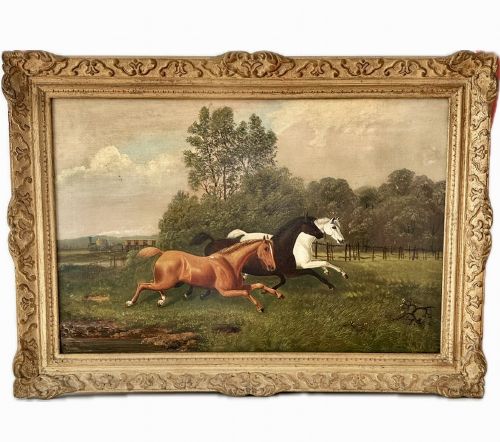
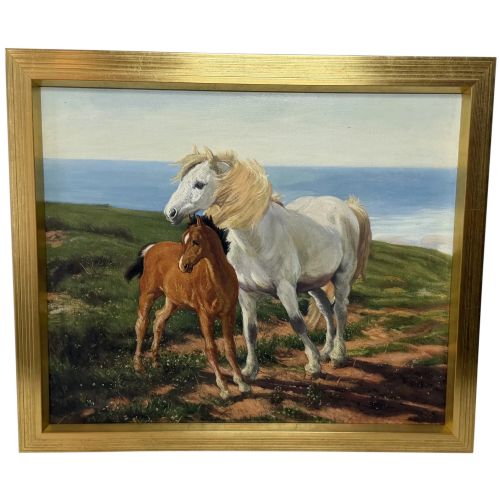
Artists painted primarily in oil on canvas or wood panels, capturing the musculature and coats of horses with fine brushwork.
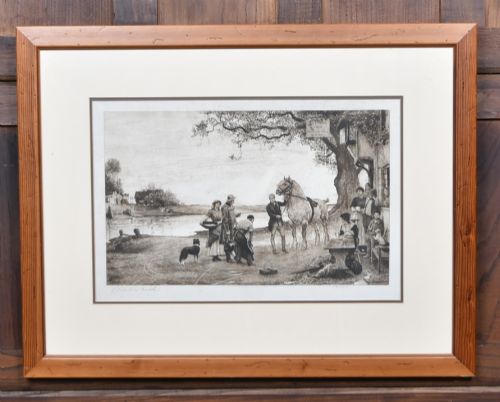
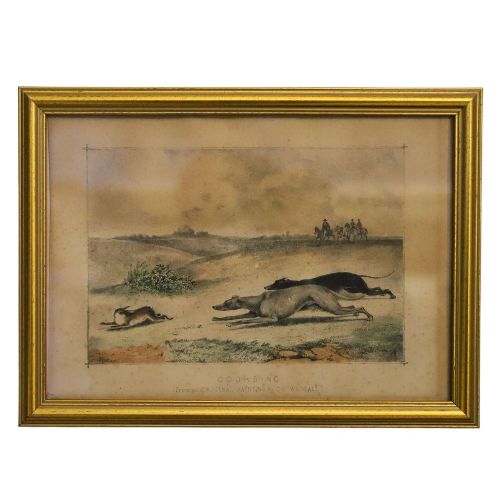
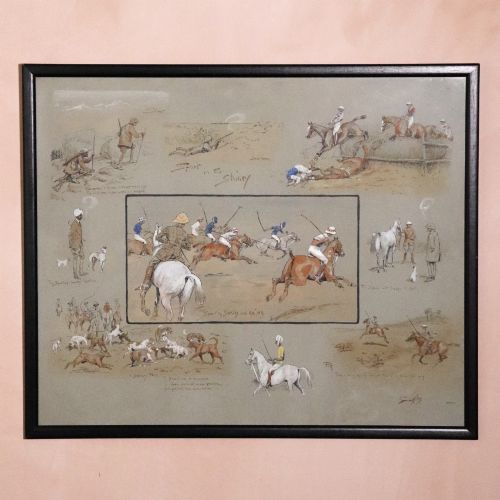
Works on paper include watercolours, gouache, chalk drawings, etchings and lithographs, often framed in giltwood.
Mid-century pieces introduce pastel on coloured paper alongside traditional oil painting techniques.
A bouncing bucking bronco captured mid-air sits comfortably beside quiet portraits of steady farm ponies.
Judging quality and execution
Quality rests on the accuracy of equine anatomy and the natural movement of horses captured by the artist.
Mastery is evident in the handling of light across horse coats and the integration of animals into detailed landscape backgrounds.
Henry Barraud·William Joseph Shayer Senior·Thomas Smythe·Albert Clark·Sir Edwin Henry Landseer·George Wright·William Albert Clarke·Abraham Cooper·C. H. Weigall·Ernest Payne·Edward Priestley·Snaffles·Vernon DeBeauvoir Ward·Philip Rideout·Dame Laura Knight·John Ferneley Senior·Herbert Dicksee·John Rattenbury Skeaping·Cecil Charles Windsor Aldin·Charles Walter Simpson·Harry Freckleton·John Arthur Lomax·Hazel M. Barnett·John Sanderson Wells·Philip Henry Rideout
The British Equestrian Art Glossary
- Etching
- A printmaking process where lines are bitten into a metal plate with acid to hold ink. This technique allows for fine, detailed lines in works on paper.
- Giltwood
- Wood carved and covered with a thin layer of gold leaf. Frames of this material are common on traditional oil paintings.
- Gouache
- An opaque water-based paint that provides solid, matte colour. Artists use it on paper for rich colour density.
- Lithograph
- A print produced from a flat stone or metal plate treated to retain ink in image areas. It enables detailed reproduction of original drawings.
- Sporting art
- Fine art depicting blood sports, racing, coaching and animals. This genre forms the core of nineteenth and twentieth-century equestrian works.
British Equestrian Art: Frequently Asked Questions
What periods do these paintings come from?
The works span from the nineteenth century through the Edwardian era and into the mid-twentieth century.
Victorian and Edwardian pieces sit alongside later twentieth-century modernist and traditional British sporting works.
Are these works original paintings or prints?
The selection includes both original oil paintings and watercolours alongside period etchings and lithographs.
Many works are unique hand-painted oils on canvas, while others are signed artist prints on paper.
How do I frame traditional equestrian art?
Traditional oil paintings are typically housed in heavy giltwood frames that complement the period of the artwork.
Works on paper generally feature wood framing with mounts to protect the surface behind glass.
What subjects besides horses appear in these artworks?
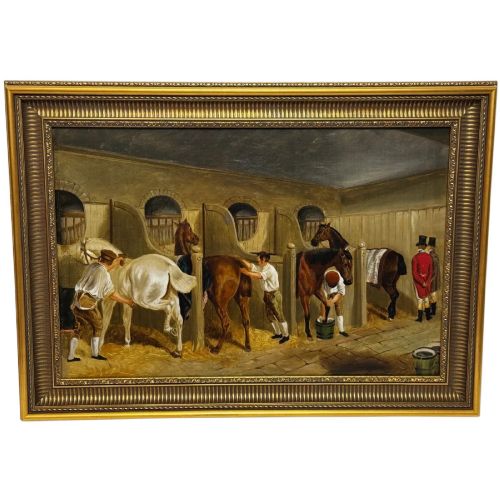
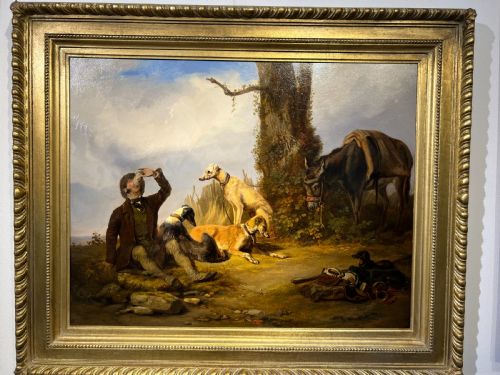
Scenes frequently include fox hunting, hare coursing, coaching inns, stableyards and hounds alongside riders.
Landscapes, rural river views and steam locomotives occasionally provide the backdrop for the equine subjects.