


British Country Equestrian Painting
A British country equestrian painting captures horses, hounds and rural life in oil or watercolour across the nineteenth and twentieth centuries.
British Country Equestrian Painting
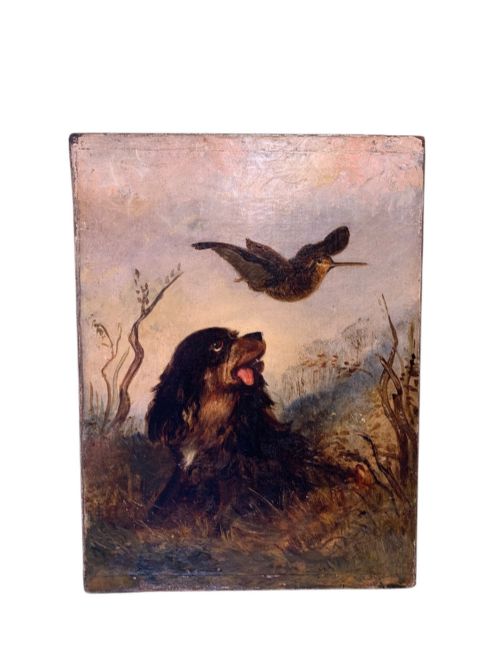
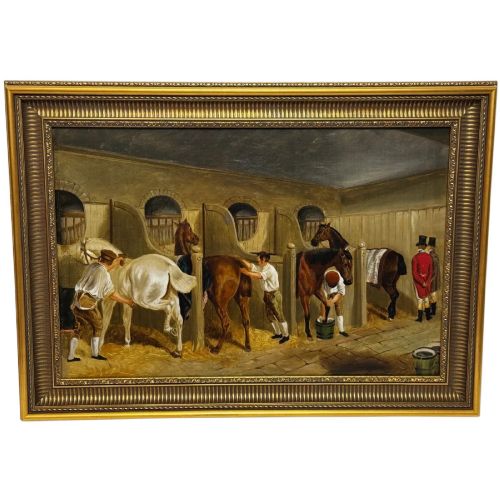
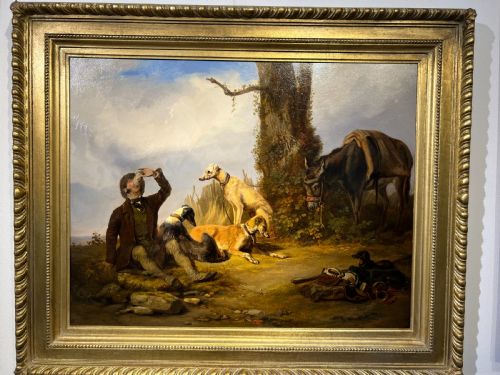
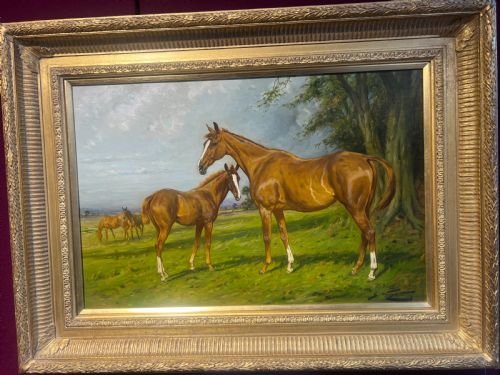
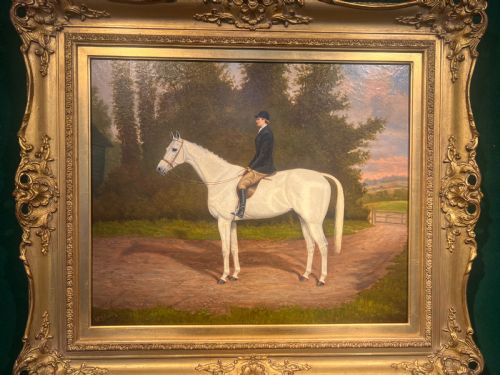
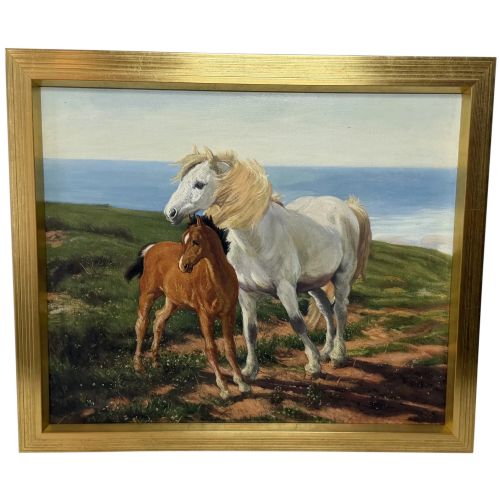
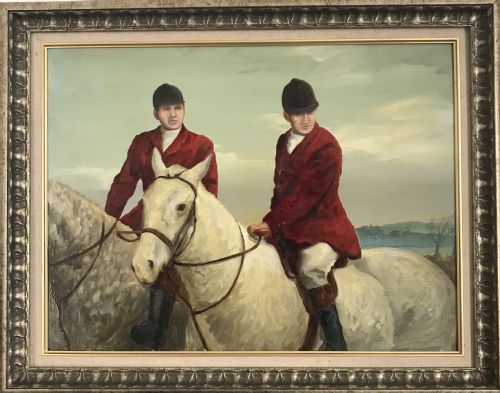
A british country equestrian painting depicts horses, hunting scenes, farm teams and rural landscapes created during the nineteenth and twentieth centuries. These works range from Victorian sporting art to Edwardian watercolours and mid-century oils.
Buyers encounter oil paintings on canvas alongside watercolours on paper, often housed in original gilt wood frames. The subjects stretch from individual portraits of hunters and mares to grand depictions of fox hunts and horse fairs.
How They Were Made
Artists worked primarily with oil paint on canvas or watercolours on paper, building layers to render the musculature of horses and the textures of countryside terrain. Giltwood and wood frames complete the construction of these framed works.
The technique relies on detailed observation of rural subjects, capturing light on coats and landscapes through traditional British school methods.
Listings feature works spanning the nineteenth century, Victorian era, Edwardian period, and twentieth century up to the nineteen-sixties.
What Varies In Quality
Quality depends on the anatomical precision of the horses, the depth of the landscape and the confidence of the brushwork in capturing movement. Works by recorded artists show greater command of light and composition.
The preservation of the canvas or paper, alongside the suitability of the original gilt frame, distinguishes finer examples from simpler provincial works.
Sir Edwin Henry Landseer·George Wright·William Albert Clarke·Charles Walter Simpson·Harry Freckleton·John Arthur Lomax·Philip Henry Rideout·Samuel Spode·John Atkinson·John Sanderson-Wells·Charles Clifford Turner·Thomas Ivester Lloyd·John Frederick Herring·George Goodwin Kilburne·Molly Maurice Latham·Henry Charles Fox·Godfrey Douglas Giles·Frank Dadd·George Cole·Wilfred Bailey·Charles James Adams
The British Country Equestrian Painting Glossary
- Oil on Canvas
- Pigment bound in drying oil applied to a stretched fabric support. This combination allowed artists to build rich textures and deep tones.
- Watercolour Painting
- Pigments suspended in a water-soluble vehicle applied to paper. It offers luminous washes suited to countryside skies and subtle landscapes.
- Gilt Wood
- Timber carved and coated with a thin layer of gold leaf. Frames of this material define the presentation of nineteenth-century sporting art.
- Sporting Art
- Depictions of rural pastimes, horses, hounds and field sports. This genre records the traditions of the British countryside.
British Country Equestrian Painting: Frequently Asked Questions
Where were these paintings displayed?
These works hung primarily in country houses, estate offices and rural residences reflecting the sporting interests of the owners.
They decorated reception rooms and libraries where landowners celebrated their horses and hounds.
How do I date a painting?
Dating relies on the artist's recorded working years, costume details in figures, and framing styles typical of the nineteenth or twentieth century.
Inscriptions on the reverse of the canvas or paper often provide specific titles and dates.
Are watercolours original?
Watercolours are unique painted works on paper executed by hand, distinct from printed reproductions.
Artists used them for finished exhibition pieces as well as field studies.
How should I frame them?
Gilt wood or wood frames matching the period of the painting complement the traditional aesthetic.
Original frames preserve the historic context of the artwork.