


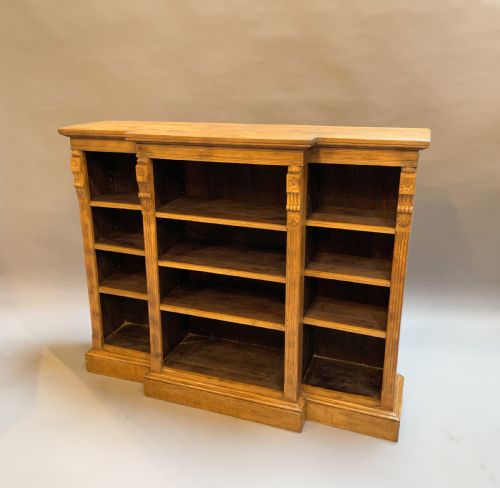
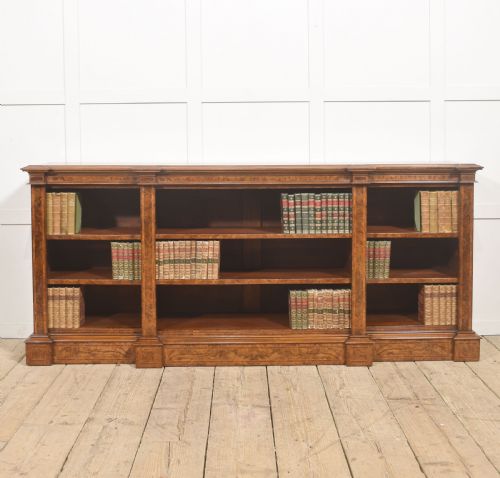
Breakfront Library Shelves
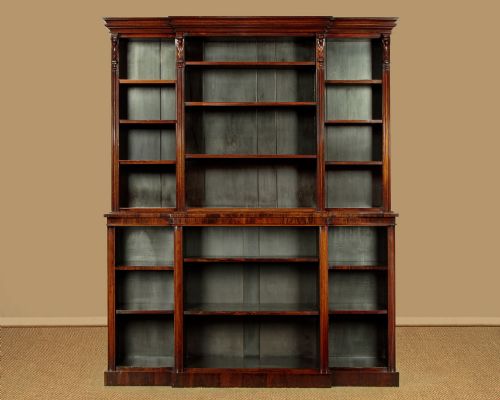
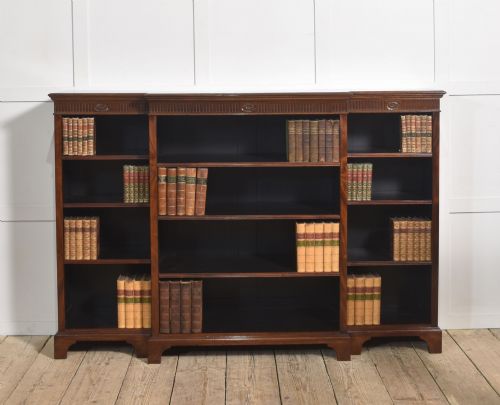
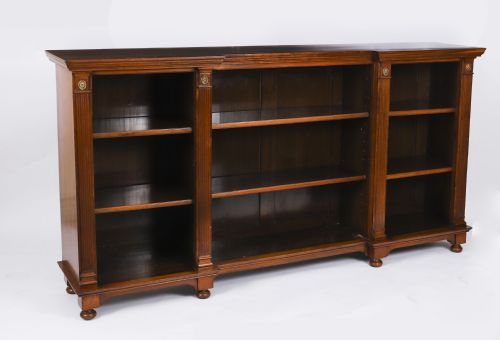
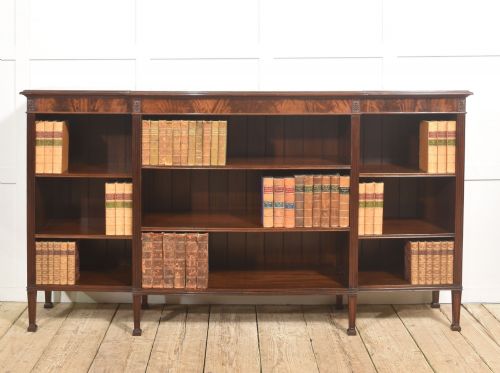
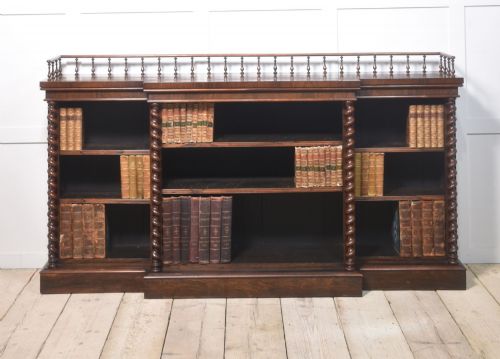
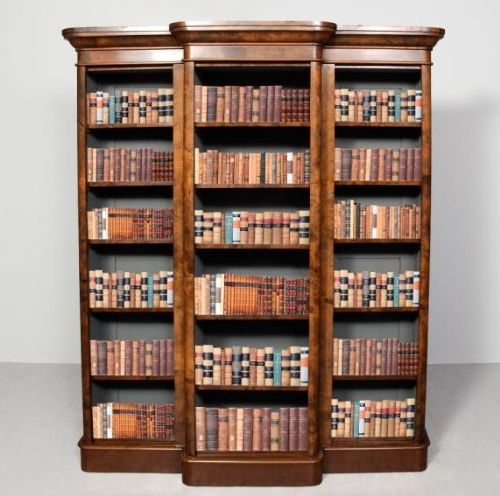
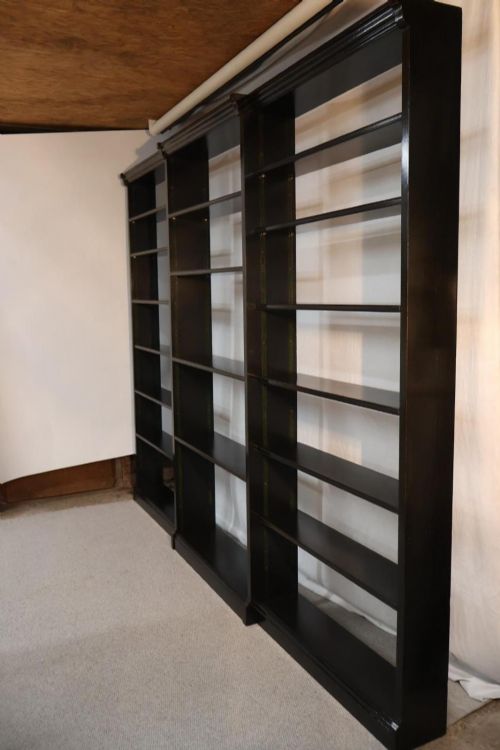
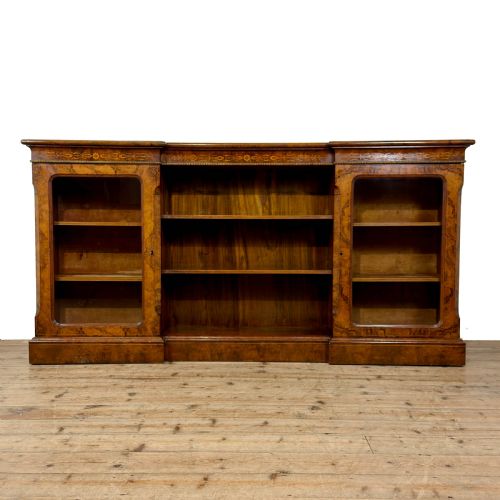
These breakfront library shelves project forward centrally to anchor a room, offering grand scale and adjustable timber storage for extensive collections.
Breakfront Library Shelves
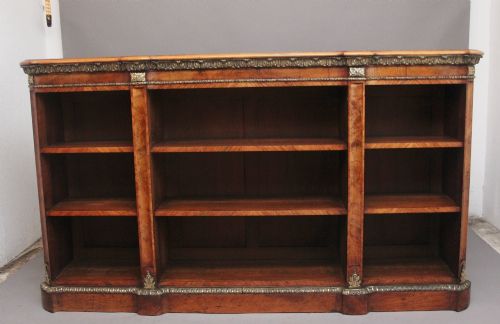
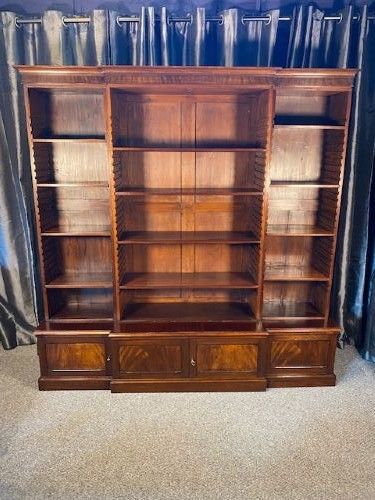
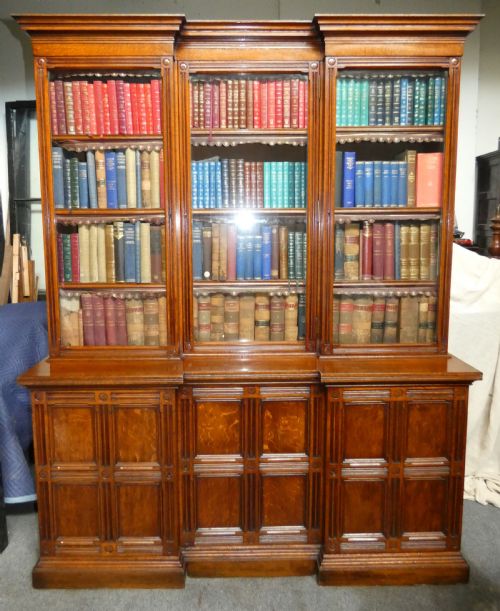
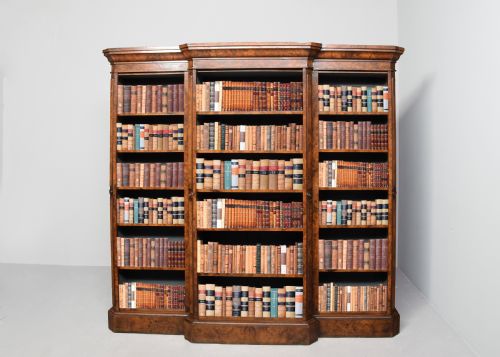
Breakfront library shelves present a tripartite architectural facade where the central section projects forward from the flanking wings, creating visual depth along a wall. When you search for breakfront library shelves, you encounter substantial furniture designed primarily to house large volumes in domestic or institutional libraries. Most examples date from the nineteenth century, spanning Victorian, Regency, and Edwardian periods.
The prevailing form on this page is the open bookcase, often constructed in three distinct sections with adjustable internal shelving. Pieces frequently appear in mahogany, walnut, or rosewood, sometimes displaying specific regional provenances or institutional ties such as Miskin Manor. Dimensions range from diminutive proportions to large configurations intended for expansive spaces.
Quality and Distinction
The standard of a piece rests upon the selection of timber veneers and the crispness of carved or applied ornamentation such as ormolu mounts. Finely figured burr walnut or flame mahogany indicates careful material sourcing by prominent makers.
Proportion and structural integration distinguish finer examples, where the central breakfront projection balances harmoniously with the recessed wings. Precision in the adjustable shelving mechanism and the integrity of the multi-section carcase further separate workshop production levels.
Listings feature pieces from the Regency, Victorian, and Edwardian eras, constructed in mahogany, walnut, rosewood, oak, and satinwood.
Johnstone and Jeanes·Gillows·Robert Strahan·Maple and Co.
The Breakfront Library Shelves Glossary
- Breakfront
- An architectural furniture format where the central section advances forward relative to the flanking left and right cabinets. This configuration creates rhythm and depth across a long bookcase facade.
- Ormolu
- Cast and gilt-bronze furniture mounts applied for decorative effect. It frequently appears alongside walnut timbers on nineteenth-century pieces.
- Crossbanding
- A border of veneer laid with the grain running perpendicular to the surrounding wood. This technique frames the primary panels of satinwood or mahogany.
- Carcase
- The primary structural framework of a bookcase without doors or shelves. Multi-section carcases allow large library furniture to be moved and assembled in rooms.
Breakfront Library Shelves: Frequently Asked Questions
Are the shelves adjustable?
Many of the open bookcases listed include adjustable shelving to accommodate books of varying heights. This functionality allowed nineteenth-century owners to reorganise their collections as needed.
Fixed shelves do appear in certain regional or architectural variants, but adjustable tiers remain common.
What timbers were used?
Cabinetmakers relied heavily on mahogany, walnut, and rosewood, often selecting figured veneers like burr walnut or flame mahogany for visual impact. Oak also appears frequently in robust library pieces.
Secondary woods provided internal support for the large multi-section carcases.
How do I date these pieces?
Dating relies on stylistic markers from periods such as Regency, Victorian, and Edwardian design. Regency pieces often show neoclassical influences, while mid-nineteenth-century examples favour heavy burr walnut.
Construction methods and documented maker signatures further clarify the era of manufacture.