

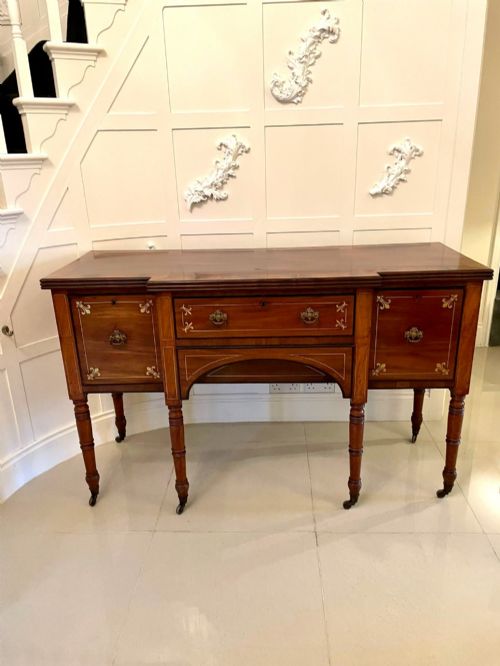
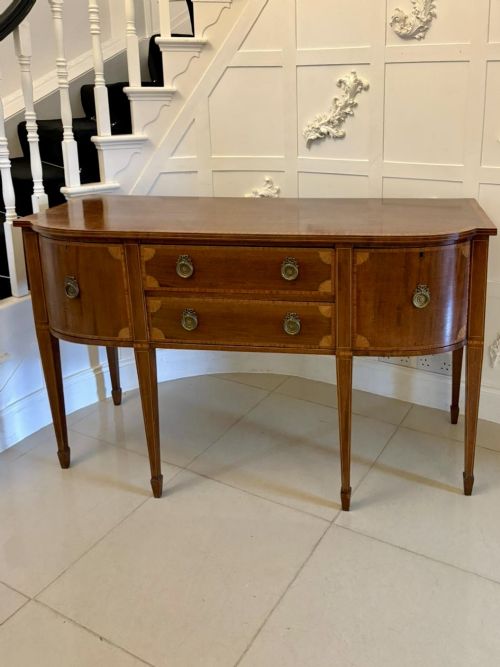
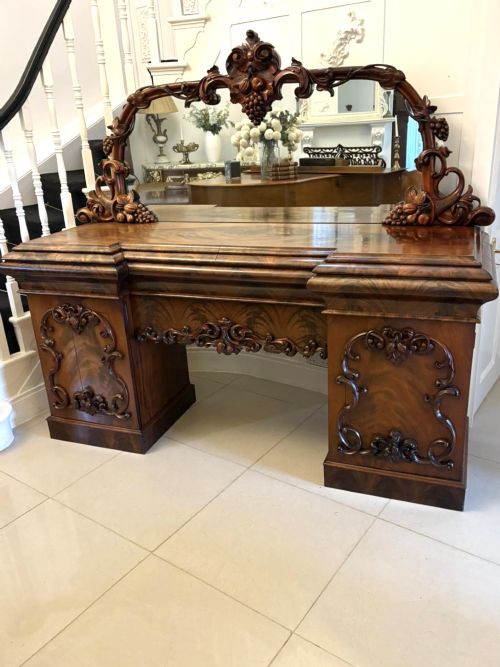
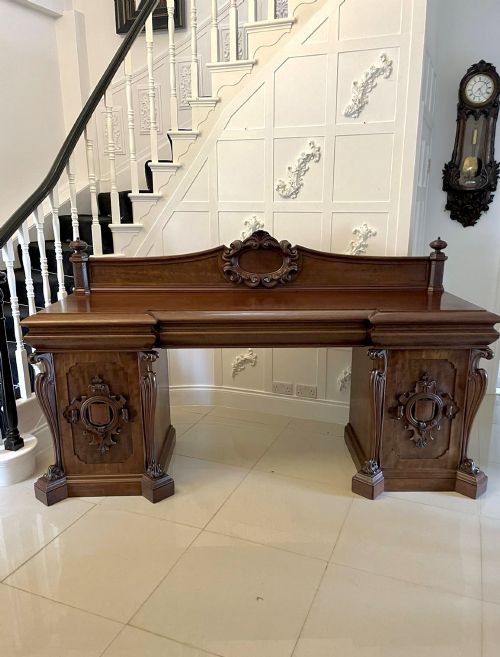
Breakfront Buffet Server
These breakfront buffet server pieces offer grand proportions and rich timber surfaces, bringing historic dining room storage into contemporary rooms.
Breakfront Buffet Server
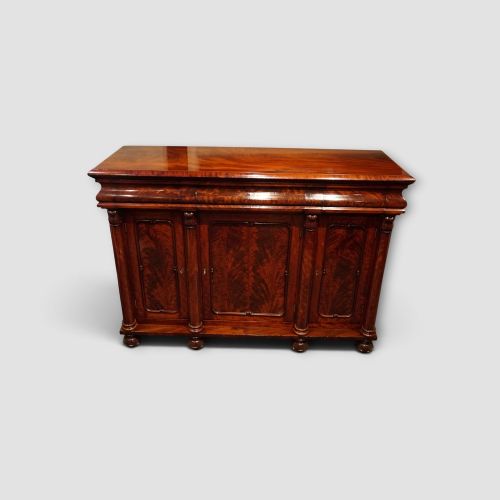
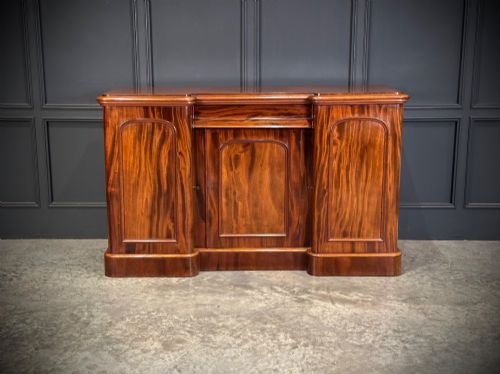
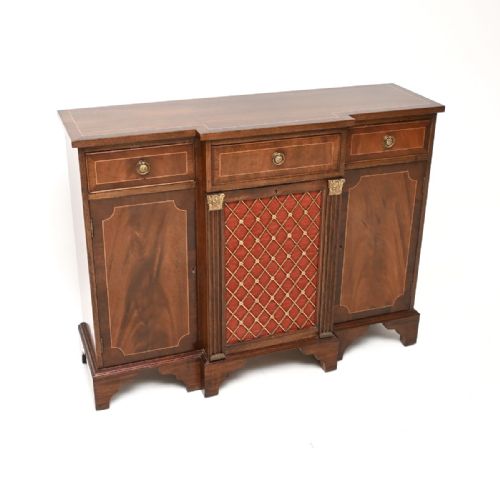
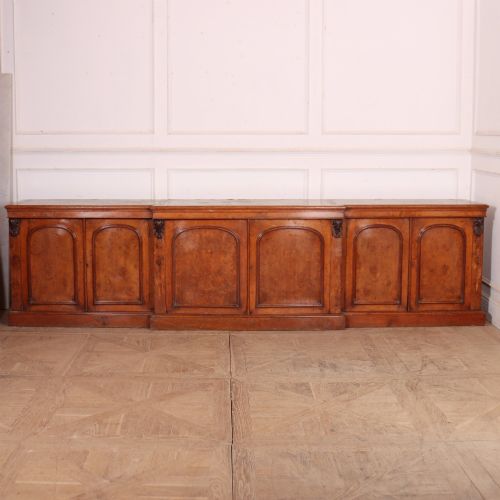
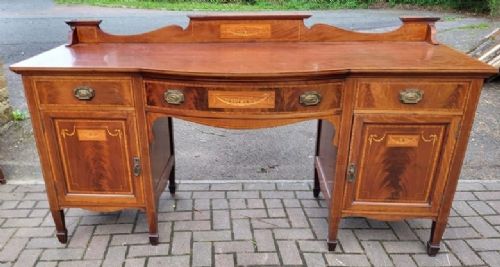
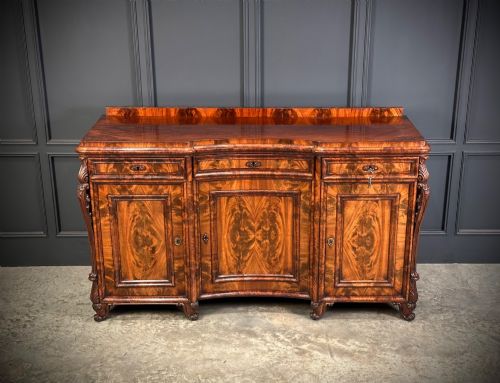
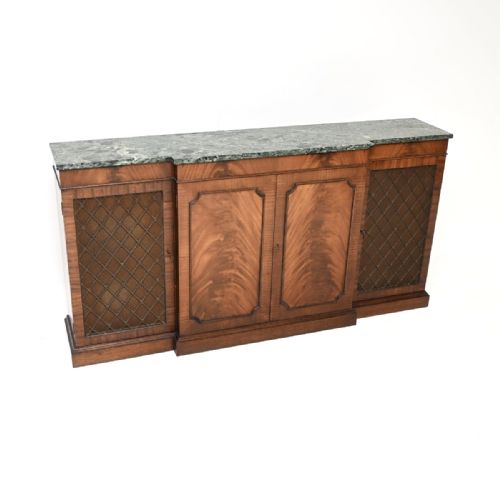
A breakfront buffet server sits at the heavier end of dining furniture, designed with a projecting central section flanked by recessed wings. When you search for a breakfront buffet server, you encounter large storage pieces originating primarily from the Georgian, Regency, and Victorian eras.
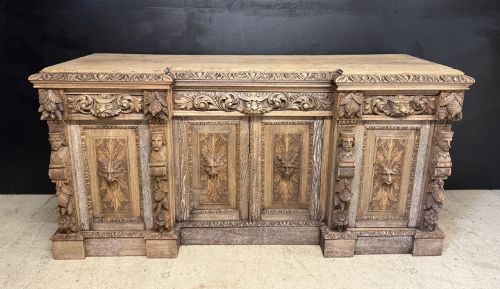
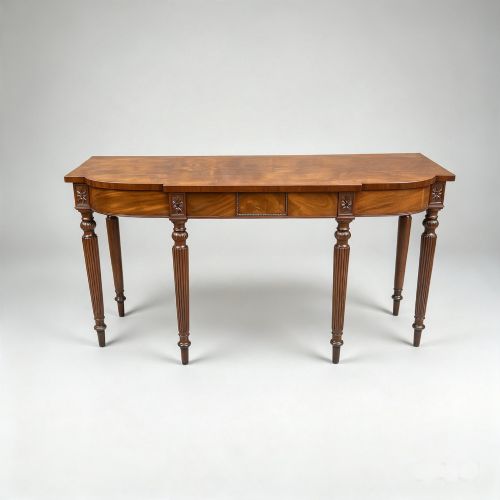
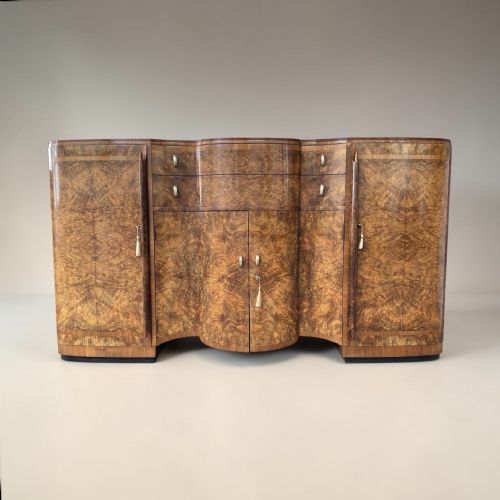
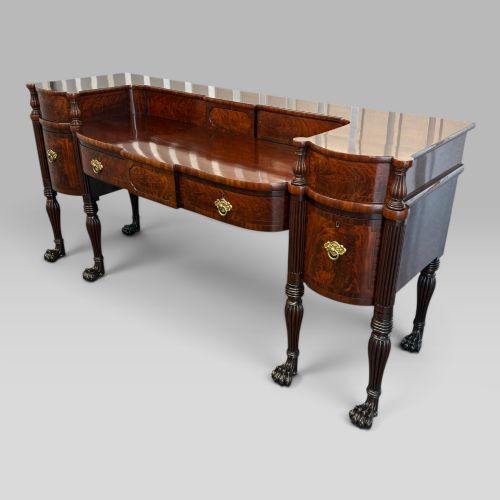
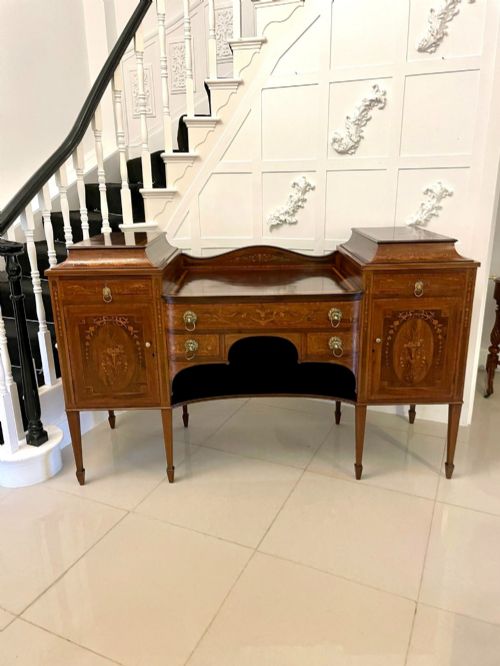
The pieces appearing on this page span several decades, featuring mahogany, flame mahogany veneer, burr walnut, and pollard oak construction. Formats include traditional sideboards with carved details, mirror backs, and multi-door configurations alongside later Art Deco interpretations.
Assessing quality
Quality rests in the selection of timber figures, particularly the matching of flame mahogany veneer or burr walnut across multiple doors and drawers. Finer examples display crisp hand-carved detailing on paw feet and mouldings rather than soft, cast substitutes.
Construction depth dictates overall merit, separating straightforward utility pieces from sophisticated cabinetwork with refined brass inlays, marquetry borders, and integrated mirror superstructures.
Breakfront Buffet Server Retail Price Guide 2026
Typical asking prices for breakfront buffet server among the pieces listed under this phrase on Sellingantiques today, from the lower quarter to the upper quarter. They describe what is for sale here now, not the wider market.
Listings feature mahogany, burr walnut, pollard oak, and satinwood across Victorian, Regency, and Art Deco periods.
Hewetsons London·Maurice Adams·Liberty of London
The Breakfront Buffet Server Glossary
- Breakfront
- A cabinet design where the central section projects forward from the side sections, creating architectural depth. This configuration breaks the linear monotony of standard flat-front sideboards.
- Flame mahogany veneer
- A prized wood cut from the fork of the mahogany tree, producing a distinctive flickering flame pattern. Cabinetmakers laid these thin sheets across drawer fronts and doors for decorative impact.
- Crossbanding
- A narrow strip of veneer laid perpendicular to the grain of the surrounding surface, creating a framed border. This technique highlights the edges of tabletops and drawer fronts.
- Marquetry
- The art of applying pieces of veneer to a structure to form decorative patterns and pictures. Makers used contrasting timbers like satinwood to build these complex pictorial designs.
- Dresser base
- A lower storage unit featuring cupboards and drawers without upper shelving. These pieces serve a similar function to formal sideboards in dining spaces.
Breakfront Buffet Server: Frequently Asked Questions
What is a breakfront buffet server?
A large dining room storage unit characterised by a forward-projecting central section and flanking cabinet wings. These pieces were built to hold silverware, linen, and serving dishes.
Today they function as substantial sideboards in dining rooms or living spaces, providing surface display area and deep internal shelving.
How do I date a mahogany sideboard?
Dating relies on observing structural characteristics, timber preparation, and decorative styles tied to specific design periods. Georgian and Regency pieces favour clean architectural lines or brass inlay, while Victorian examples often feature heavy carving and mirror backs.
Secondary timbers inside drawers and the presence of hand-cut joints provide further clues to the decade of manufacture.
Where were these pieces used?
These servers stood in formal dining rooms of substantial houses, positioned against walls to hold food and service items during large meals. Their imposing scale suited high ceilings and large entertaining spaces.
In modern interiors, they transfer easily to entrance halls, dining spaces, or large living rooms as statement storage furniture.
What woods were commonly used?
Mahogany served as the primary timber for the majority of these pieces, often enhanced by decorative flame mahogany veneers. Cabinetmakers also utilised burr walnut, pollard oak, and satinwood for distinctive grain patterns and lighter colour contrast.
Secondary woods like oak appeared in drawer linings and internal framing to ensure structural stability.