



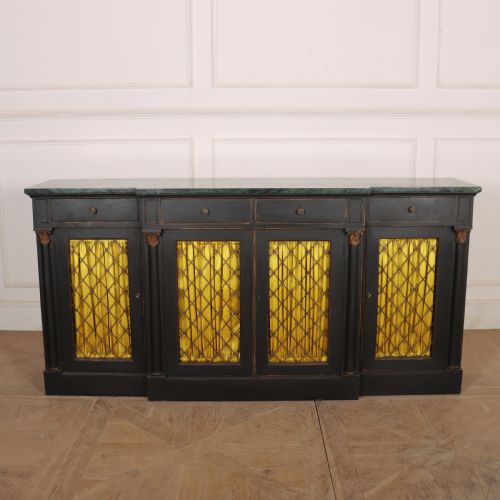


Brassed Wire Cabinets
These brassed wire cabinets combine fine timber framing with delicate metalwork, offering both display and secure storage for a refined interior.
Brassed Wire Cabinets
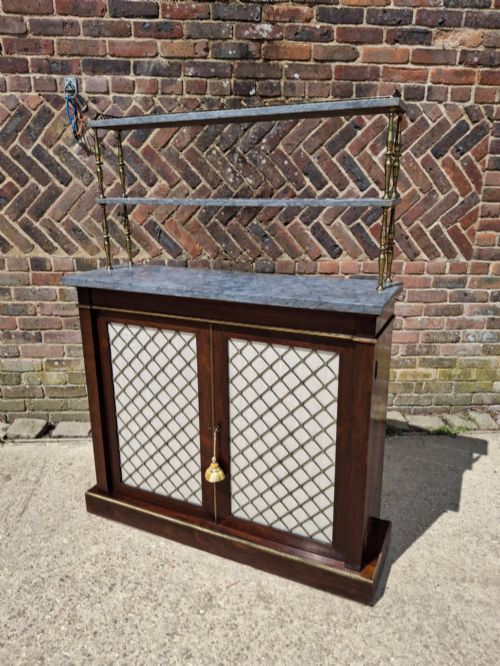
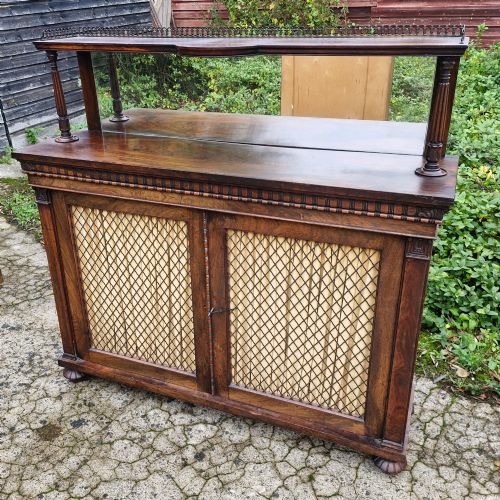
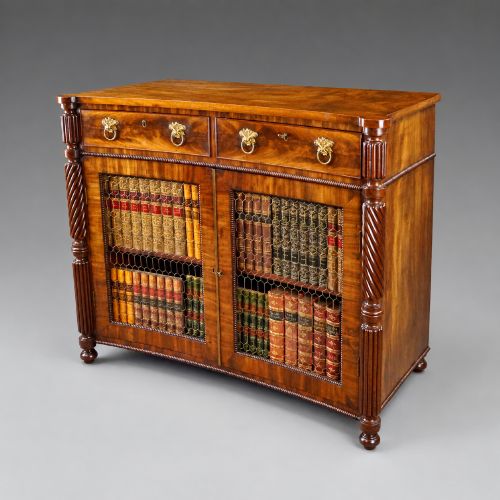
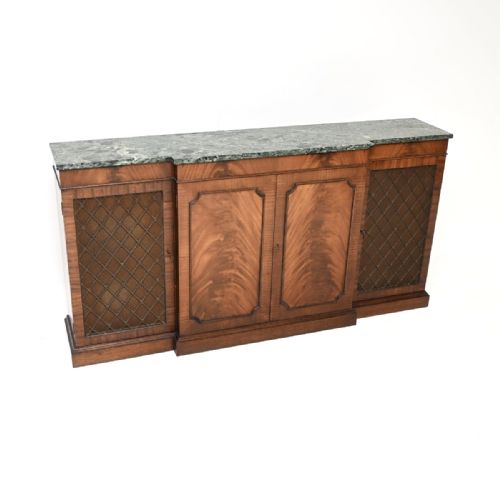
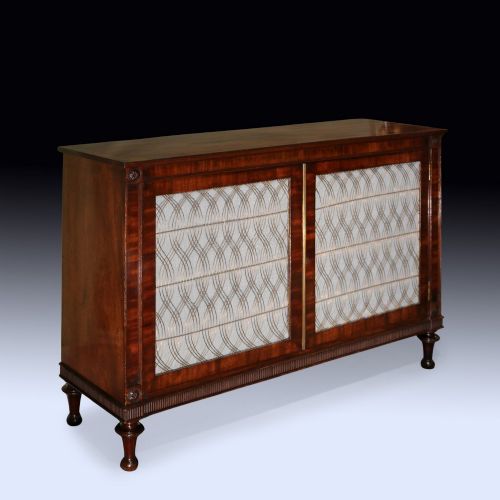
When you search for brassed wire cabinets, you encounter pieces that incorporate woven or grilled metal mesh into their doors, allowing visibility while protecting the contents within. The items seen on this page span several distinct periods, most notably the Regency era and the wider nineteenth century, alongside later twentieth-century interpretations.
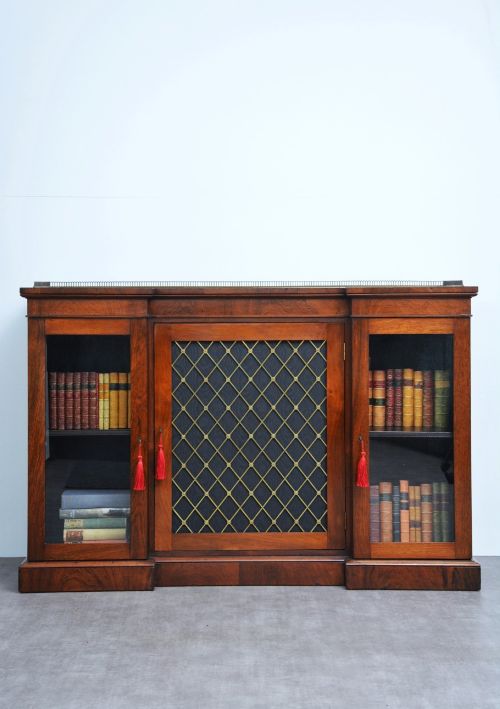
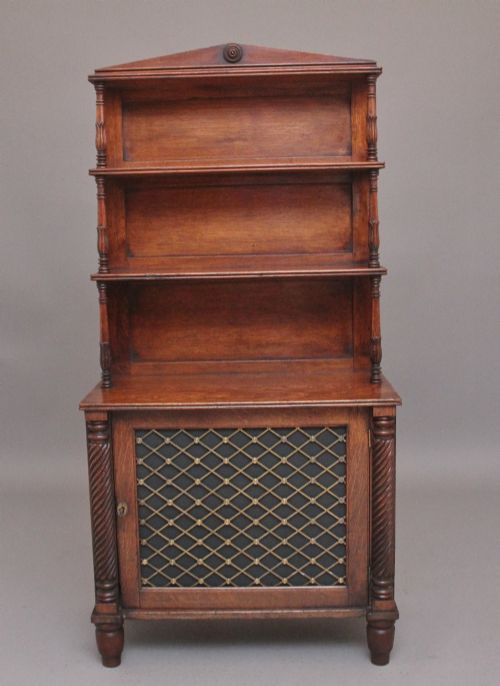
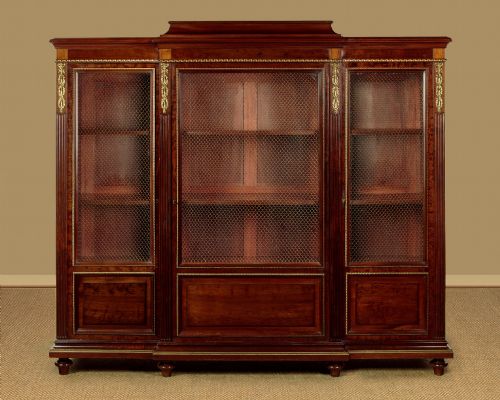
The primary forms you are most likely to meet include side cabinets, chiffoniers, and larger bookcase cabinets built from rich timbers. These functional pieces range from restrained country house examples to grander exhibition-quality library bookcases featuring adjustable display shelves.
Makers and designers of the period utilised these wire mesh panels to store books, papers, and collections securely without shutting them away completely. The integration of brass mounts and grille fronts defines the visual character of these storage items across multiple styles.
Materials and construction
The structural framework relies heavily on dense hardwoods such as mahogany, rosewood, walnut, and oak, often selected for their deep grain and stability. Cabinetmakers shaped these timbers into breakfront bookcases, sideboards, and side cabinets, frequently enhancing the surfaces with brass inlay and fine boxwood stringing.
The characteristic wire mesh or grille panels are constructed from brass, fixed into timber door frames to provide the requisite transparency and strength. Interior elements occasionally incorporate secondary materials such as marble tops, fabric linings, or silk accents behind the metalwork.
Brassed Wire Cabinets Retail Price Guide 2026
Typical asking prices for brassed wire cabinets among the pieces listed under this phrase on Sellingantiques today, from the lower quarter to the upper quarter. They describe what is for sale here now, not the wider market.
One unexpected nineteenth-century listing presents itself purely as a medical specimen cabinet, proving these wire grilles held more than just novels.
Assessing quality in construction
Quality in these pieces is dictated by the precision of the cabinetwork, the selection of figured timber veneers, and the integration of the brass grillwork. Finer examples display meticulous attention to detail in their brass inlays, door alignments, and the execution of neoclassical or French Empire influences.
The structural integrity of the timber framing and the original condition of the wire mesh panels separate standard items from exhibition-grade pieces. Superior items often feature sophisticated internal arrangements, such as adjustable display shelves and high-grade secondary woods.
Paul Sormani·John McLean
The Brassed Wire Cabinets Glossary
- Chiffonier
- A low cabinet or sideboard, typically featuring shelves or enclosed storage space beneath, popular during the Regency period.
- Grille front
- A door panel constructed from woven wire or metal bars rather than solid wood, permitting visibility of the interior contents.
- Breakfront
- A piece of furniture where the central section projects forward from the flanking outer sections, creating architectural depth.
- Regency
- A British design period spanning the early nineteenth century, known for drawing inspiration from classical antiquity and French styles.
- Kingwood
- A dense, richly figured exotic timber utilised for high-end decorative veneering in cabinet making.
Brassed Wire Cabinets: Frequently Asked Questions
What are brassed wire cabinets?
These are functional storage pieces featuring doors inset with woven wire mesh or metal grilles instead of solid wood or glass.
They were designed to house books and collections while allowing air circulation and visual access to the contents.
How were these cabinets used?
Historically, they served in libraries, drawing rooms, and dining spaces to store valuable books, papers, and porcelain.
The wire mesh provided a practical alternative to glass, offering security while maintaining a lighter visual presence in the room.
How do I style them at home?
Place them in living areas or studies where their timber grains and metal grille details can complement traditional or eclectic interiors.
Use the internal shelving to display books or ceramics, taking advantage of the semi-transparent doors to soften the visual weight of the timber.
How do I identify a Regency piece?
Look for classical proportions, mahogany or rosewood veneers, and decorative elements such as brass inlays and restrained neoclassical motifs.
Pieces from this era often exhibit clean architectural lines combined with sophisticated timber selection and fine brass grille work.