




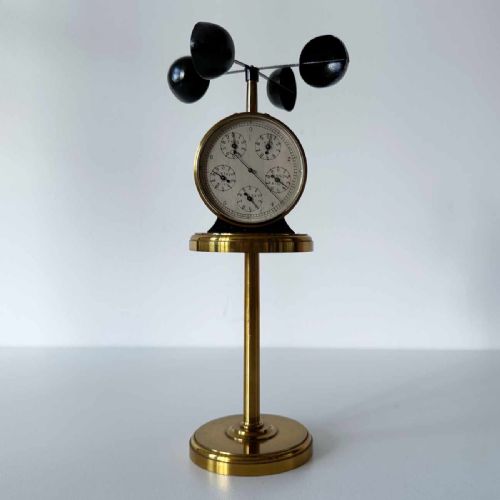


Brass Weather Gauge
A brass weather gauge brings the precise measurement of atmospheric pressure, temperature, and wind into the room with robust Victorian and Edwardian engineering.
Brass Weather Gauge
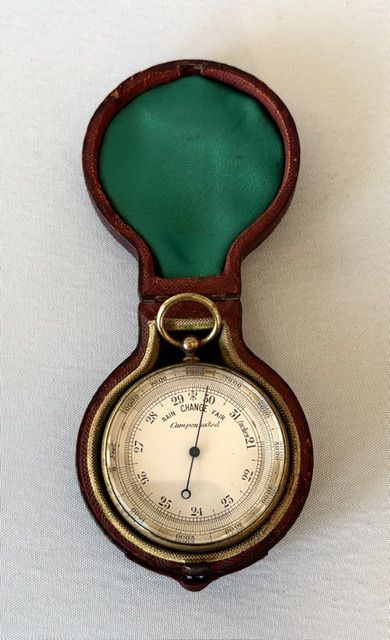
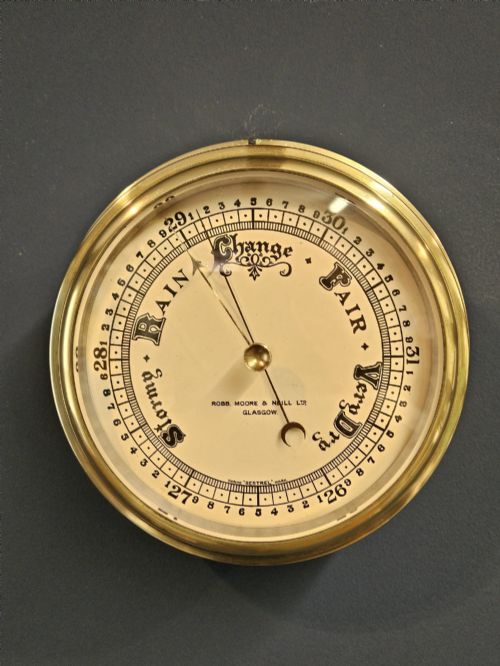
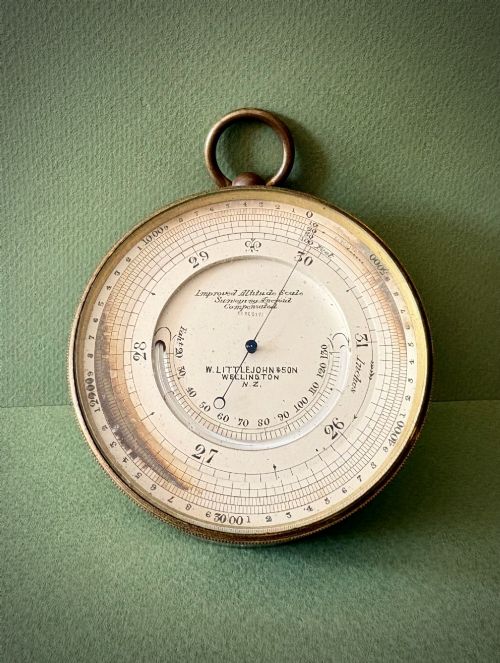
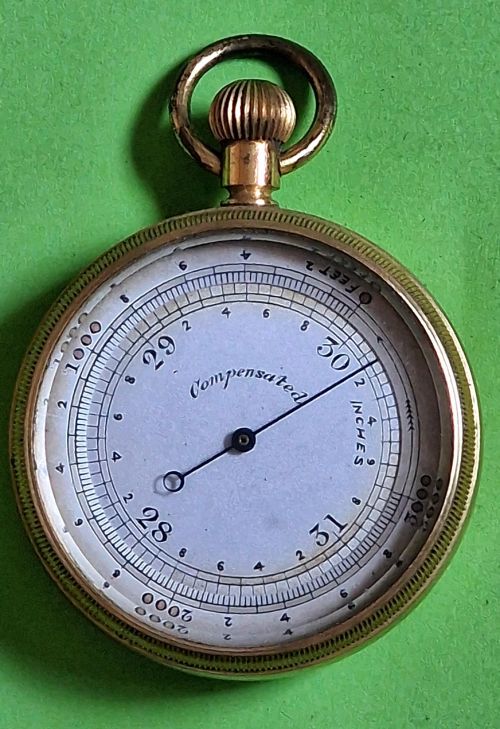
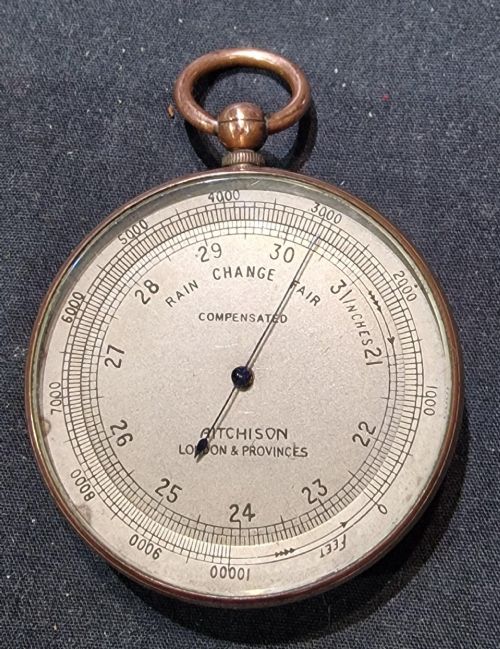
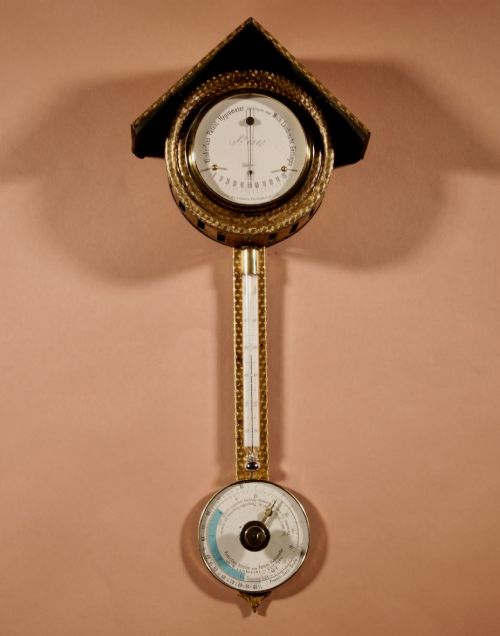
When you search for a brass weather gauge, you encounter a range of scientific instruments designed to measure atmospheric conditions, from pocket barometers and altimeters to large wall barometers, barographs, and hygrometers. The selection spans the Victorian and Edwardian eras through to the 1930s, reflecting a period when domestic and scientific meteorological recording became widespread.
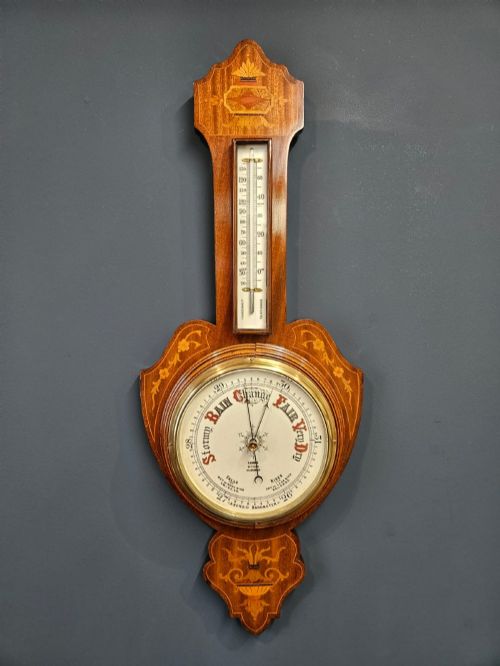
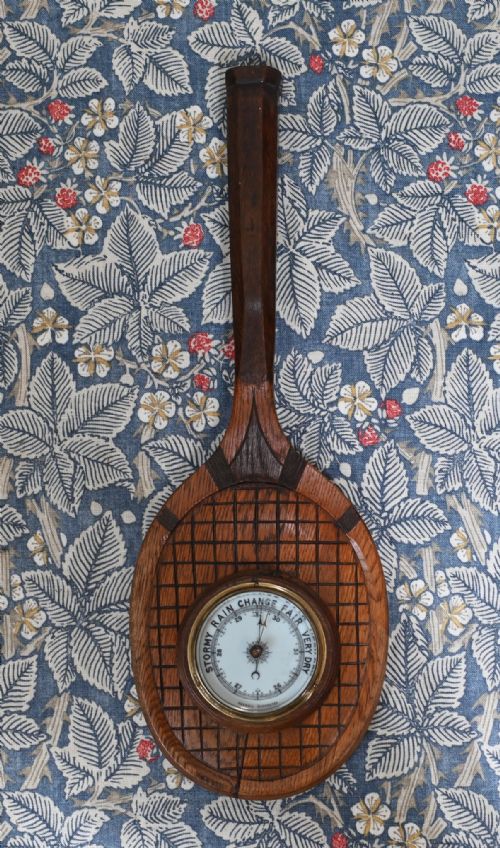
The most common versions on this page are aneroid barometers and weather stations housed in timber cases of mahogany, oak, and walnut, alongside portable pocket instruments in fitted leather or metal travel cases. These objects combine utilitarian scientific utility with polished brass bezels, dials, and glass viewing windows.
Materials and construction
Makers housed these precision movements in durable woods like mahogany, oak, walnut, rosewood, and beechwood, often featuring inlaid details, carved Black Forest motifs, or ebonised finishes. The visible hardware relies on heavy brass for bezels, cisterns, and dials, paired with silvered metal scales and protective glass covers.
Internal mechanics utilise sensitive aneroid capsules, hair hygrometer fibres, and mercury columns linked to delicate steel pivots and levers. Cased instruments frequently incorporate brass carrying handles, leveling screws, and fitted storage drawers for spare recording charts and inks.
Brass Weather Gauge Retail Price Guide 2026
Typical asking prices for brass weather gauge among the pieces listed under this phrase on Sellingantiques today, from the lower quarter to the upper quarter. They describe what is for sale here now, not the wider market.
Listings span Victorian, Edwardian, and 1930s periods, incorporating brass, glass, mahogany, oak, steel, silvered metal, and walnut across barometers, barographs, and hygrometers.
Separating the ordinary from the exceptional
Quality in a brass weather gauge rests upon the reputation of the scientific instrument maker, the legibility and engraving of the silvered dial, and the complexity of the movement. Instruments signed by notable makers such as Negretti & Zambra, Short & Mason, or Dollond demonstrate superior mechanical precision and finishing compared to unsigned commercial pieces.
The integrity of the cabinetry also dictates value, where substantial carved walnut, figured mahogany, or specialised forms like skeletonised frames and recording barographs elevate the piece above standard circular wall barometers.
Wilh Lambrecht Gottingen Germany·Poulenc Freres of Paris·Elliott Brothers·Short and Mason London·Negretti and Zambra·J Hicks of London·James H Kelly of Glasgow·Blake and Son·Dollond of London·W Watson and Sons London·Primavesi
The Brass Weather Gauge Glossary
- Aneroid barometer
- An instrument that measures atmospheric pressure using an expanding and contracting metal bellows without liquid. The movement connects via levers to an indicating hand on a dial.
- Barograph
- A self-recording meteorological instrument that plots barometric pressure over time onto a rotating drum fitted with paper charts. It is typically housed in a mahogany or walnut case with a glazed glass cover.
- Hygrometer
- A device used for measuring humidity in the air, often utilising human hair or wet and dry bulb thermometers. Examples include hair hygrometers by makers such as Wilh. Lambrecht and Poulenc Freres.
- Altimeter
- A specialised aneroid instrument calibrated to measure altitude above sea level based on atmospheric pressure changes. These range from pocket-sized models to large observation balloon units.
- Anemometer
- An instrument designed to measure wind speed or pressure. Examples include Lind's pattern wind gauges and pedestal anemometers.
Brass Weather Gauge: Frequently Asked Questions
How do I set a brass aneroid barometer?
You set an aneroid barometer by turning the small adjustment screw on the back or beneath the bezel to match the current local barometric pressure obtained from a reliable meteorological source.
After adjustment, gently tap the glass to settle the internal levers before reading the current atmospheric trend.
What is the difference between a barograph and a barometer?
A standard barometer displays only the current atmospheric pressure via a pointer on a dial at the exact moment you look at it.
A barograph continuously records pressure fluctuations onto a paper chart fitted to a clockwork rotating drum, allowing you to observe weather patterns over a full week.
How should I clean the brass parts?
Dust the brass bezels and fittings gently with a soft, dry microfibre cloth to remove surface particles.
Avoid liquid metal polishes or abrasive cleaners, as these can strip original patination and damage adjacent wooden cases or silvered dials.
Were these instruments used outdoors or indoors?
Most domestic wall barometers, banjo barometers, and barographs were designed to hang in hallways or libraries where temperature fluctuations were moderate.
Specialised field instruments, such as pocket barometers and altimeters, were built for travel, mountaineering, and military observation.