

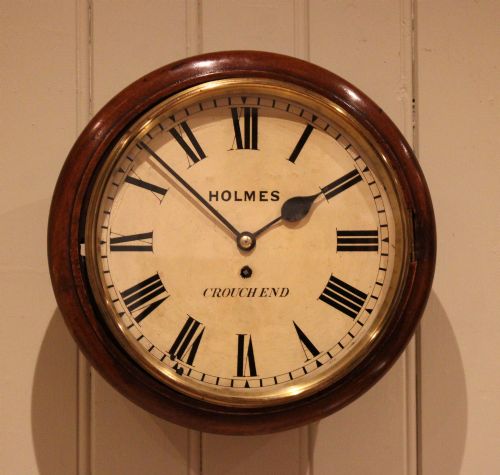
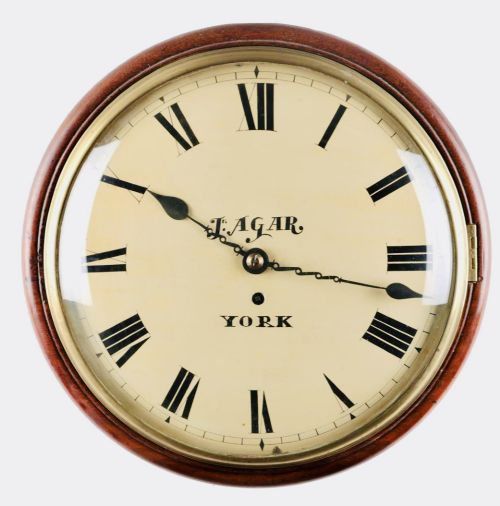
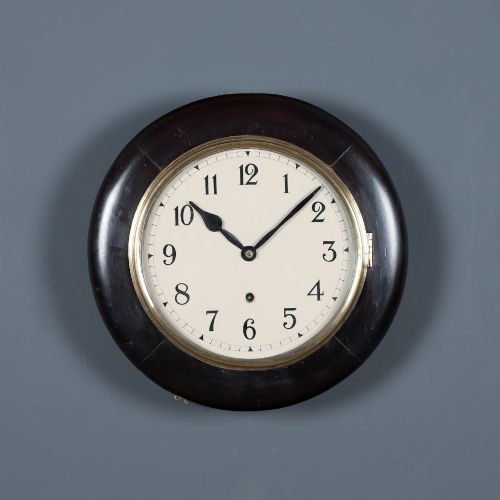
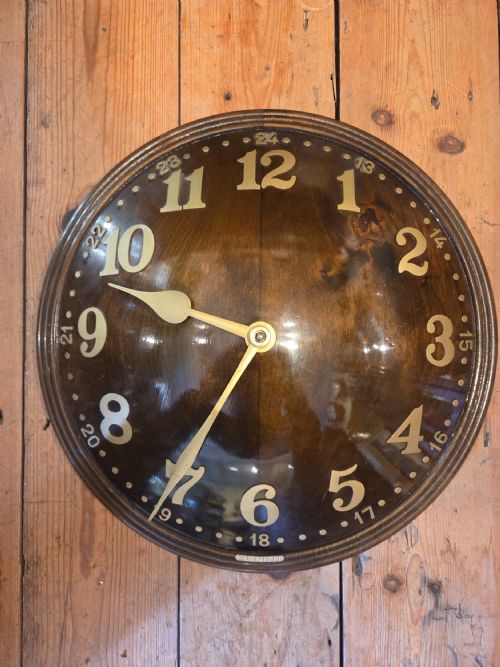
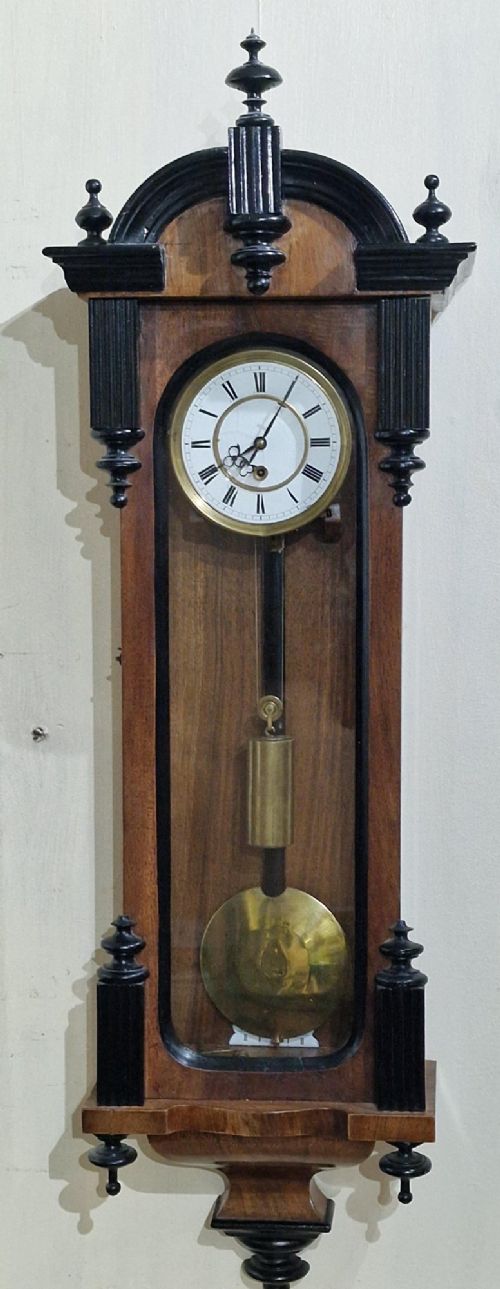
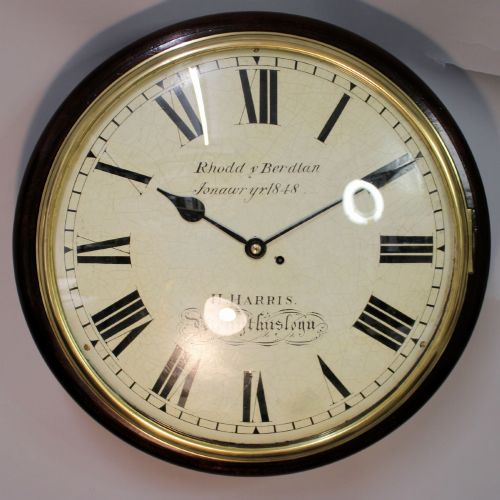
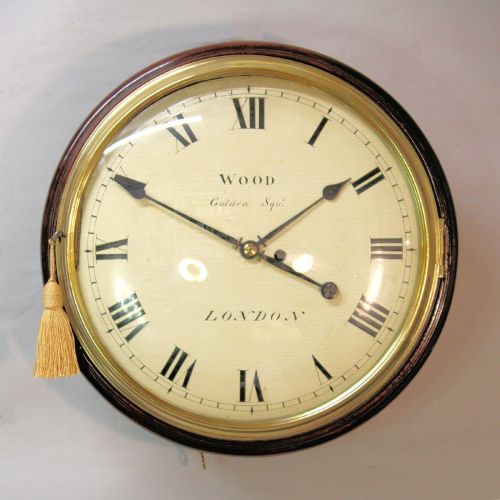
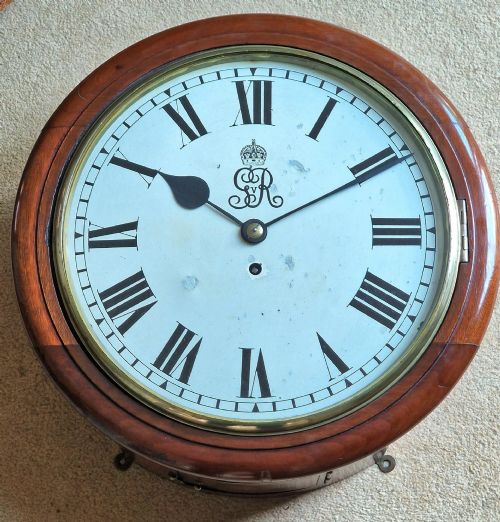
Brass Wall Timepiece
A brass wall timepiece brings utilitarian precision and rich timber cases into domestic and public spaces, rewarding the collector with centuries of mechanical ingenuity.
Brass Wall Timepiece
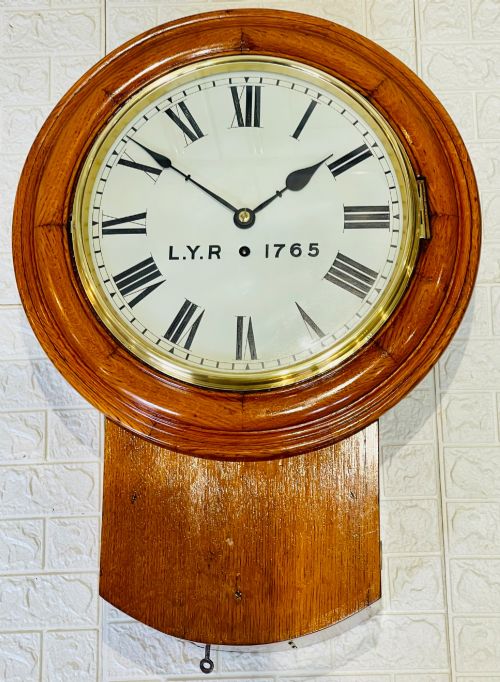
When searching for a brass wall timepiece, buyers encounter a diverse selection spanning from seventeenth-century lantern clocks to robust nineteenth-century railway dials. These instruments were primarily built to keep accurate time in public offices, railway stations, and domestic halls rather than simply serving as decoration.
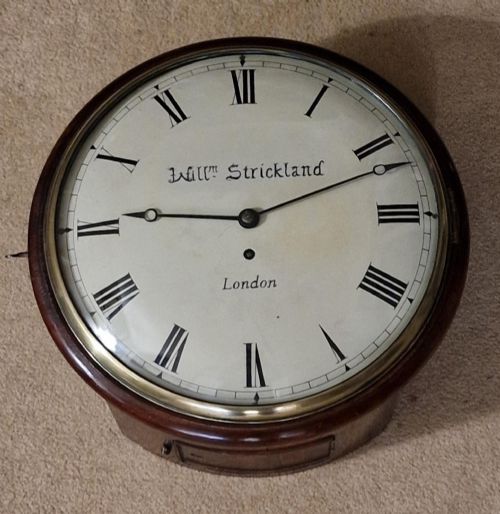
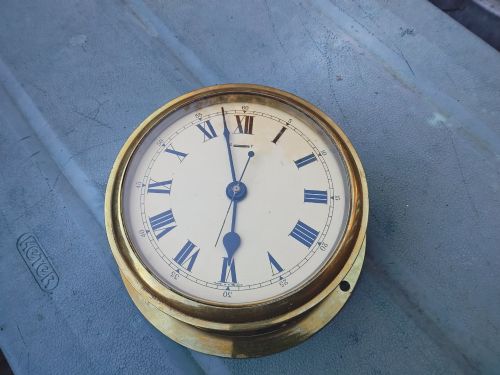
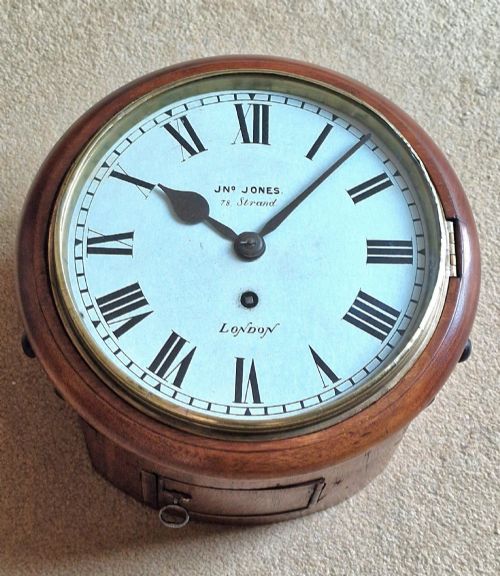
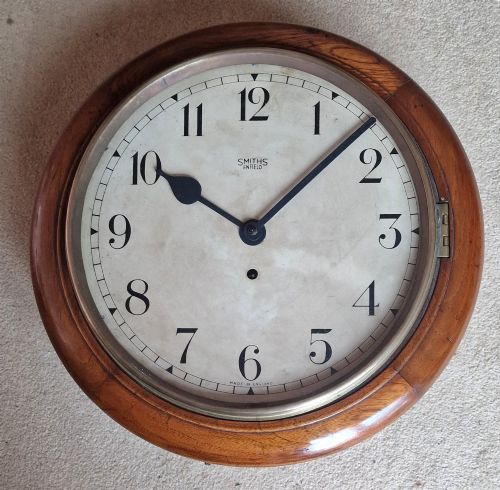
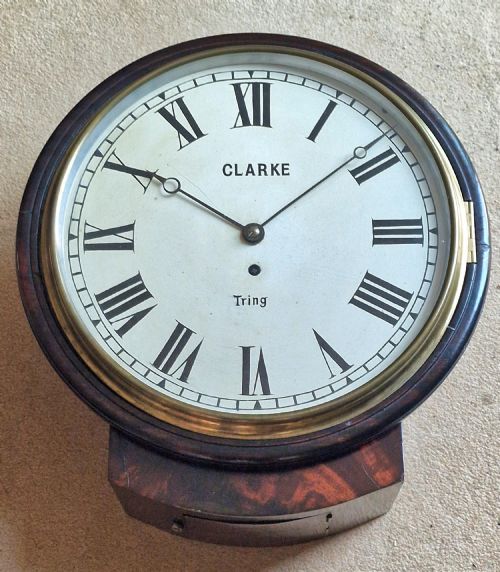
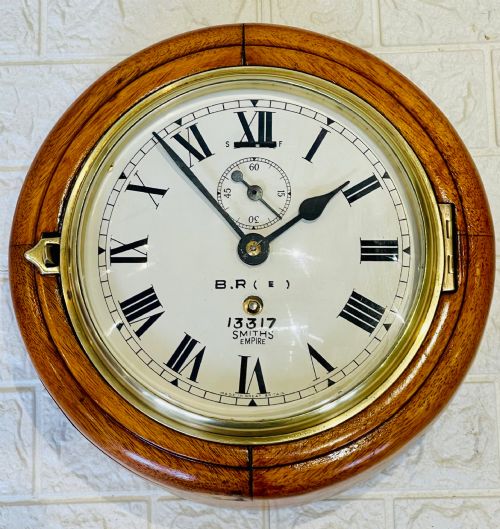
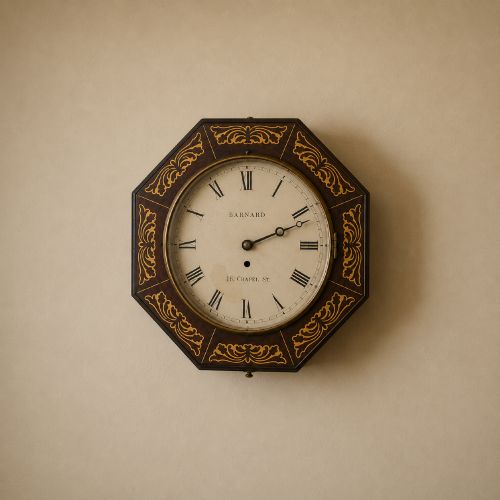
The most common examples on this page are circular dial clocks housed in mahogany, oak, or walnut, often featuring brass bezels framing enamelled or painted faces. Pieces range from utilitarian railway timepieces to domestic Victorian models and striking Arts and Crafts variants.
Origins stretch across British workshops in London and regional towns, alongside continental examples including French and Austrian designs. Each piece reflects the functional requirements of its era, whether built for a cramped railway office or a grand Georgian hall.
Materials and Construction
Movements frequently rely on fusee mechanisms paired with chains or cords to maintain even tension as the mainspring unwinds. Dials feature hand-painted numerals on wood, metal, or convex glass faces protected by brass bezels.
Brass Wall Timepiece Retail Price Guide 2026
Typical asking prices for brass wall timepiece among the pieces listed under this phrase on Sellingantiques today, from the lower quarter to the upper quarter. They describe what is for sale here now, not the wider market.
Listings feature brass wall timepieces spanning the seventeenth century through to the Art Deco period, utilising oak, mahogany, walnut, and iron.
Assessing Quality and Craftsmanship
Quality in a brass wall timepiece rests upon the precision of the movement and the integrity of the original case timbers. Finer examples display crisp engraving on the dial, hand-cut brass wheels, and robust fusee movements bearing the signature of a known maker.
The relationship between the dial, movement, and case dictates the overall desirability of the piece. Untouched dials and well-proportioned timber housings command greater respect than heavily restored or mismatched components.
Richard Jones of Hereford·Thomas Langley·George Clarke·Henry Harris·John Spershott·Dent of London·Benj Reeves·John Walker·Kleyser of London·Haley & Milner
The Brass Wall Timepiece Glossary
- Fusee
- A conical pulley used in clock movements to equalise the torque of the mainspring as it runs down. This device ensures consistent power delivery and improves timekeeping accuracy.
- Dial clock
- A wall-mounted clock featuring a prominent circular face, frequently adopted by railways, schools, and institutions. They prioritise legibility and reliable timekeeping above elaborate case decoration.
- Lantern clock
- An early domestic chamber clock constructed primarily of brass with hanging weights and a top-mounted bell. They represent some of the earliest portable domestic timepieces in British horology.
- Drop dial
- A clock case featuring an extended lower trunk to accommodate a longer pendulum or weight drop. This design balances a compact dial with the internal space required for an eight-day movement.
- Bezel
- The brass ring that holds the glass protecting the clock face in place. It often hinges open to allow for hand-setting and winding.
Brass Wall Timepiece: Frequently Asked Questions
How do I wind a fusee wall clock?
Most fusee wall clocks require a specialised winding key inserted into the dial aperture to tension the chain and mainspring. Care must be taken not to overwind the mechanism.
Regular winding maintains consistent tension on the fusee cone, which directly influences the accuracy of the movement over its operational period.
Where were dial clocks typically used?
Dial clocks were manufactured extensively for public institutions, railway networks, and maritime settings where dependable timekeeping was essential. Examples regularly bear station or shipping company insignia.
Domestic versions were equally popular in larger Victorian and Georgian hallways, kitchens, and offices where clarity and durability mattered.
How do I date a brass wall timepiece?
Dating relies on stylistic clues within the case timber, the shape of the brass bezel, and the construction methods of the internal movement. Maker signatures on the dial or backplate offer a direct link to historical records.
Shift from early brass lantern designs to nineteenth-century mahogany fusee dials illustrates how materials evolved alongside interior fashions and technological demands.
Can these clocks run continuously on a wall?
Wall timepieces are engineered to operate vertically when securely mounted and properly plumbed. Correct wall hanging ensures the pendulum swings evenly and the escapement ticks in balance.
Careful positioning on a solid wall prevents vibrations from disrupting the delicate rhythm of the movement.