




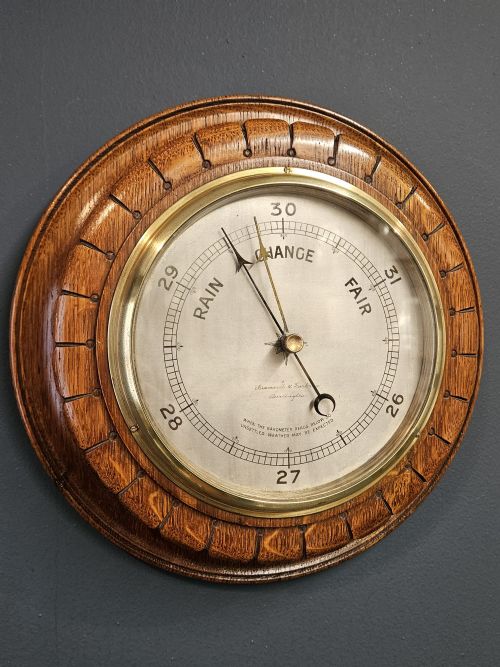

Brass Wall Instrument
A brass wall instrument measures shifts in weather or time, bringing Victorian science and maritime utility into domestic rooms.
Brass Wall Instrument
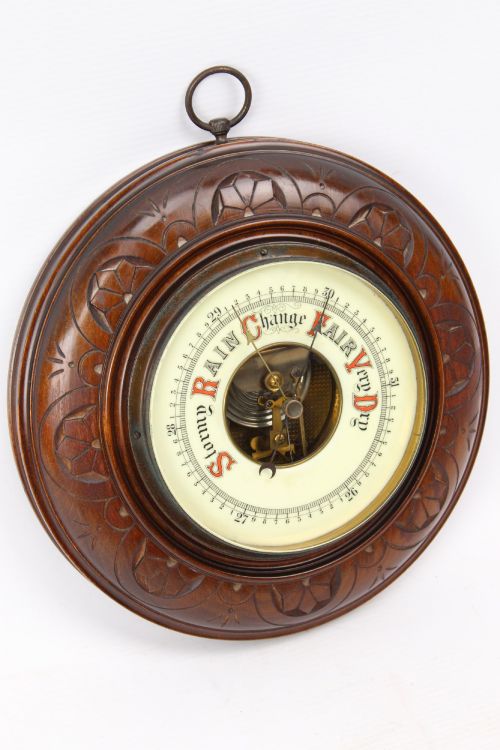
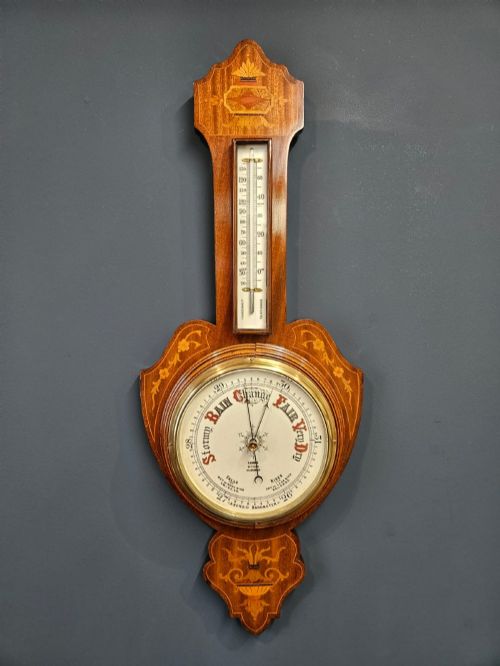
A brass wall instrument encompasses barometers, barographs, weather stations, and scientific instruments designed to hang in domestic or institutional settings. These pieces track atmospheric pressure, humidity, or time using mechanical dials, tubes, and mercury columns.
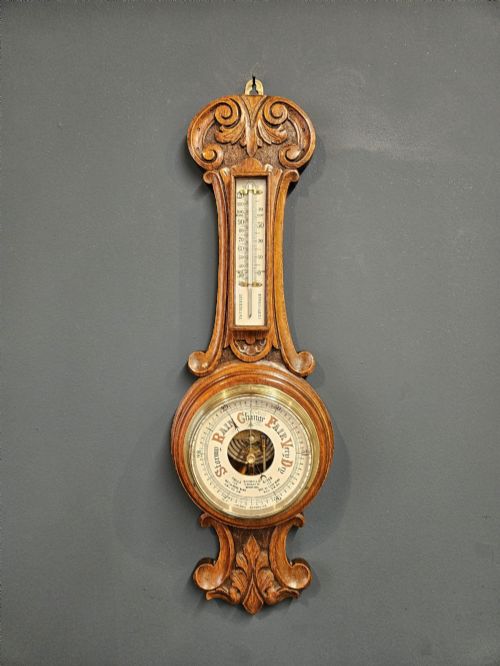
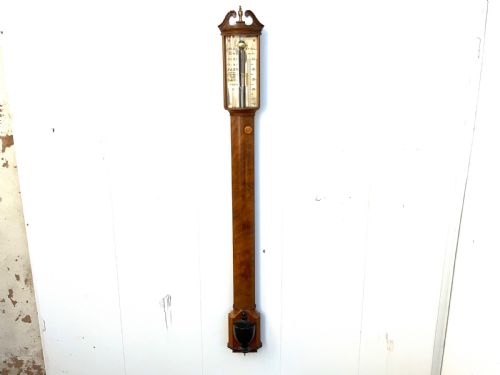
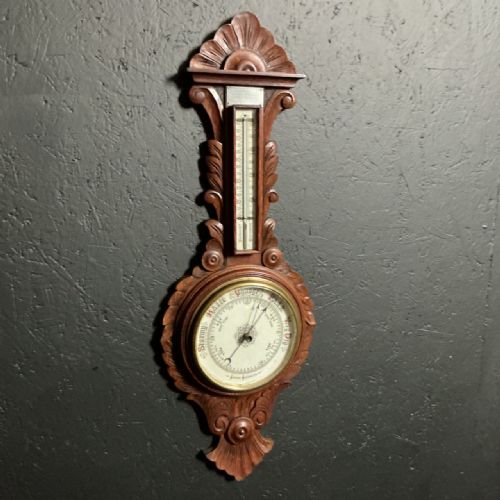
The versions most frequently met on this page date from the Victorian and Edwardian eras, alongside Georgian stick barometers. Oak, mahogany, and walnut cases house these mechanisms, often shaped in banjo, bulk head, or stick formats.
How they were made
Brass provides the structural bezels, horns, and backplates, combined with silvered metal for engraved dial faces. Cabinetmakers shaped housings from mahogany, oak, rosewood, and walnut, frequently adding bone or porcelain inserts and glass viewing covers.
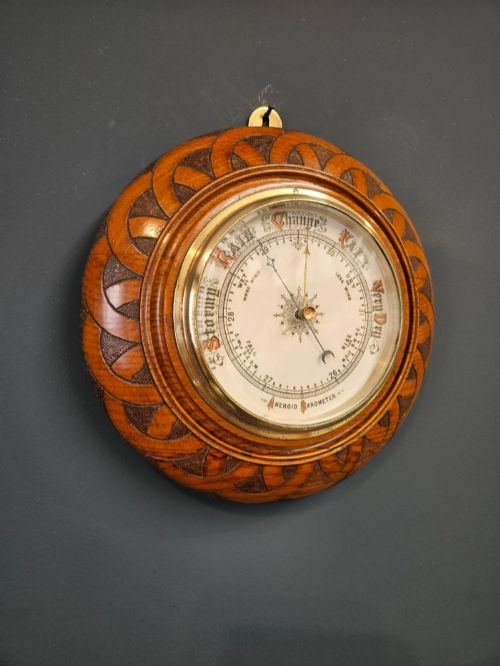
Makers utilised aneroid movements with internal vacuum chambers or mercurial glass tubes paired with steel indicators. Carving, inlay, and turning decorated the timber surrounds, particularly in Black Forest and industrial workshop examples.
Brass Wall Instrument Retail Price Guide 2026
Typical asking prices for brass wall instrument among the pieces listed under this phrase on Sellingantiques today, from the lower quarter to the upper quarter. They describe what is for sale here now, not the wider market.
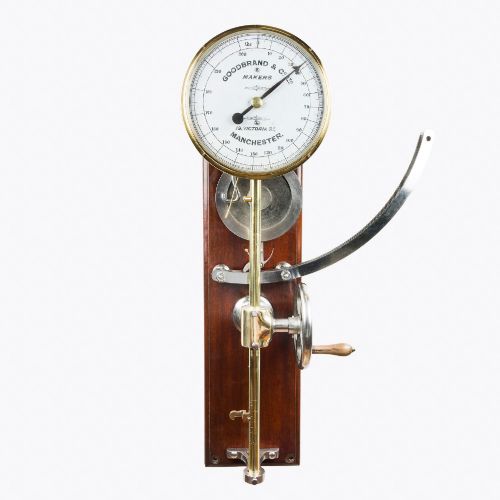
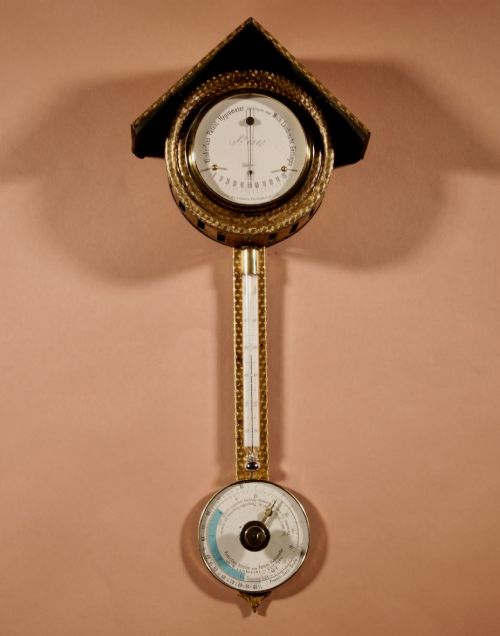
Scientific and maritime apparatus appearing here spans altitude adjustment aneroids, Fortin stick barometers, hair hygrometers, and industrial yarn testers.
What varies in quality
The sophistication of the internal movement dictates the standard, ranging from simple domestic aneroid dials to complex skeletonised mechanisms and Fortin cisterns. Precision in the silvered dial engraving and the legibility of scientific scales separate utilitarian pieces from high-grade scientific apparatus.
Cabinetwork execution defines the exterior grade, observed in the depth of timber carving, figured grain choice in mahogany or walnut, and the integrity of geometric or inlaid detailing.
Wilh. Lambrecht·Poulenc Freres·Elliott Brothers·Short & Mason·Bramwell & Harbron·Goodbrands·Blunt·Ganthony·Alexander Wright·Fagioli·Bate·Negretti & Zambra·Antoine Redier
The Brass Wall Instrument Glossary
- Aneroid barometer
- A barometric instrument measuring atmospheric pressure through the expansion and contraction of a sealed metal corrugated box, eliminating the need for liquid mercury. It drives a mechanical pointer across a graduated dial face.
- Stick barometer
- A tall, narrow instrument containing a vertical glass tube filled with mercury against a scale, operating on Torricelli's principle. Georgian and Victorian examples are housed in mahogany, rosewood, or satinwood trunk cases.
- Banjo barometer
- A domestic wall instrument shaped like a banjo, combining a hygrometer, thermometer, spirit level, and circular dial below a dampening tube. These appeared frequently in nineteenth-century homes.
- Hygrometer
- A scientific instrument measuring relative humidity in the air using hair tension or chemical elements. Hair hygrometers were produced by notable instrument makers in Paris, Göttingen, and London.
- Barograph
- A self-recording meteorological instrument that draws a continuous line of barometric pressure on a rotating paper drum driven by clockwork. These heavy wall-mounted or desk units combine precision brass mechanics with timber cases.
Brass Wall Instrument: Frequently Asked Questions
How do I read a mercurial stick barometer?
Observe the height of the mercury column against the fixed scale and adjust the vernier scale using the side key to take precise measurements.
Rising columns indicate improving weather conditions, while falling levels warn of approaching storms or low pressure systems.
Where should I hang a wall barometer?
Select an interior wall away from direct sunlight, central heating radiators, and draughty doors to prevent artificial temperature distortions.
Ensure the wall material can support the weight of denser timber and brass cased instruments securely.
How do I tell an aneroid from a mercurial barometer?
Aneroid instruments display a circular dial face with a pointer needle moving across marked weather conditions.
Mercurial barometers feature a vertical glass tube revealing the liquid metal column within a wooden trunk case.
What is the purpose of a weather station?
A weather station combines multiple meteorological instruments, such as a barometer, thermometer, and hygrometer, into a single wall-mounted housing.
They allowed nineteenth-century observers to monitor comprehensive atmospheric data simultaneously from one room.