

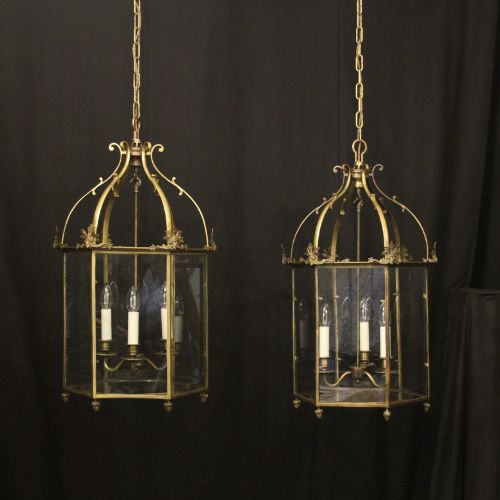
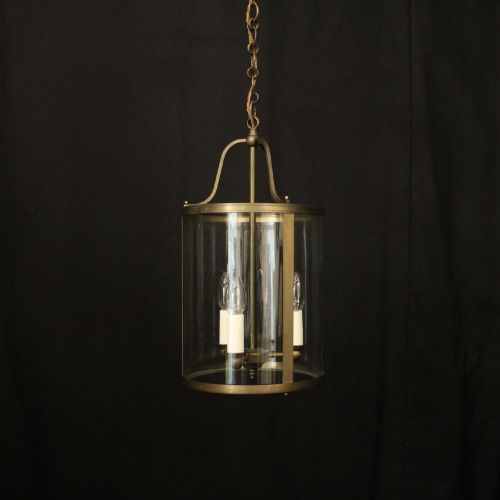
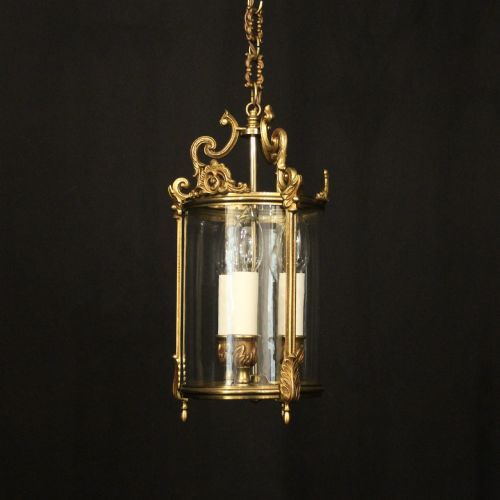
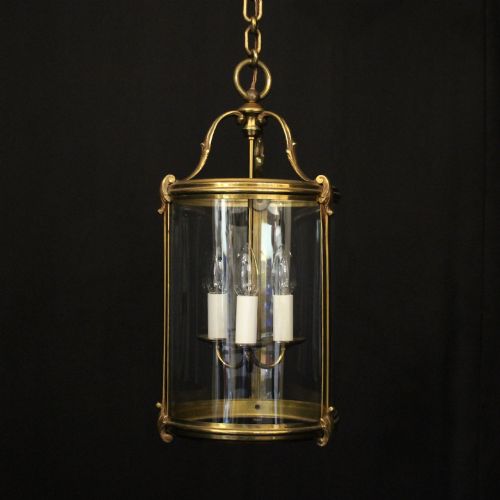
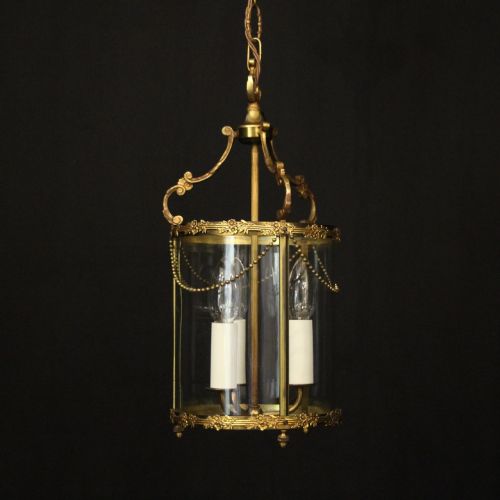
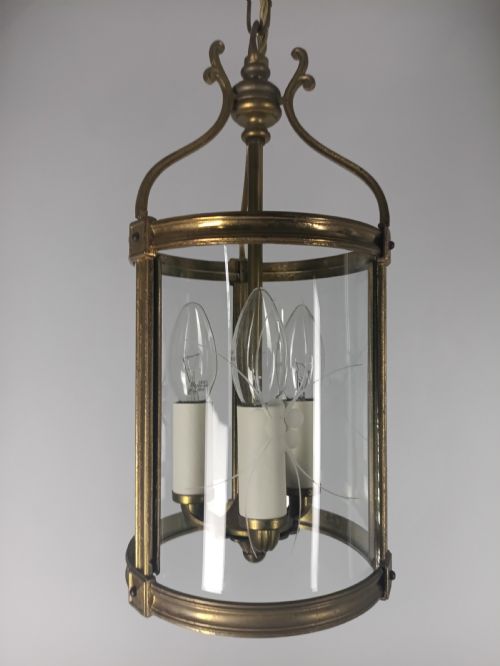
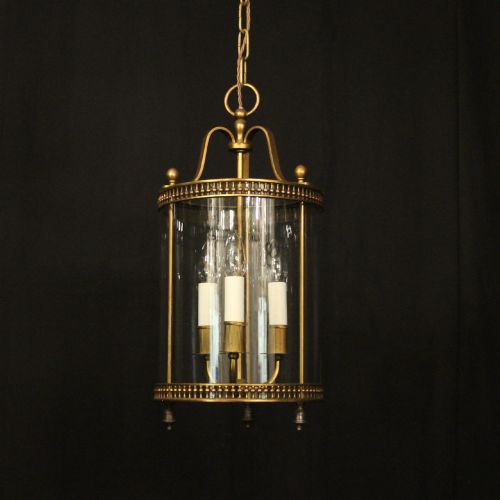


Brass Triple Lantern
A brass triple lantern brings remarkable period character to an entrance hall, offering warm multi-source illumination through glazed panels.
Brass Triple Lantern
A brass triple lantern provides generous illumination from three internal lights housed within a glazed metal framework designed primarily for hallways and ceilings. These pieces originate from the Edwardian period and the 1900s through to the 1930s, reflecting classical design traditions.
The version most commonly encountered on this page is the French hall lantern, frequently styled with convex glass panels and gilt brass or bronze metalwork. Such fixtures draw upon French Chateau, Rococo, Empire, Neoclassical, and Classical design influences.
How they were made
These lanterns combine structural brass, gilt brass, bronze, or gilded bronze frames with fitted glass panels, often featuring etched glass detailing. Metal components are cast and polished, then occasionally gilded to achieve a rich metallic finish.
Convex glass panes are curved to fit the enclosing metal framework, diffusing the light from the three internal bulbs across the hallway. Metalwork exhibits varied surface treatments, ranging from polished brass to gilt bronze.
Brass Triple Lantern Retail Price Guide 2026
Typical asking prices for brass triple lantern among the pieces listed under this phrase on Sellingantiques today, from the lower quarter to the upper quarter. They describe what is for sale here now, not the wider market.
Current listings feature pieces spanning the Edwardian era and the 1900s through to the 1930s, utilising brass, bronze, and glass.
What varies in quality
Quality differences emerge in the weight and complexity of the metal casting, distinguishing standard cast brass frames from finely chased gilt bronze or heavily gilded brass mounts. Heavier bronze and gilt metalwork retains crisp architectural detailing across the decorative mounts.
The glass execution also separates tiers of quality, particularly where panes are convex and etched rather than flat and plain. The subtlety of the gilding and the precision of the glass fitting dictate the overall refinement of the lantern.
The Brass Triple Lantern Glossary
- Convex glass
- Glass formed with an outward curve, designed to bend light and soften the internal bulb visibility. This technique enlarges the visual presence of the lantern.
- Gilt brass
- Brass coated with a thin layer of gold or gold-coloured leaf to impart a rich sheen. This finish protects the underlying metal while altering its visual tone.
- Bronze
- An alloy consisting primarily of copper, historically utilised for durable and finely cast decorative objects. It supports intricate surface chasing and patination.
- Edwardian
- A stylistic period spanning the early twentieth century, noted for lighter proportions and refined classical revivals. Pieces from this era often balance traditional forms with simpler domestic requirements.
- French Empire
- A neoclassical design style originating in nineteenth-century France, characterised by monumental symmetry and military motifs. Subsequent lantern iterations frequently borrow these robust decorative elements.
Brass Triple Lantern: Frequently Asked Questions
Where should a brass triple lantern hang?
These fixtures suit entrance halls, corridors, and high-ceilinged vestibules where multi-source illumination can project evenly across the space. Their proportions demand adequate vertical clearance to allow full appreciation of the hanging frame.
Positioning the lantern centrally ensures the three internal lights adequately distribute illumination without obstruction from surrounding architectural elements.
How do I identify a French style lantern?
French lanterns typically incorporate distinct stylistic markers such as gilt bronze mounts, classical proportions, and convex etched glass panels. Design influences range from ornate Rococo curves to structured Empire symmetry.
Examining the metal finishing and decorative cast elements reveals the specific design vocabulary employed by the maker.
Are these lanterns suitable for modern wiring?
Many surviving examples have been adapted or rewired to accommodate contemporary electrical standards while preserving the historic exterior housing. Checking the internal fittings confirms whether modern cables and lamp holders are installed.
Professional installation is recommended to support the weight of the metal and glass assembly securely from the ceiling.
What is the difference between brass and bronze?
Brass is an alloy of copper and zinc, yielding a bright yellowish metallic appearance that can be polished or gilt. Bronze primarily combines copper with tin, producing a darker, denser material suited to intricate casting.
Both metals appear across these lanterns, offering different surface textures and weight profiles depending on the specific period.