
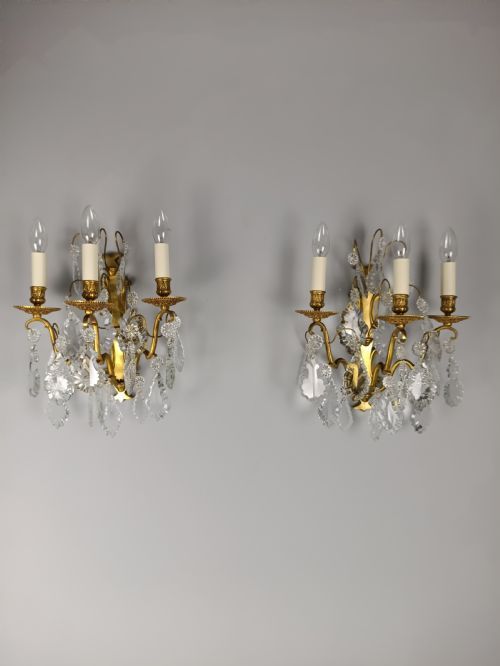


Brass Three Arm Applique
These brass three arm applique fixtures bring decorative wall illumination to interiors, offering multiple candle or bulb branches.
Brass Three Arm Applique
A brass three arm applique is a wall-mounted lighting fixture featuring three distinct branches or arms designed to hold candles or electric bulbs. When you search this phrase, you find wall lights and sconces originating primarily from French and English workshops across the nineteenth and twentieth centuries.
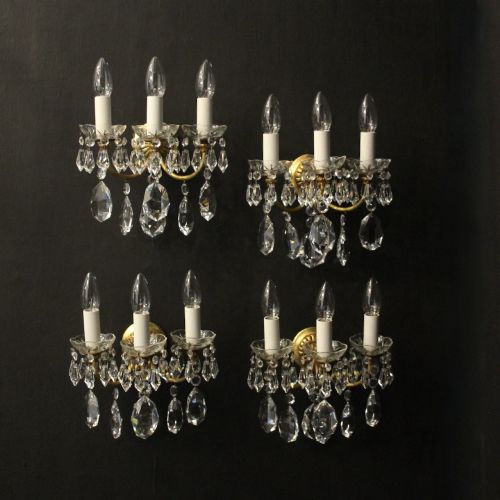
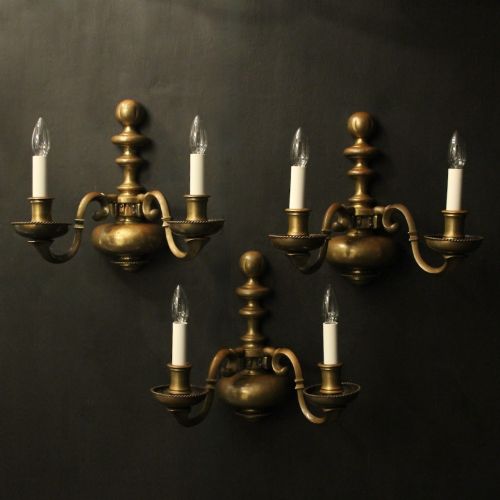
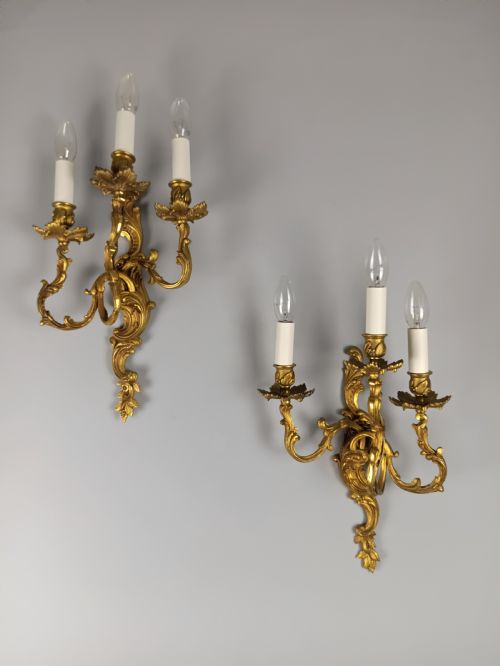
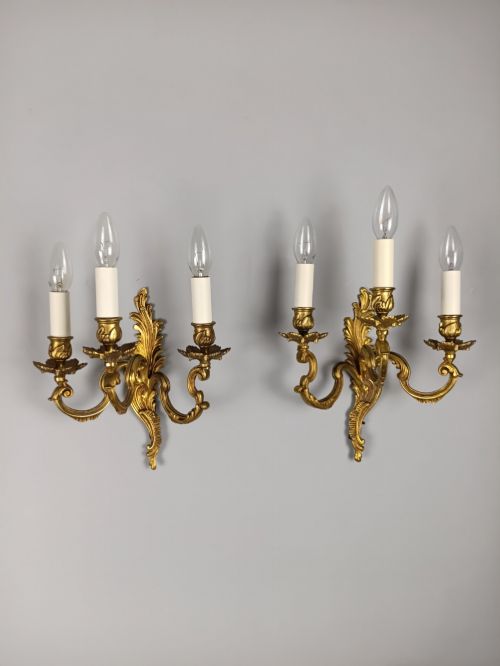
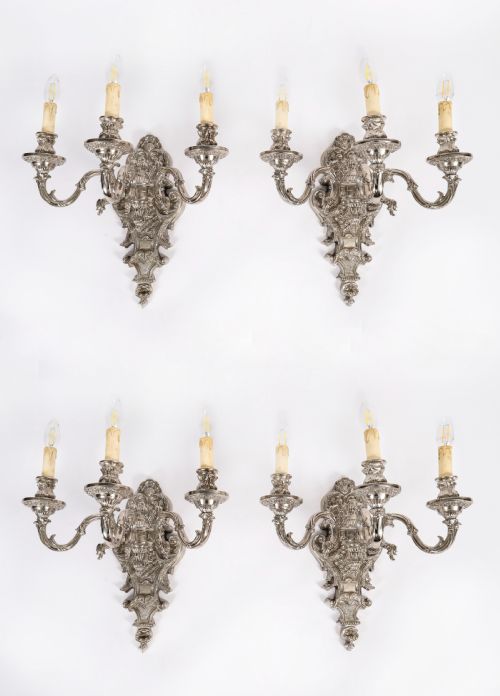
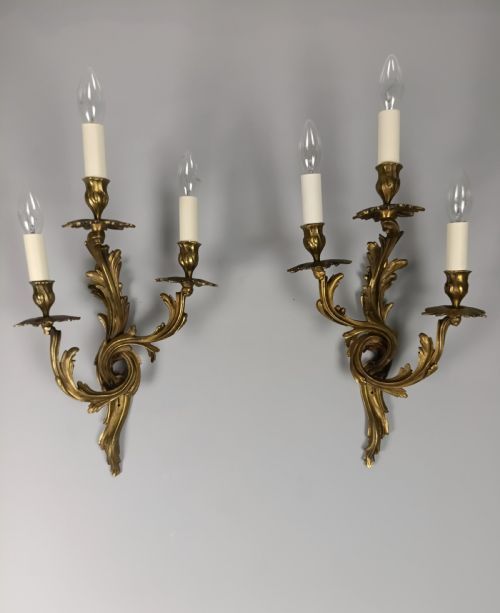
The pieces appearing here span periods from the Victorian era up to the nineteen-thirties, incorporating styles such as French Rococo, Louis XVI, Baroque, and English Traditional. Pairs and sets of four dominate the selection, often utilised symmetrically flanking mirrors, fireplaces, or architectural doorways.
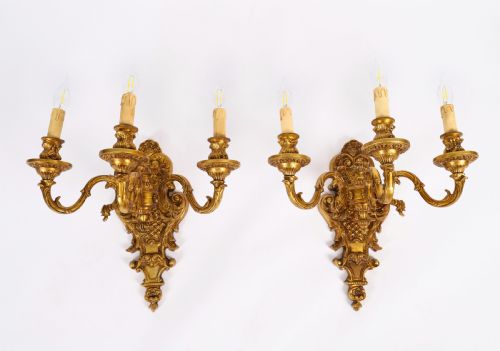
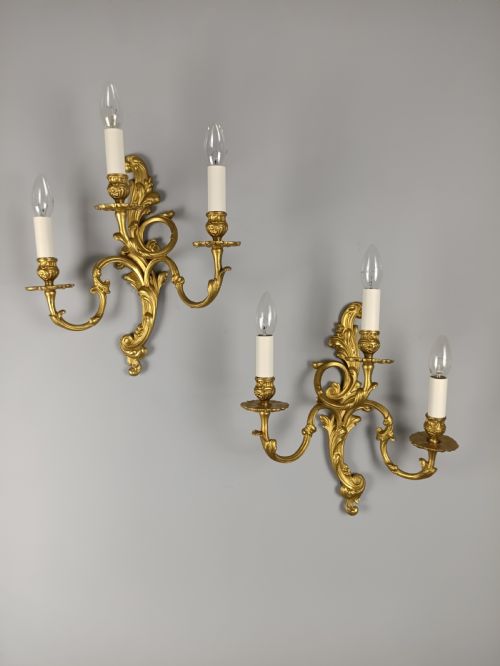
Buyers encounter forms varying from simple patinated brass branches to heavily ornamented gilded bronze castings embellished with crystal drops. French examples in particular display exuberant scrolling acanthus leaves, shell motifs, and asymmetrical Rococo flourishes.
What varies in quality
Quality rests significantly in the crispness of the metal chasing and the weight of the casting. Superior examples show deep, hand-tooled definition in the acanthus leaves and scrolls, whereas lesser pieces rely on softer, unrefined factory moulds.
The richness and durability of the surface finish further distinguish tiers of production. Heavy fire gilding or thick ormolu retains a warm, deep lustre over centuries, while thinner applied finishes tend to wear down and reveal the base metal underneath.
Some of these heavy bronze arms have spent a century listening to dinner table gossip without ever dropping a single crystal pendant.
Maison Baques
The Brass Three Arm Applique Glossary
- Applique
- A wall-mounted lighting fixture or sconce designed to hold candles or electric lamps. These decorative brackets project from vertical surfaces.
- Ormolu
- Finely chopped gold-mercury amalgam applied to a bronze base, creating a rich golden surface finish. This technique was widely utilised by French makers.
- Rococo
- A decorative style characterised by asymmetrical scrolling, shell motifs, and natural curves. It appears frequently on nineteenth-century French wall lights.
- Patina
- The surface sheen and coloration developed by metal through age, handling, and oxidation. Natural patination distinguishes older brass components from modern bright finishes.
- Louis XVI
- A neoclassical style defined by straight lines, symmetry, classical urns, and acanthus foliage. Pieces in this taste date from the nineteenth century onward.
Brass Three Arm Applique: Frequently Asked Questions
How were these wall lights originally used?
These fixtures were mounted in pairs or sets along reception room walls to supplement natural daylight and candle illumination. Reflective surfaces like mirrors placed between them helped amplify the available light.
Over time, many of these antique backplates and arms have been carefully adapted for modern electrical wiring while retaining their original aesthetic appeal.
How do I tell a nineteenth-century piece from a later one?
Nineteenth-century examples often display heavier bronze or brass castings with hand-chased surface details and deeper patination. Twentieth-century productions from the nineteen-twenties and thirties sometimes show different assembly techniques and lighter metal gauges.
Examining the backplate fixing points and the wear patterns on the gilt or patinated surfaces helps clarify the manufacturing era.
How do I care for gilded brass and bronze?
Dusting gently with a dry, soft cloth is the best method for maintaining the surface of gilded bronze and brass wall lights. Avoid abrasive cleaners or metal polishes that can strip away thin historical gilt layers.
Keeping the fixtures away from excessive moisture helps preserve the integrity of both the metal and any suspended crystal drops.