


Brass Studded Seating
Brass studded seating brings tangible character to a room through traditional upholstery secured with metal tacks.
Brass Studded Seating
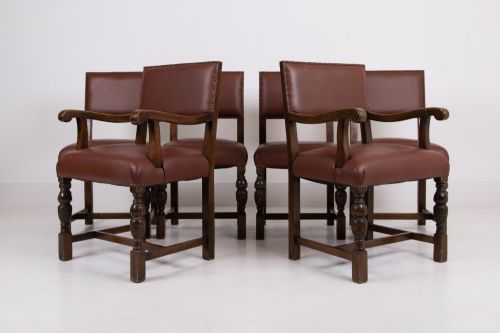
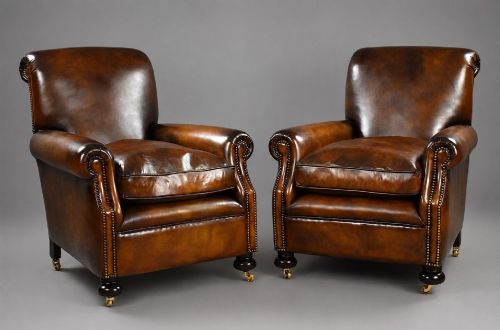
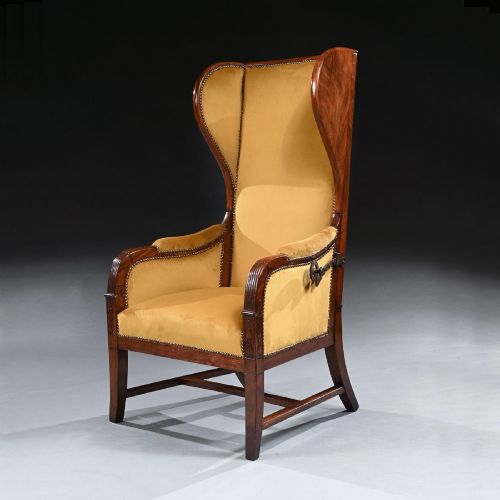
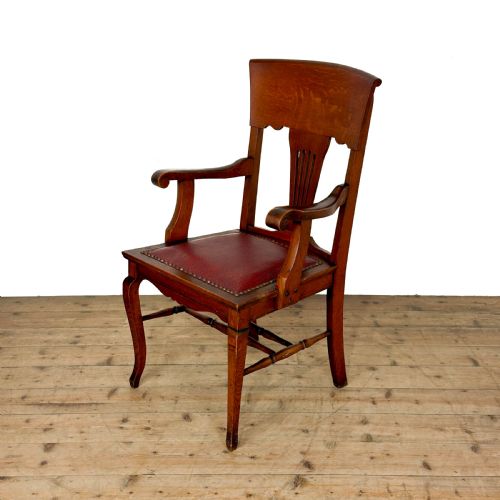
When buyers search for brass studded seating, they encounter practical pieces designed for everyday use, ranging from robust dining chairs to comfortable library armchairs and club fenders. The selection spans distinct eras, from the 18th century through the Georgian, Victorian, and Edwardian periods up to the 1930s. Mahogany and oak frame much of this furniture, upholstered in leather or fabric and accented with metal tacks.
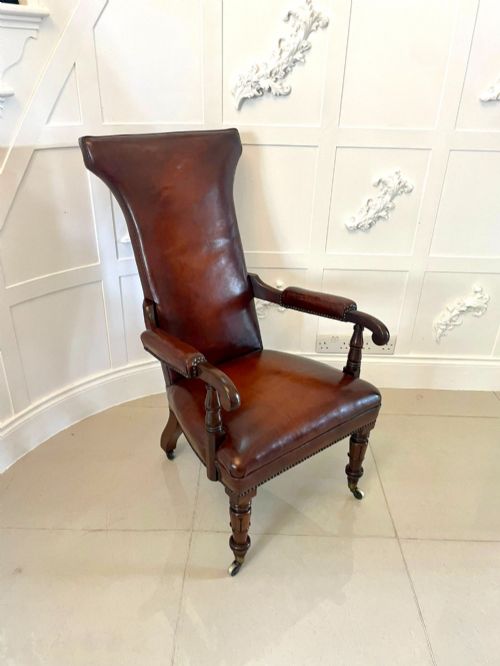
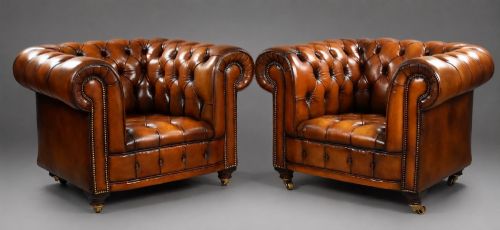
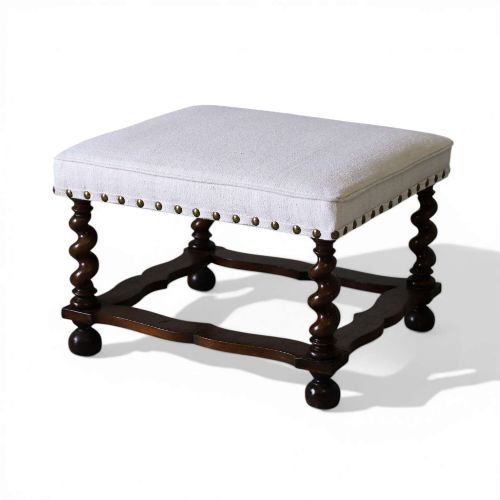
Armchairs, dining chairs, stools, benches, and club fenders dominate the current selection, showing how makers integrated metal fastenings into functional household items. Examples include Gainsborough chairs, Chesterfield sofas, and footstools utilising wood frames paired with leather upholstery. These forms provide a grounded, traditional aesthetic suitable for studies, living rooms, and halls.
How they were made
Craftsmen built these pieces using dense hardwoods such as mahogany, oak, walnut, rosewood, and yew wood for structural integrity. Frames often exhibit traditional joinery alongside turned legs, cabriole supports, or barley-sugar details.
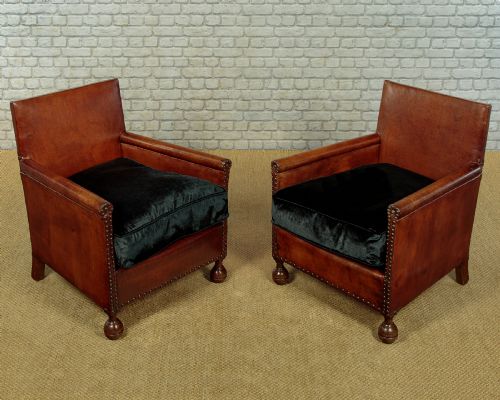
Upholstery required stretching materials like leather, velvet, or fabric over padding and securing the edges firmly with brass studs. These individual metal tacks served both a functional purpose in holding the textiles tight and a decorative role along the seams.
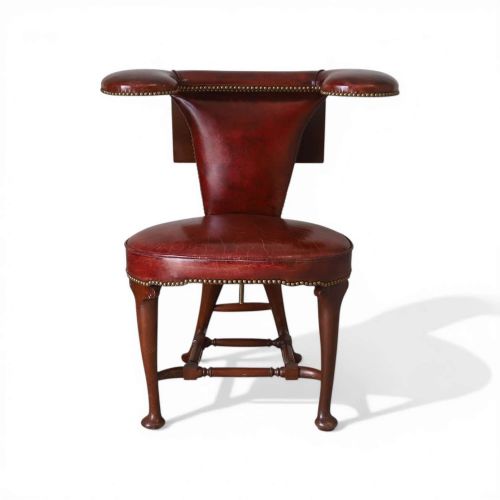
Cockfighting chairs appear in dark red leather, built with a narrow wooden back designed to straddle backward.
What varies in quality
The standard of timber selection and the precision of the frame construction set examples apart, with well-figured mahogany or solid oak representing superior building methods. Carved details, such as fluted legs or shaped structural elements, reflect the maker's time and skill.
The grade of the leather and the regularity of the brass stud placement indicate the original workshop's attention to detail. Patina accumulated through age on both the wood and the hide distinguishes pieces with genuine history from later interpretations.
Howard & Co, London
The Brass Studded Seating Glossary
- Gainsborough chair
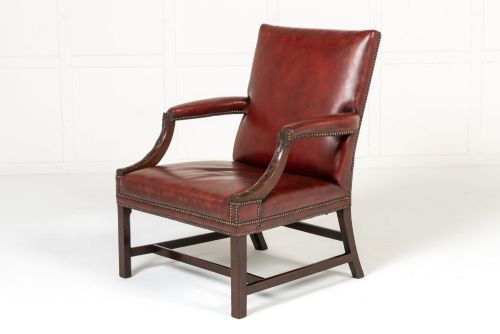
- A wide, open-armed armchair with a padded seat and back, typically dating from the Georgian period.
- Club fender
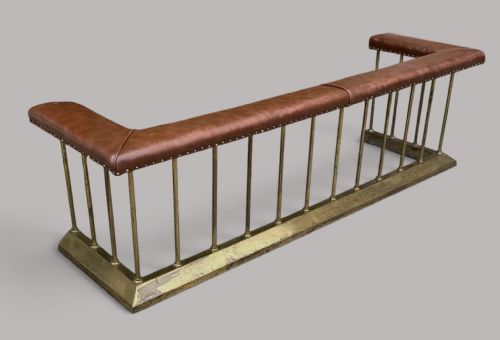
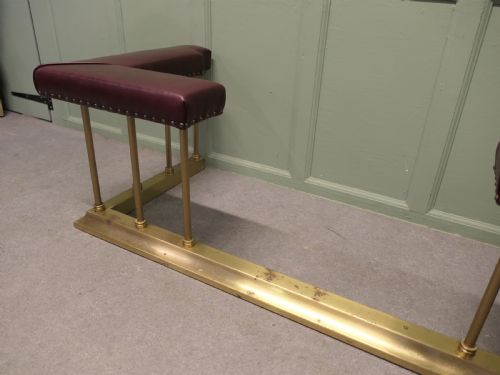
- A low, brass-framed hearth seat with upholstered top rails, placed around an open fireplace.
- Chesterfield
- A large upholstered sofa characterised by deep buttoning and rolled arms of equal height to the back.
- Carver chair
- An armchair designed for the head of a dining table, featuring wooden arms matching the dining chairs.
- Cabriole leg
- A furniture leg that curves outward and then tapers inward, inspired by the shape of an animal's leg.
Brass Studded Seating: Frequently Asked Questions
What is a club fender?
A club fender is a low metal frame featuring upholstered seats running along the top edges, designed to sit directly around a fireplace hearth. This arrangement provides fireside seating while keeping people at a comfortable distance from the heat.
Most examples utilise brass structures paired with leather pads. They appeared in various forms throughout the nineteenth and early twentieth centuries.
How do I identify a Gainsborough chair?
A Gainsborough chair is a specific type of upholstered armchair originating in the Georgian era, characterised by open wooden arms and a high padded back. The frame usually incorporates mahogany with cabriole or straight legs.
The seat and back are covered in leather or fabric, secured around the wooden framework with brass studs.
Are these pieces suitable for daily use?
These items were built for practical domestic environments, utilising sturdy hardwoods and durable leather upholstery designed to withstand regular sitting. Solid construction methods ensure they remain functional pieces of furniture.
Routine maintenance involves treating leather surfaces with appropriate balms to keep the hide supple and prevent cracking over time.
How do I distinguish between periods?
Period identification relies on observing timber choices, leg shapes, and upholstery styles characteristic of specific eras. Georgian and 18th-century pieces often feature mahogany and restrained carving, while Victorian examples lean toward heavier frames and buttoned leather.
Later 20th-century items, including 1920s and Art Deco pieces, introduce streamlined profiles and club styles while retaining traditional studwork.