
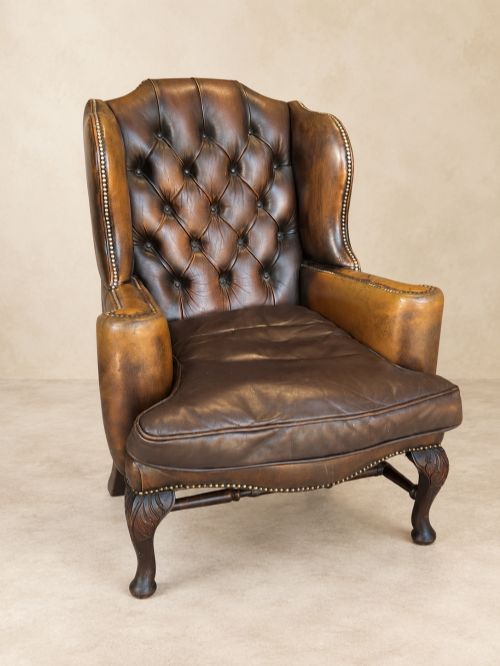
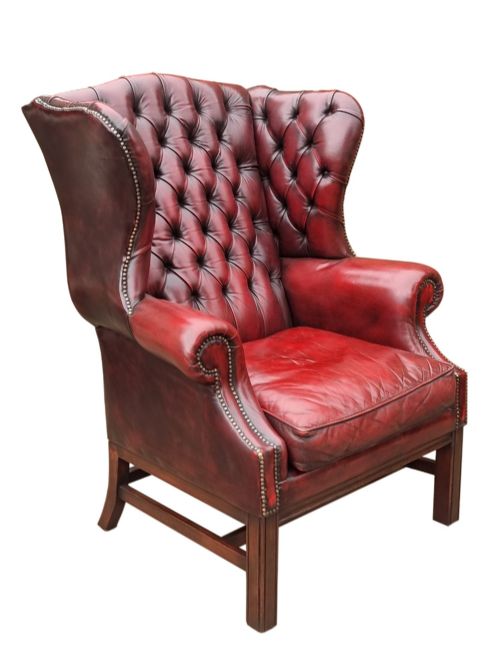
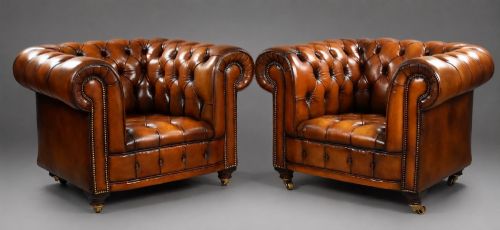
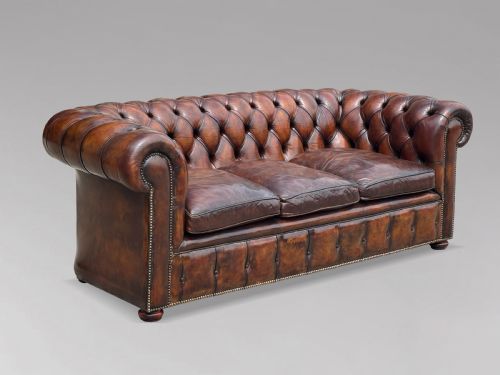
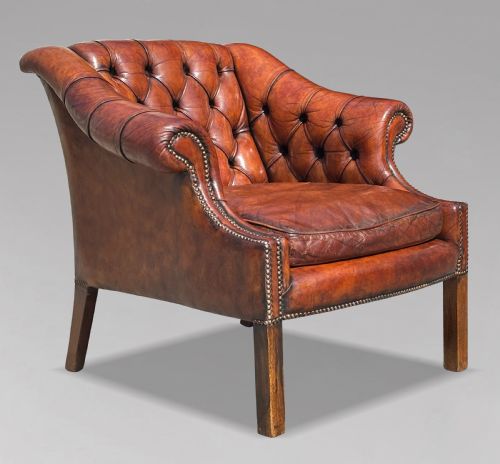
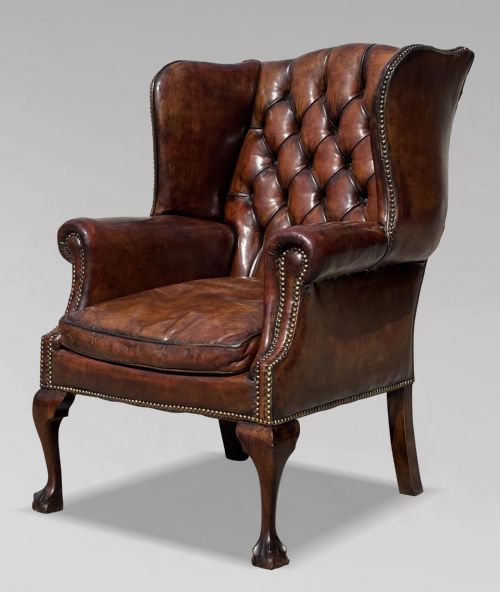

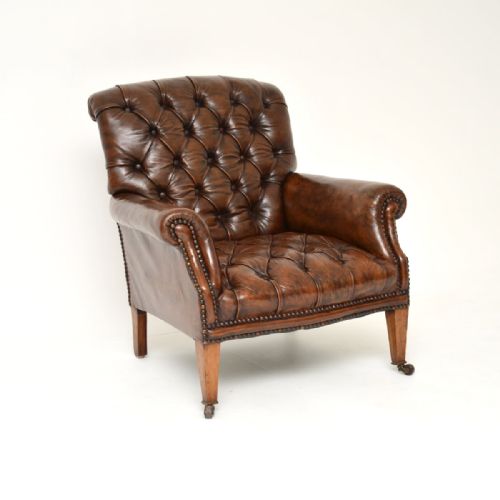


Brass Studded Chesterfield
A brass studded chesterfield brings heavy leather and individual metal tacks together in a seating form built to last generations.

Brass Studded Chesterfield
When searching for a brass studded chesterfield, buyers encounter deep buttoned seating built in forms ranging from low three-seater sofas to wing back armchairs, club chairs, and ottomans. These pieces trace their lineage through Victorian, Edwardian, and Georgian periods, employing traditional silhouettes that anchor a library or study.
The most common examples on this page are nineteenth-century and early twentieth-century brown leather armchairs and sofas featuring buttoned upholstery and nailhead trim. Alongside full-sized settees, the selection includes footstools, desk chairs, and porters armchairs originating from diverse decades.
Makers and workshops of the past constructed these items from timber and hardwood frames before applying substantial cattle hides fastened with metal tacks. Each variation reflects the prevailing taste of its specific decade, from regency framework to later Edwardian proportions.
How they were made
Traditional construction relies on sturdy hardwood or mahogany timber frames designed to support dense internal stuffing. Workshops utilised horse hair and coil springing inside the seat and back to provide firm yet resilient support.
Upholsterers then applied leather hides over the padding, securing the material by hand using individual brass tacks or studs. This method required precise tension so the metal fastenings held the folds of the deep buttoning securely in place.
Materials recorded across the inventory include mahogany, hardwood, leather, and individual brass tacks.
What varies in quality
The calibre of a piece depends heavily on the grade of the leather and the integrity of the internal stuffing. Hand-dyed hides that retain natural character sit at the higher end, alongside items retaining original horse hair padding.
Frame construction also dictates value, with solid mahogany or hardwood frames offering superior longevity compared to lighter timber substitutes. Skilled execution of the deep buttoning and hand-hammered brass tacks distinguishes standard utility seating from finer library and boardroom examples.
Howard & Sons·Gillows
The Brass Studded Chesterfield Glossary
- Chesterfield
- A deep-buttoned upholstered sofa or armchair characterised by arms and back of the same height. This traditional seating form has remained popular in British interiors for centuries.
- Button-back
- An upholstery technique where buttons are pulled deep into the padding to create a padded diamond pattern. This method secures the internal filling and provides firm structural support.
- Porters armchair
- A high-backed enclosed seat designed to block draughts in large entrance halls. Early iterations often feature enclosed sides and brass studded leather upholstery.
- Wing armchair
- An upholstered seat featuring projecting side panels designed to shield the occupant from draughts. These chairs frequently incorporate leather upholstery and brass tack detailing.
- Tack
- A small metal nail with a large head used to secure leather edges and webbing to the wooden frame. Rows of these fastenings create the distinctive decorative border on traditional furniture.
Brass Studded Chesterfield: Frequently Asked Questions
How do I clean antique leather?
Dust the surface regularly with a soft dry cloth to prevent dirt accumulation in the button creases. Apply a suitable leather conditioner periodically to keep the hide supple.
Avoid harsh chemical cleaners or excessive moisture which can damage the aged surface. Professional restoration is recommended for deeply neglected hides.
What is hand dyed leather?
Hand dyeing involves applying colour manually to the hide to build up rich tonal variations and an aged appearance. This technique highlights the natural grain and texture of the leather.
Pieces treated this way often develop a distinct patina over time. It differs from uniform factory colouring by offering unique depth in every panel.
Are these sofas comfortable for daily use?
Traditional construction methods utilise firm coil springs and dense horse hair stuffing. This creates a supportive seat rather than a soft sinking cushion.
Over decades of use, the internal padding adapts to the sitter while maintaining structural integrity. They provide excellent upright support for reading or working.
How do I identify a Victorian chesterfield?
Nineteenth-century examples typically feature heavy hardwood frames and hand-turned wooden legs often fitted with castors. The leather is secured with individual hand-driven brass tacks rather than modern strip fastening.
Inspect the underside and interior webbing for signs of age and traditional handmade construction. Period stitching and wear patterns also help confirm the era.