
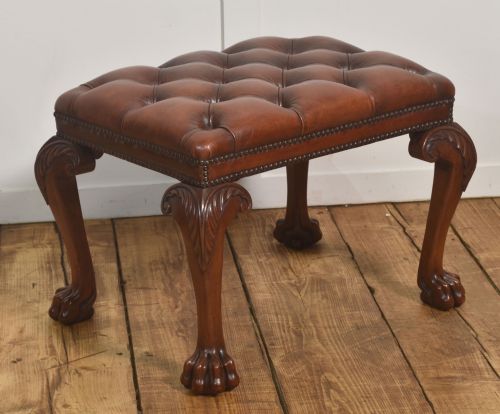
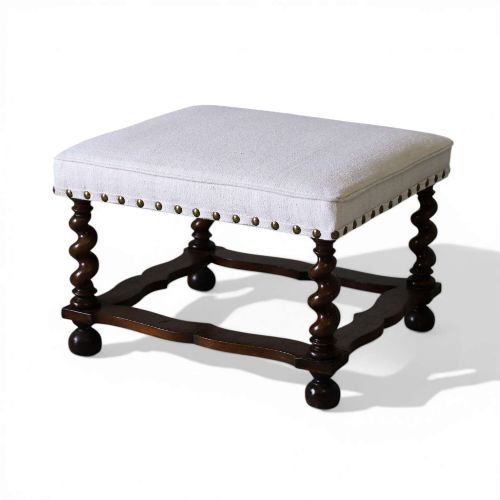
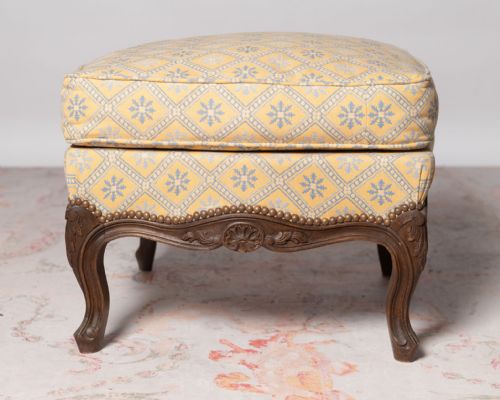


Brass Stud Ottoman Stool
A brass stud ottoman stool brings sturdy timber frames and brass detailing together, offering a practical seat or footrest for traditional interiors.
Brass Stud Ottoman Stool
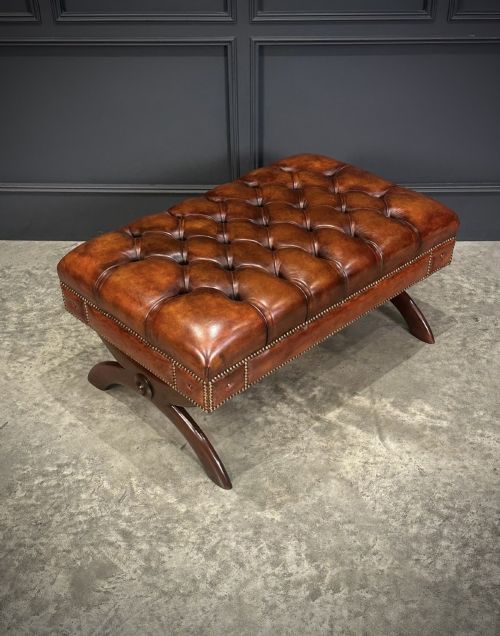
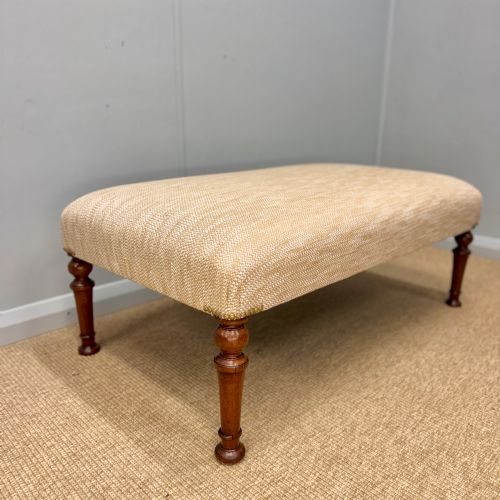
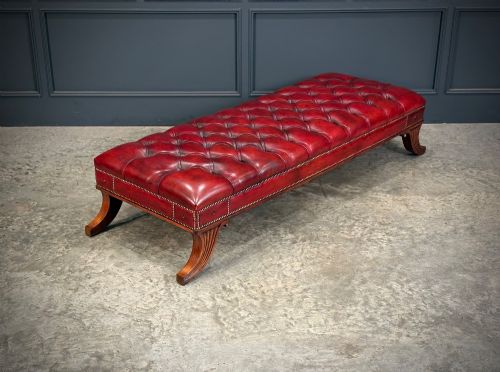
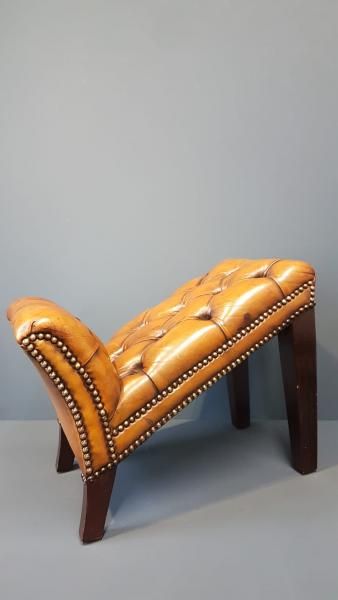
A brass stud ottoman stool appears across various periods, ranging from the Regency and Victorian eras to Edwardian and 1930s designs. These pieces function as footstools, low hall seats, long benches, and box ottomans.
The inventory on this page spans simple upholstered footstools to large buttoned leather pieces and box ottomans with storage. Mahogany, rosewood, walnut, and oak form the structural timber frames.
Makers drew on diverse styles, including Chippendale, William and Mary, and French Chateau designs. Buyers frequently encounter low seating fitted with brass castors and decorative studwork.
Timber and upholstery methods
Framing relies on dense hardwoods such as mahogany, rosewood, walnut, and oak. Joinery techniques secure the structural integrity of these low seats and benches.
Upholstery involves leather, fabric, silk, and chenille secured with brass studs. Deep buttoning and box construction appear across nineteenth-century and later examples.
Several low stools come equipped with original brass castors, ready to roll across the floor at a moment's notice.
Evaluating timber frames and upholstery detail
Quality rests in the selection of timber and the precision of the carving on cabriole or fluted legs. Heavier rosewood and mahogany frames demonstrate greater structural ambition than later oak or softwood variants.
The execution of the upholstery, from deep buttoning to the regular placement of brass studs, distinguishes finer workshop production from standard commercial seating.
The Brass Stud Ottoman Stool Glossary
- Ottoman
- A low upholstered seat or footstool, sometimes featuring internal storage for blankets or linens. These pieces function as dual-purpose furniture in reception rooms.
- Cabriole leg
- A furniture leg that curves outward and then tapers inward, mimicking an animal limb. This form appears frequently on eighteenth-century and Victorian walnut stools.
- Buttoning
- An upholstery technique where depressions are formed in padded surfaces using secured threads or twine. This method creates the characteristic tufted pattern seen on leather footstools.
- Box ottoman
- A hinged seat opening to reveal a compartment beneath the cushion. These storage pieces are found in Regency and later nineteenth-century designs.
- Castor
- A small wheel mounted on a swivel attached to the base of furniture legs. They allow heavy mahogany and walnut stools to move smoothly across floor coverings.
Brass Stud Ottoman Stool: Frequently Asked Questions
Where should I place a brass stud ottoman stool?
These low seats suit placement in front of a fireplace or sofa as a functional footrest. Larger box ottomans also serve as occasional seating or central coffee tables in a traditional room.
Their compact proportions allow them to sit neatly beneath windows or at the foot of a bed. Long benches work particularly well in hallways and dressing rooms.
How do I care for antique leather upholstery?
Keep leather surfaces clean by dusting them regularly with a soft, dry cloth. Avoid placing antique pieces in direct sunlight or near heat sources to prevent the material from drying out.
Treat the leather periodically with appropriate conservation balms to maintain its flexibility. Ensure brass studs remain dry during routine cleaning to prevent tarnishing.
How do I distinguish a Victorian stool from an 18th-century original?
Examine the secondary timbers inside the frame and the wear patterns on the underside of the feet. Victorian interpretations often incorporate machine-cut elements and heavier nineteenth-century turning.
Earlier pieces display hand-cut joinery and timber characteristics specific to Georgian workshops. Stylistic revival pieces from the later nineteenth century frequently blend elements of earlier reigns.