


Brass Stud Accent Chair
A brass stud accent chair brings substance and character to a room, offering sturdy seating grounded in traditional craftsmanship and enduring materials.
Brass Stud Accent Chair
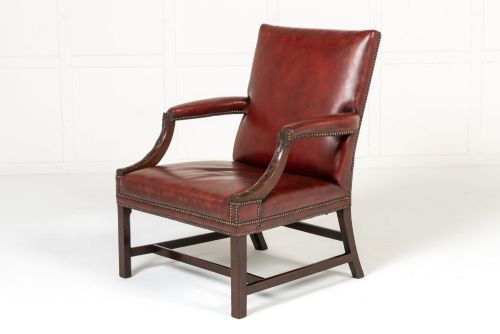
When you search for a brass stud accent chair, you encounter a varied selection of antique seating primarily from the eighteenth and nineteenth centuries, alongside early twentieth-century examples. These pieces span form types such as library armchairs, carvers, hall chairs, and prayer chairs, reflecting diverse origins from English mahogany designs to French open armchairs.
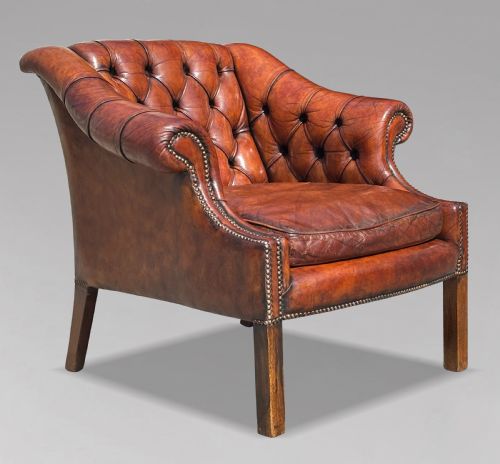
The assortment on this page relies heavily on substantial wooden frames paired with upholstered seats and backs, often finished with decorative metal nailing along the borders. You meet everything from sturdy oak and walnut frames to grand Gainsborough chairs and leather club armchairs designed for daily utility and distinct period presence.
How they were made
The construction of these chairs depends on solid timbers such as mahogany, oak, walnut, and hardwood, shaped into supportive frames by period joiners. Carved decoration appears across many styles, from Georgian mahogany to Gothic Revival oak.
Upholstery techniques involve durable textiles, needlepoint panels, silk, and hand-dyed leather secured to the wooden framework using individual brass studs. These metal tines serve a structural role in fastening the covering while creating a defined decorative border around the edges.
Every single brass stud was hammered into place by hand, meaning thousands of tiny metal thumbprints hold your sitting room together.
What varies in quality
The distinction between ordinary and exceptional examples rests in the depth of timber carving and the architectural proportions of the frame. Superior chairs display crisp detailing on the woodwork and balanced proportions that support both comfort and visual weight.
Materials also dictate the tier of a piece, with fine mahogany and supple hand-dyed leather elevating the work above standard hardwood and basic fabric upholstery. The precision of the brass stud placement and the integrity of the underlying joinery mark the highest standard of execution.
The Brass Stud Accent Chair Glossary
- Gainsborough chair
- A wide, upholstered armchair with open padded arms, originating in the mid-eighteenth century for use in libraries and writing rooms.
- Carver chair
- An armchair, typically matching a set of smaller dining or side chairs, often placed at the head of a table.
- Needlepoint
- A type of counted thread embroidery stitched onto a stiff open-weave canvas, frequently seen on French antique chair panels.
- Gothic Revival
- An architectural and decorative style drawing inspiration from medieval forms, characterised by pointed arches and heavy carved oak.
- Club armchair
- A deep, low-slung upholstered seat covered in leather, built for comfort and heavy domestic use.
Brass Stud Accent Chair: Frequently Asked Questions
How do I use a brass stud accent chair?
These chairs find natural placement in studies, libraries, and living spaces where a substantial seating option is required. They serve well as standalone reading chairs or as occasional seating that adds architectural weight to a room.
Because many examples feature leather or heavy wood construction, they handle daily sitting well while anchoring the surrounding interior scheme.
What periods do these chairs represent?
The selection spans several centuries, starting from eighteenth-century mahogany pieces through nineteenth-century Victorian designs up to early twentieth-century iterations. Styles range from Georgian and Rococo Revival to Gothic Revival and French Provincial.
Each period brings distinct timber choices and carving styles, allowing you to trace the evolution of domestic seating design.
How do I care for leather upholstery?
Leather upholstery benefits from regular dusting and occasional treatment with appropriate conditioning balms to keep the hide supple. Avoiding direct sunlight prevents the leather and the surrounding wood from drying out over time.
Gentle maintenance preserves the hand-dyed finish and the lustre of the individual brass studs bordering the fabric.
What woods were commonly used?
Cabinet makers utilised dense hardwoods including mahogany, oak, walnut, and regional hardwoods depending on the origin of the chair. English pieces frequently turned to mahogany and oak, while continental and global examples incorporated local timbers.
These sturdy woods provided the structural backbone necessary to support heavy upholstery and decades of use.
Are these chairs comfortable for daily use?
Many of these forms, particularly library armchairs and club chairs, were engineered specifically for relaxed sitting and extended reading. Their deep seats and upholstered backs offer substantial physical support compared to rigid dining seating.
The inclusion of padded arms further enhances their suitability for everyday relaxation in a study or sitting room.