

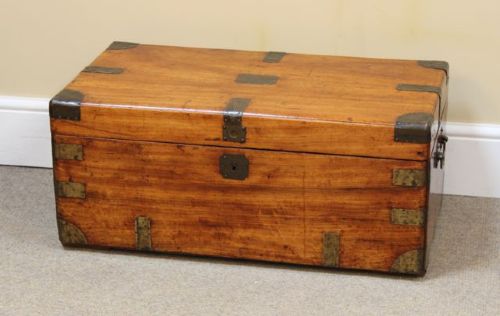
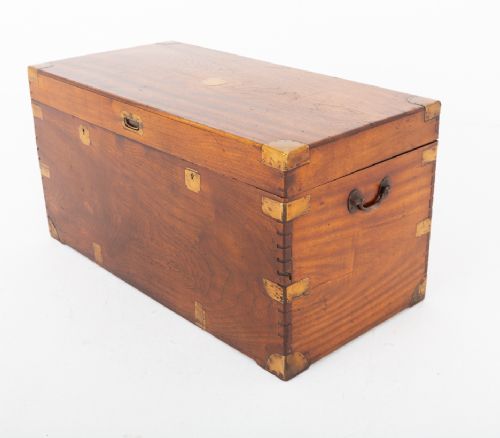

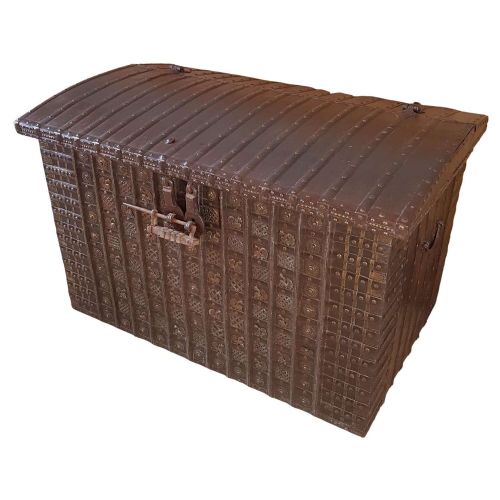


Brass Strap Trunk
A brass strap trunk offers robust travelling storage, built from dense woods with metal reinforcement to endure long journeys.
Brass Strap Trunk
A brass strap trunk is a substantial storage piece designed for travel and expedition use, appearing in forms such as campaign chests, blanket boxes, and heavy coffers. Buyers searching this phrase seek durable chests that combine functional storage with distinctive metal mounts and corner braces.
The versions most frequently met on this page date from the nineteenth century, including Victorian examples and military campaign pieces. These items often originate from British, Indian, or Chinese export workshops, reflecting global travel and trade during the period.
Forms range from dome-top coffers and merchants' trunks to miniature display chests and officer's travelling chests. Each variant utilises sturdy timbers like camphor wood, teak, oak, or pitch pine, secured with heavy brass straps or iron bands.
What varies in quality
Quality depends on the selection of primary timbers and the integration of the metal strapping. Dense woods like camphor wood or teak indicate higher utility for travel, whilst well-fitted brass mounts demonstrate superior craftsmanship.
The presence of original inscriptions, specialised locks, or internal compartments elevates a piece beyond standard utilitarian storage. The precision of the metalwork and the integrity of the timber carcase determine the standing of each trunk.
Brass Strap Trunk Retail Price Guide 2026
Typical asking prices for brass strap trunk among the pieces listed under this phrase on Sellingantiques today, from the lower quarter to the upper quarter. They describe what is for sale here now, not the wider market.
Listings feature nineteenth-century pieces alongside eighteenth-century examples, utilising camphor wood, teak, oak, and pitch pine.
The Brass Strap Trunk Glossary
- Brass strap trunk
- A storage chest reinforced with metal bands of brass across the exterior to protect the wood during transit. These pieces often feature flush-fitting handles and reinforced corners.
- Campaign trunk
- A portable chest built for military officers on the move, designed to withstand frequent transport. Such chests typically incorporate sturdy handles and protective metal hardware.
- Coffre fort
- A heavy strongbox or coffer utilised for securing valuables and documents during travel. These reinforced boxes often feature complex locking mechanisms.
- Damchiya dowry chest
- A traditional Indian storage chest used for domestic textiles and valuables, often featuring iron banding. These regional pieces display distinct decorative carving and heavy metal work.
- Camphor wood
- An aromatic timber frequently utilised for campaign and export trunks to deter insects. The wood possesses a distinct scent and natural durability.
Brass Strap Trunk: Frequently Asked Questions
What is a brass strap trunk?
A brass strap trunk is a heavy wooden storage chest reinforced with metal bands to withstand travel. These pieces were built for officers, merchants, and travellers.
They combine practical internal storage with robust exterior protection. The metal strapping secures the corners and edges against damage during transit.
How were these trunks used?
These trunks served as portable wardrobes and storage vaults for individuals undertaking long journeys. Officers and merchants used them to transport uniforms, papers, and valuables.
Many examples feature recessed handles and secure locks suited for shipping or carriage travel. Their durable construction allowed them to endure repeated loading and unloading.
Where do these chests originate?
The pieces originate from various regions influenced by trade and military movement, including British workshops, India, and China. Export pieces often utilised local timbers like teak and camphor wood.
European examples commonly employ oak, elm, or pitch pine. The origin typically dictates the choice of wood and the style of metal mountings.
How do I care for a wooden trunk?
Maintenance involves keeping the timber nourished with appropriate waxes and protecting the brass from excessive moisture. Regular dusting preserves the surface finish of both wood and metal.
Placement away from direct heat sources prevents the timber from splitting. Careful handling of original hinges and locks ensures their continued mechanical function.