

Brass Standard Light
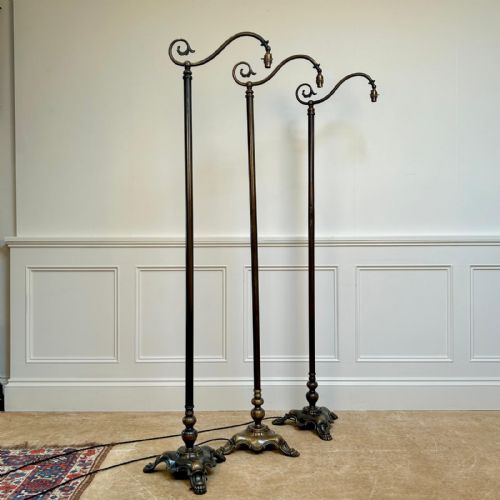
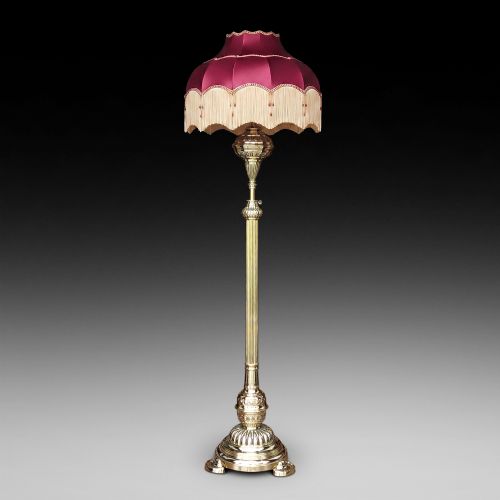
A brass standard light brings adjustable height and warm illumination into a room, spanning Victorian oil conversions to early twentieth-century Arts and Crafts designs.
Brass Standard Light
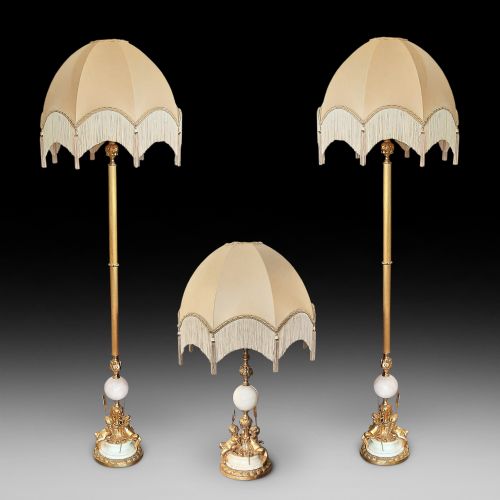
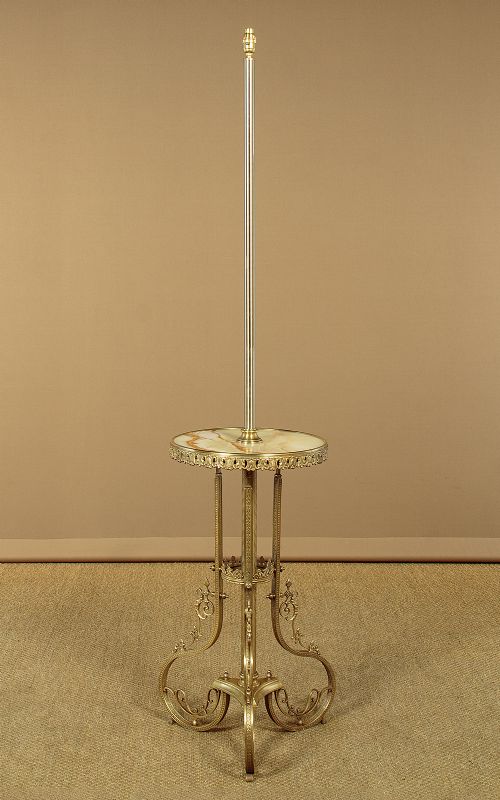
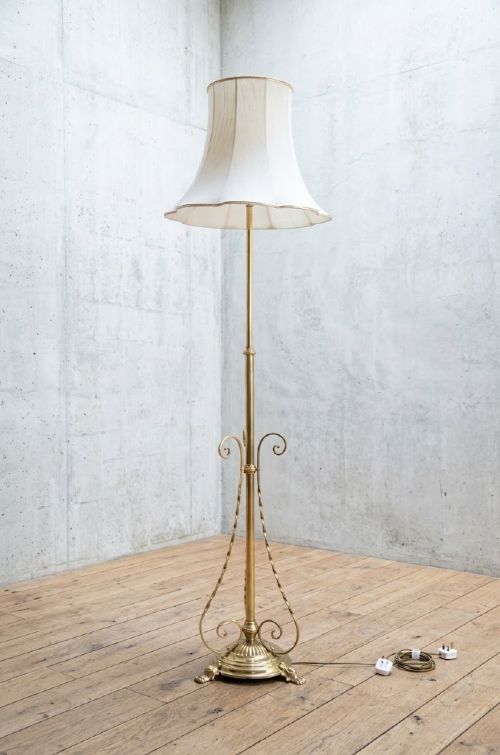
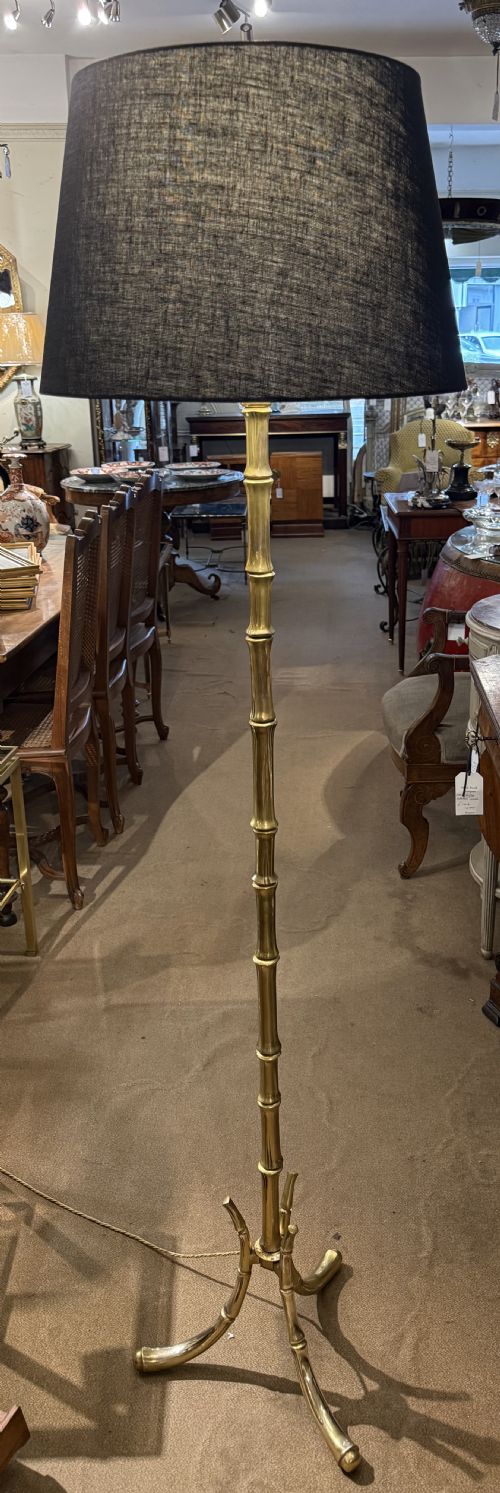
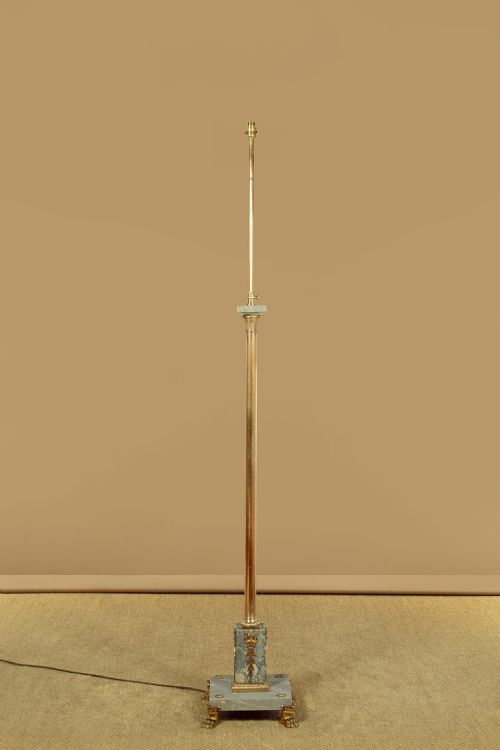
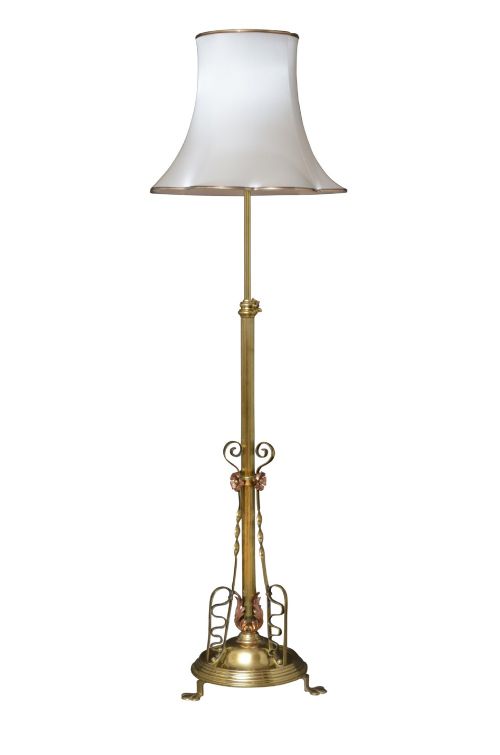
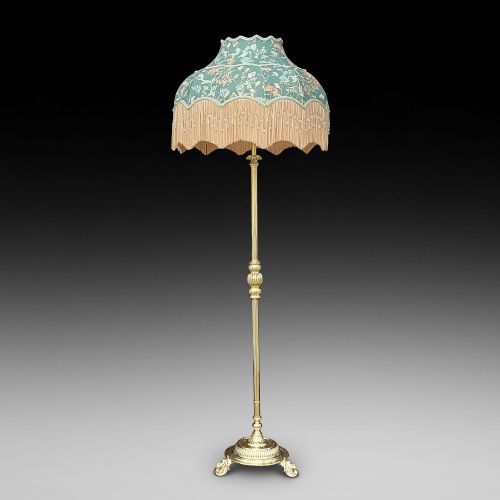
A brass standard light is a tall floor-standing illumination piece designed to provide ambient or reading light in domestic interiors. When searching this phrase, buyers encounter vertical lighting fixtures that frequently incorporate mechanisms for adjusting height or extending arms.
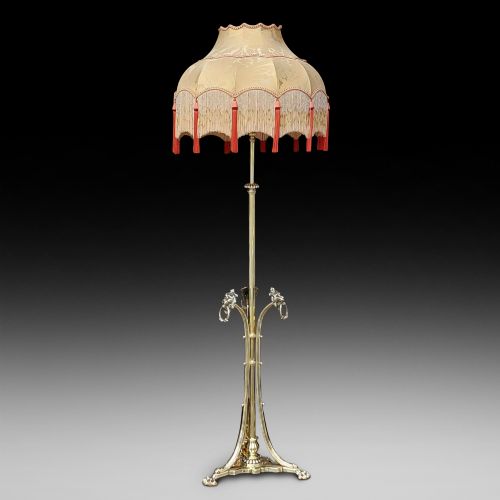
The selections available span from the nineteenth century through the Edwardian era and into the 1920s and 1930s. Victorian and Edwardian examples often feature telescopic columns, while Arts and Crafts and Art Nouveau interpretations display distinct stylistic flourishes in the metalwork.
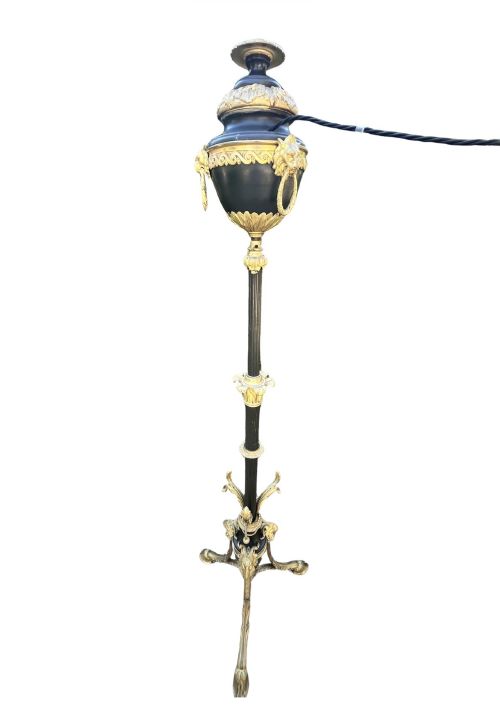
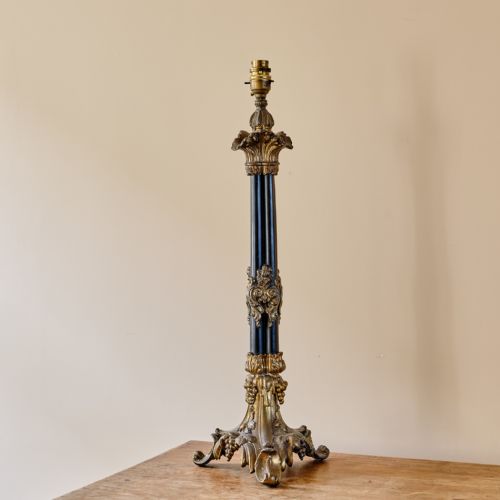
Floor lamps in this category frequently originate from British, French, and Spanish workshops, appearing in forms such as Corinthian columns, tripod stands, and converted oil lamps. Fabric shades, cranberry glass, and copper accents frequently accompany the primary brass structure.
What varies in quality
The distinction between ordinary and exceptional pieces lies in the weight of the casting and the precision of the mechanical adjustments. Heavier gauge brass and smoothly functioning telescopic stems indicate superior construction.
Detailing in the casting, such as crisp fluting on Corinthian columns or intricate organic whiplash lines on Art Nouveau examples, separates mass-produced items from finely worked studio pieces.
Some Edwardian standard lamps were designated as steamer lamps, built with weighted bases to stay upright during rough ocean voyages.
Hinks of B'ham·Maison Bagues·Bleriot
The Brass Standard Light Glossary
- Telescopic
- An extendable shaft design allowing the lamp height to be adjusted up and down. This mechanism is frequently found on Victorian oil lamp standards.
- Oil lamp conversion
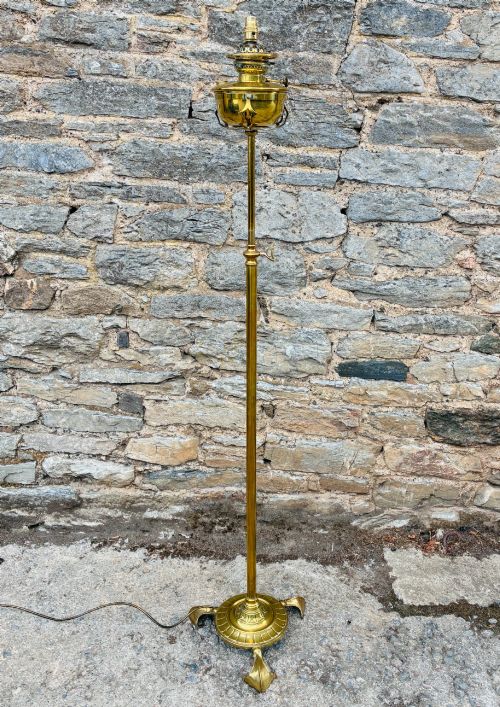
- A period lighting fixture originally designed to burn paraffin or oil that has been professionally rewired for electricity. This preserves the original reservoir and burner assembly.
- Tripod
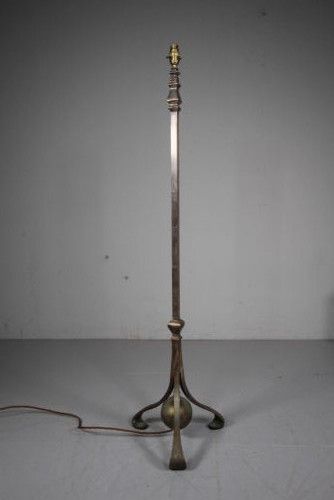
- A three-legged base support system providing stability for the standard lamp. This configuration appears frequently in Arts and Crafts designs.
- Bouillotte
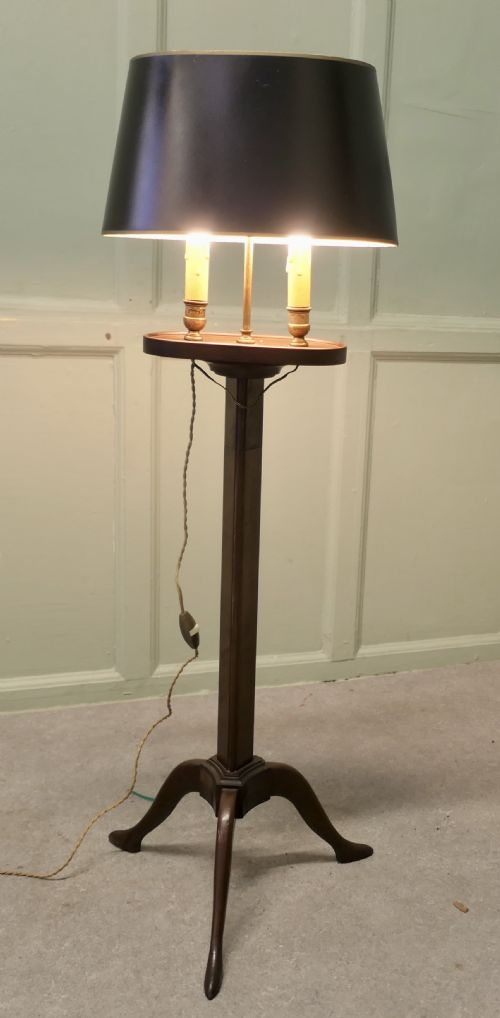
- A style of adjustable multi-candle or multi-light lamp originating in France. These pieces typically feature a central shaft with twin candle arms.
Brass Standard Light: Frequently Asked Questions
How do I adjust the height?
Many period standard lamps incorporate a sliding inner column secured by a thumbscrew or a ratchet mechanism. Loosening this collar allows the upper section to rise or descend.
Care should be taken when adjusting older telescopic brass columns to avoid straining internal wiring that passes through the centre shaft.
Are these lamps safe for modern use?
Most antique lighting fixtures require rewiring to meet contemporary electrical standards. Many pieces have already undergone conversion from oil or older wiring systems.
It is advisable to have a qualified electrician inspect any vintage lamp before connecting it to a modern power supply.
How do I identify a converted oil lamp?
Converted oil lamps usually retain a distinct metal reservoir or burner assembly just below the bulb holder. The wick winders or gallery screws often remain intact.
These elements provide a clear indication that the floor standing fixture served a liquid fuel purpose before electricity became standard.
What styles are available?
The selection encompasses Victorian Corinthian columns, Edwardian steamer lamps, and French Neoclassical designs. Art Nouveau and Arts and Crafts examples introduce organic motifs and hammered metal textures.
Each style reflects the prevailing aesthetic of its decade, ranging from ornate nineteenth-century Revivalism to early twentieth-century functionalism.