




Brass Sideboard Table Lamps
These brass sideboard table lamps bring period character and ambient light to a room, offering a functional piece of history for your home.
Brass Sideboard Table Lamps
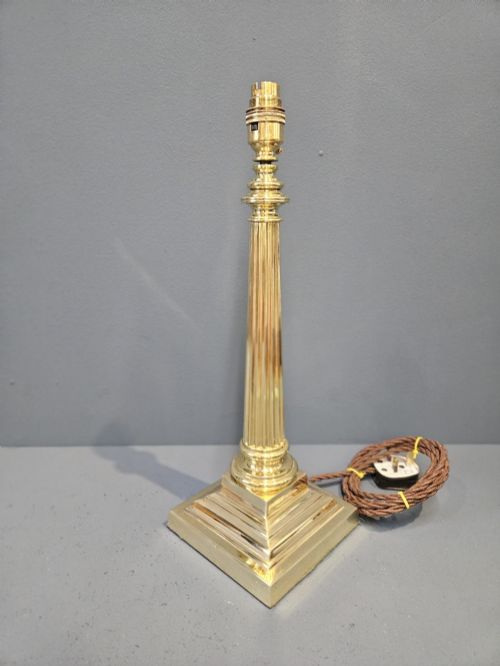
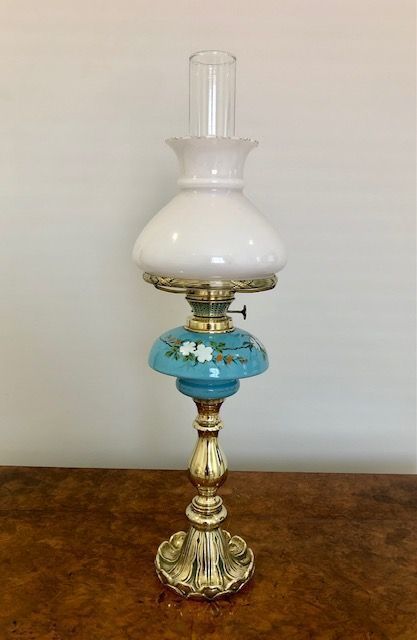
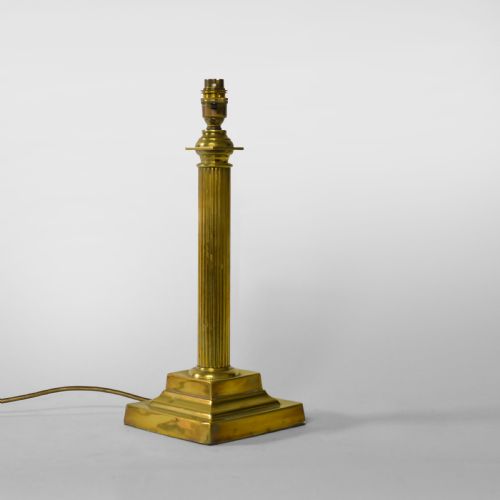
Brass sideboard table lamps encompass a variety of lighting forms spanning the nineteenth and early twentieth centuries, including converted oil lamps, column lamps, and candelabra. You will frequently encounter Victorian and Edwardian examples featuring classical columns, reeded stems, and ornate metalwork designed to sit upon sideboards and console tables.
The selection ranges from sturdy cast brass designs to more elaborate French neoclassical and Gothic revival pieces that incorporate glass, crystal, and ormolu mounts. These lamps reflect the shifting domestic lighting technology and interior fashions from the eighteen-sixties through to the nineteen-thirties.
How they were made
Maker workshops utilised cast and spun brass, gilt bronze, and ormolu to form the structural bodies, columns, and urns of these lamps. Metal elements were often combined with cut glass, lead crystal, opaline glass, and porcelain, reflecting the high standards of nineteenth and early twentieth-century metalworking and glass production.
Craftsmen applied detailed classical motifs such as Corinthian capitals, ionic details, and rams' heads to the metal columns and bases. Many pieces began as oil lamps before being adapted for electricity, preserving their original decorative metal and glass components.
The listings span from eighteen-sixty to the nineteen-thirties, featuring Victorian, Edwardian, and Art Deco design periods.
What varies in quality
The distinction between standard production and superior examples lies in the crispness of the brass casting and the depth of the chasing on ormolu and bronze elements. Fine mounts, heavy gauge metal, and substantial bases indicate careful craftsmanship rather than mass-produced utilitarian output.
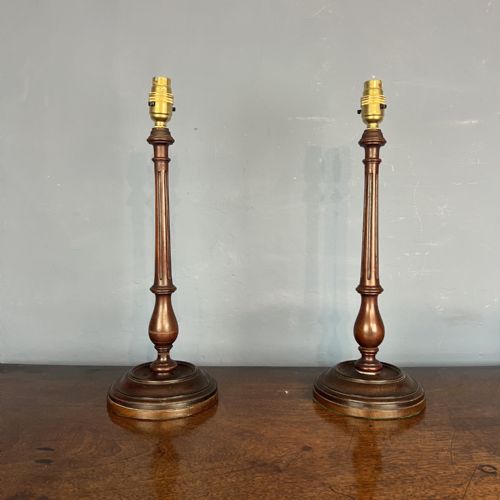
The integration of materials also defines the tier of a piece, particularly where high-grade cut glass, lead crystal, or fine opaline glass is paired with solid brass mounts. Pairs naturally command greater architectural presence, whilst single lamps often showcase distinct individual form and detailing.
The Brass Sideboard Table Lamps Glossary
- Ormolu
- Gilded bronze used widely for decorative mounts on nineteenth-century furnishings and lamps. This technique gave a rich, golden finish to detailed metalwork.
- Corinthian column
- A classical column style featuring ornate acanthus leaves on the capital. It appears frequently on Victorian and Edwardian brass table lamps.
- Opaline glass
- A pale, translucent glass popular in nineteenth-century decorative lighting. It diffuses light softly and is often paired with brass mounts.
- Candelabra
- A branched lighting fixture designed to hold multiple candles or electric bulbs. Several examples in this category take the form of table-standing candelabra.
Brass Sideboard Table Lamps: Frequently Asked Questions
Are these lamps wired for modern use?
Many antique lamps have been adapted for electricity over time to suit contemporary homes while retaining their historical metal and glass bodies.
Buyers should check individual listings to confirm the current wiring status and ensure compatibility with modern electrical standards.
How do I identify a Victorian brass lamp?
Victorian examples often display heavy cast brass construction, classical revival motifs like ionic or Corinthian columns, and substantial weighted bases.
Stylistic cues such as reeded stems and combination with opaline glass or cut crystal typically point toward late nineteenth-century manufacture.
Where should I place a sideboard lamp?
These tall column and urn lamps suit placement on sideboards, console tables, or large desks where their height provides both task and ambient lighting.
Their decorative bases and reflective metal surfaces make them strong focal points in entrance halls or reception rooms.
What is the difference between brass and ormolu?
Brass is an alloy of copper and zinc used for the structural body and columns of many lamps, valued for its warm metallic tone.
Ormolu specifically refers to gilded bronze, which offers a brighter, richer gold surface finish commonly found on finer French neoclassical pieces.