


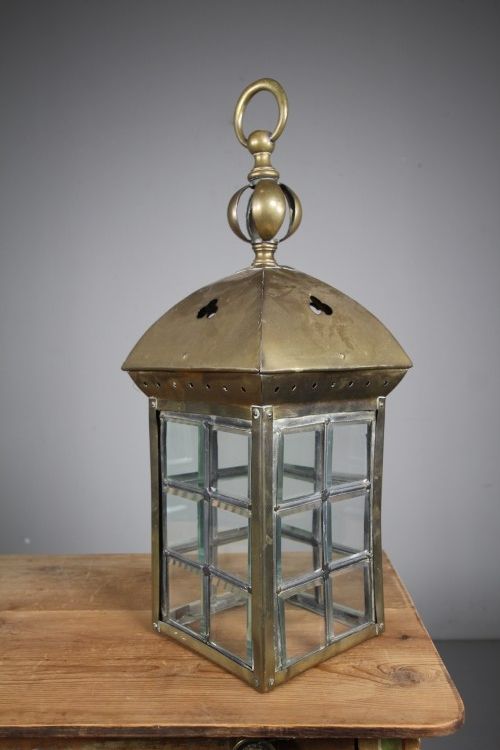


Brass Porch Pendant
A brass porch pendant is an entrance light that greets visitors with character, spanning Victorian and Edwardian periods.
Brass Porch Pendant
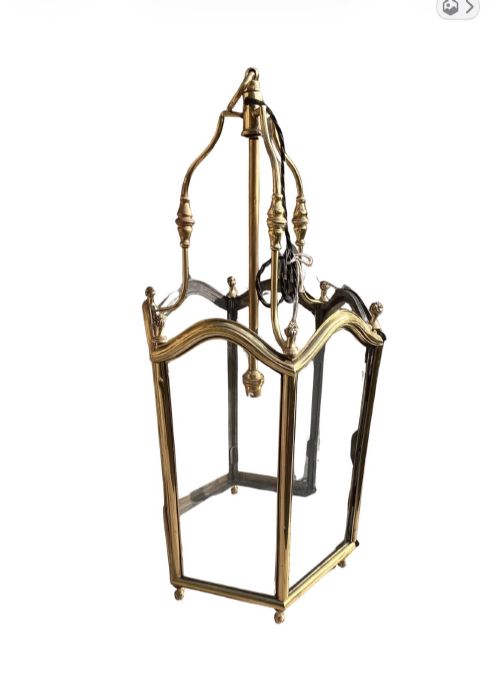
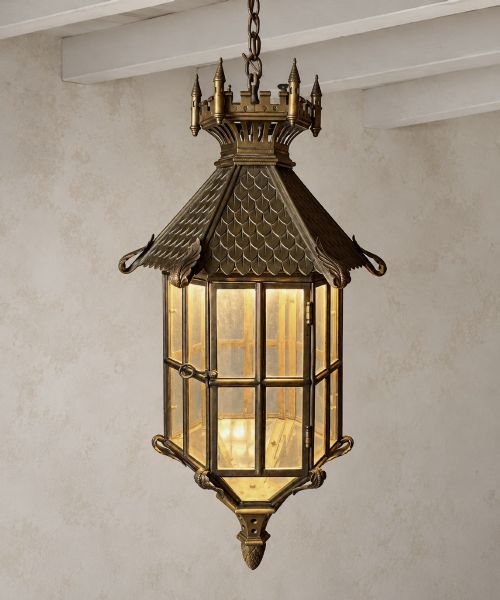
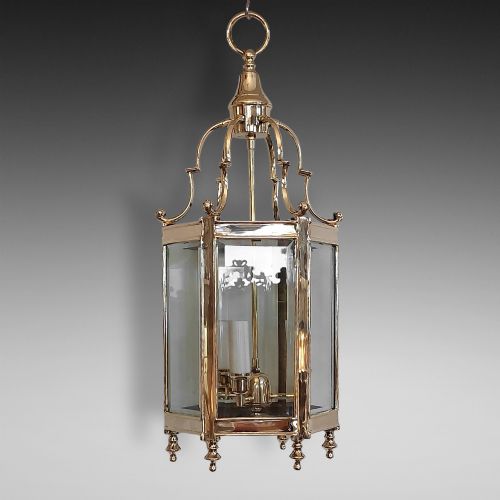
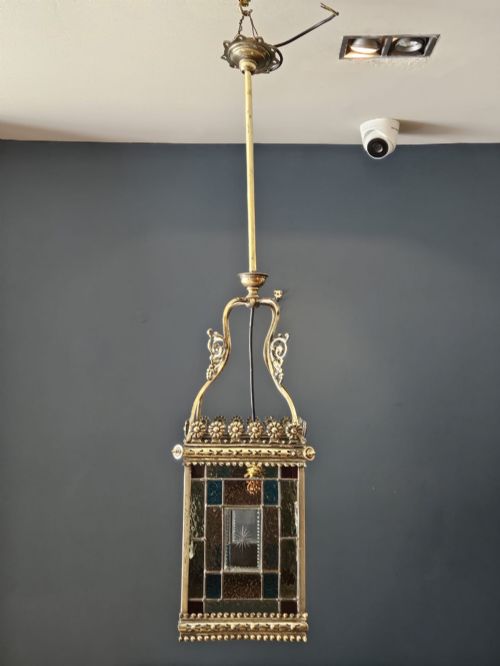
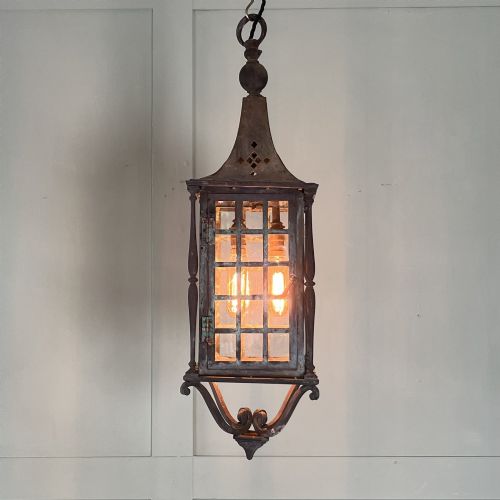
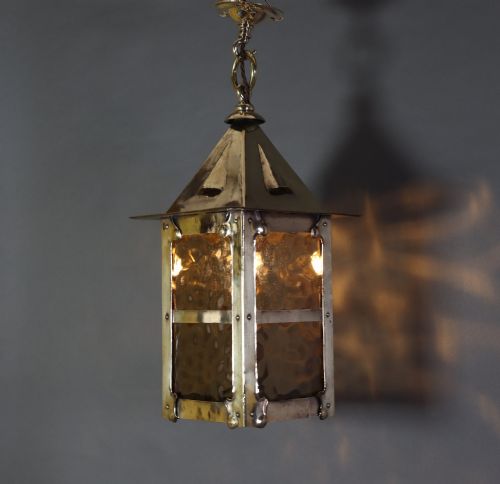
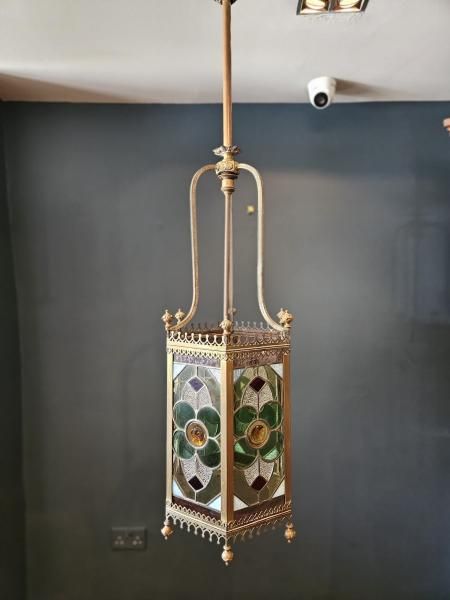
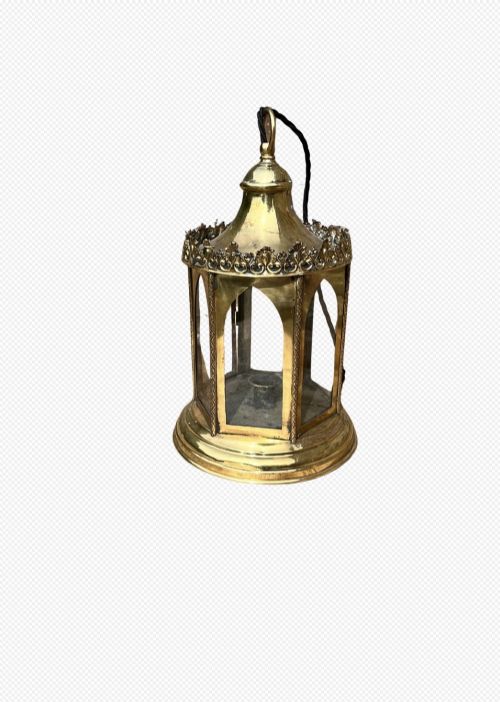
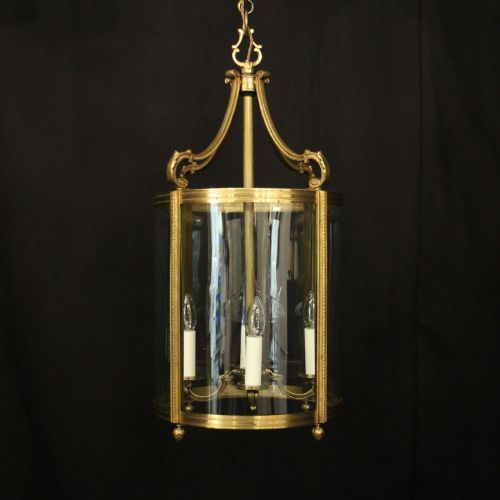
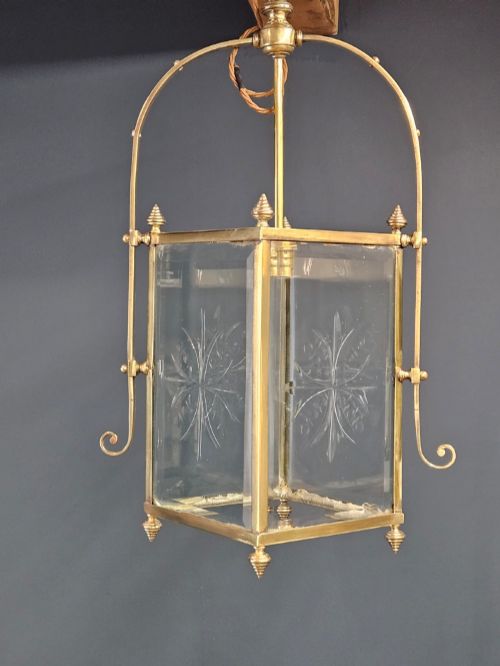
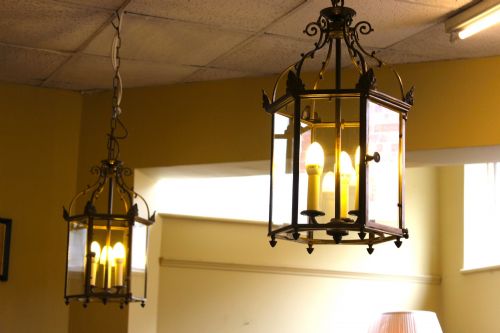
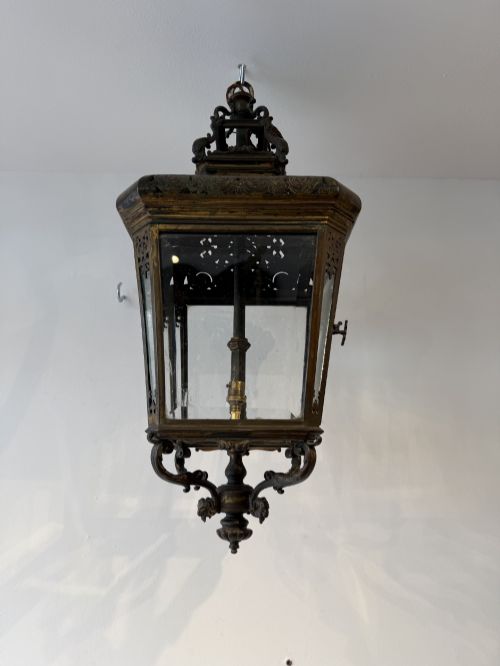
A brass porch pendant is primarily encountered as a hall lantern or hanging ceiling light, designed to illuminate entranceways and corridors. The pieces on this page span from the nineteenth century through the Edwardian era into the mid-twentieth century, offering various interpretations of domestic illumination.
Most examples favour hexagonal or rounded forms, suspending glass panels within a metal framework. Buyers will frequently find Edwardian and Victorian designs, alongside specific style revivals such as Gothic and Arts and Crafts.
How they were made
Makers constructed these lanterns using brass, bronze, copper, and steel frames to hold panels of clear, leaded, or stained glass. Lead came is often utilised to join multi-coloured or stained glass segments within geometric or patterned windows.
Metal components were cast, hammered, or joined mechanically, sometimes integrating gilt bronze or surface patination for decorative effect. Structural soldering and internal wiring adapted original oil or candle lamps for electrical current.
Brass Porch Pendant Retail Price Guide 2026
Typical asking prices for brass porch pendant among the pieces listed under this phrase on Sellingantiques today, from the lower quarter to the upper quarter. They describe what is for sale here now, not the wider market.
Listings feature periods spanning from the Victorian era through the Edwardian years to the 1940s, constructed in brass, bronze, and copper.
What varies in quality
The distinction between ordinary and superior lanterns lies in the weight of the metal casting and the precision of the glazing. Heavier brass frames and hand-cut leaded glass denote careful workshop production rather than mass manufacture.
Detailing in the metalwork, such as crisp Gothic tracery or refined Arts and Crafts proportions, separates standard utilitarian lighting from ambitious decorative pieces.
Voysey·Pugin
The Brass Porch Pendant Glossary
- Hexagonal
- Having six sides. This geometric plan is common in hanging lanterns to distribute light evenly.
- Leaded glass
- Glass panes held together with lead cames. This technique allows intricate patterns and coloured panels to form a sturdy shade.
- Gothic Revival
- An architectural and decorative style drawing on medieval forms. Lanterns in this taste often incorporate pointed arches and heavy tracery.
- Arts and Crafts
- A design movement valuing visible craftsmanship and simple construction. Pieces in this style emphasise honest materials over excessive ornamentation.
Brass Porch Pendant: Frequently Asked Questions
How do I hang a porch pendant?
These lanterns typically suspend from a matching chain and ceiling canopy attached to the entrance hall ceiling. Ensure the drop allows adequate clearance beneath the fixture for doors to open freely.
Professional electrical installation is recommended to support the weight of brass and glass fixtures safely from ceiling joists.
Are these lanterns suitable for outdoors?
Many examples originated as interior hall lanterns or sheltered porch lights rather than fully weatherproof exterior fittings. Check the individual sealing and wiring specifications before exposing them to direct driving rain.
Protected porches and entrance vestibules offer the ideal environment to preserve historic metal finishes and delicate glass.
How do I clean antique brass?
Dust gently with a soft dry cloth to remove surface particles without disturbing the accumulated patina. Avoid harsh chemical cleaners that strip the historic finish from the metal.
Glass panels can be cleaned using standard glass spray applied to a cloth rather than directly onto the frame.
How do I date a brass lantern?
Dating relies on stylistic clues, construction methods, and the type of glass utilised in the panels. Victorian and Gothic Revival pieces show heavier casting, while Edwardian versions lean towards lighter hexagonal frames.
Wiring components and fixings often provide additional clues regarding the period of manufacture or subsequent adaptation.