



Brass Pillar Lights
Brass pillar lights bring architectural dignity to a room, offering sturdy column forms shaped in metal across Victorian and Edwardian periods.
Brass Pillar Lights
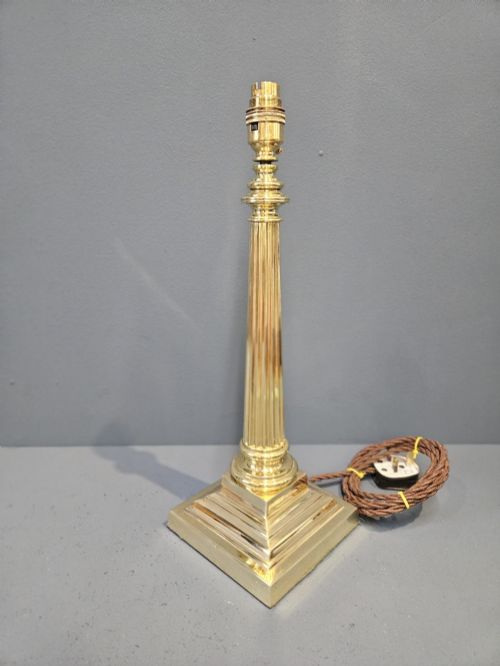
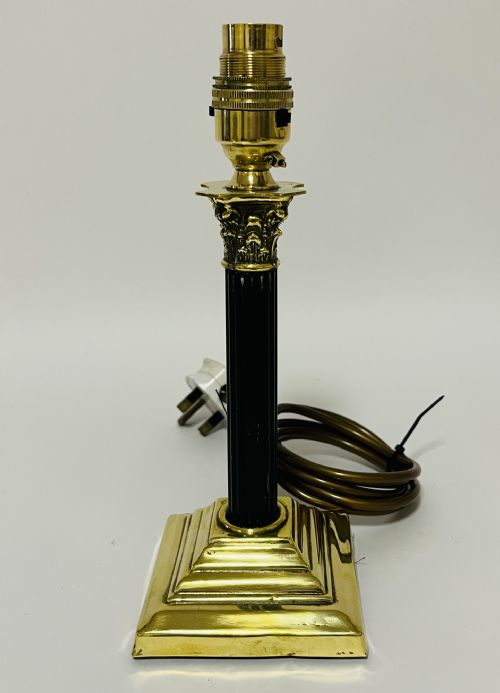
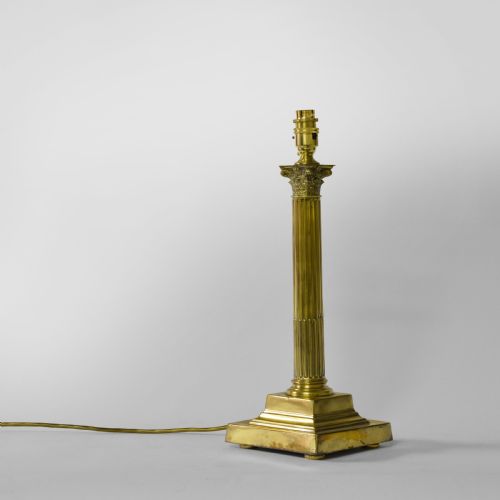
Brass pillar lights encompass column-form table lamps and tall candlesticks that adapt classical architectural motifs for domestic lighting. These pieces draw heavily on Corinthian and reeded column designs, originating mainly from the nineteenth century and the early decades of the twentieth century.
Buyers will most frequently encounter brass pillar lights configured as table lamps or matched pairs of candlesticks. The selection ranges from domestic Victorian examples to Edwardian pieces and church candlesticks adapted for modern illumination.
Materials and construction
The primary construction relies on cast and turned brass, often combined with bronze, copper alloy, or ormolu to achieve varied surface finishes. Certain variations incorporate secondary materials such as mahogany, oak, and glass components.
Maker techniques involve turning columns on a lathe and casting intricate Corinthian capitals with precise leaf detailing. Surface patination develops naturally over decades, occasionally paired with braided fabric flex on electrified conversions.
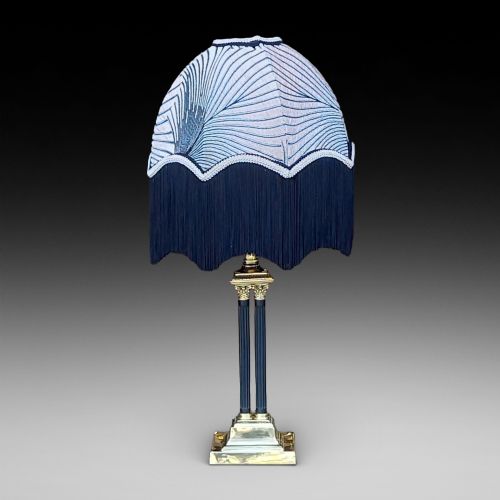
Keep an eye out for graduated Masonic candlesticks, where three brass pillars stand ready to shed light on secret handshakes.
Distinctions in quality
Quality rests upon the crispness of the casting detail in the capital and the structural weight of the metal pillar. Superior examples display sharp acanthus leaves on Corinthian capitals and substantial gauge brass rather than thin stamped sheet metal.
Proportion and scale dictate the visual presence of each piece, with taller matched pairs and graduated sets demanding greater technical skill in manufacture. The integration of solid timber bases or heavy cast internal weighting separates standard production from finer workshop output.
The Brass Pillar Lights Glossary
- Corinthian column
- A classical pillar style featuring an ornate capital decorated with carved or cast acanthus leaves. This motif is widely replicated on nineteenth-century table lamps.
- Ormolu
- Finely ground high-carat gold-bronze applied to metallic objects, creating a rich golden surface finish. It appears on French decorative pieces from the period.
- Reeded column
- A pillar decorated with parallel convex mouldings running vertically along the shaft. This technique adds texture and visual rhythm to lamp bodies.
- Sconce
- The metal socket or cup at the top of a candlestick designed to catch dripping wax and hold the candle secure. These fixtures often feature in brass and mahogany designs.
Brass Pillar Lights: Frequently Asked Questions
Are these lamps wired for modern use?
Many table lamps arrive adapted with modern electrical flex while retaining their original metal columns.
Buyers should inspect the internal wiring and consult a qualified electrician to ensure safety compliance.
How do I date a brass pillar lamp?
Dating relies on stylistic clues such as the depth of the Corinthian capital, the presence of reeding, and construction methods.
Victorian and Edwardian examples often show distinct patination and casting techniques that separate them from later reproductions.
Can antique candlesticks be converted into lamps?
Solid brass candlesticks from the nineteenth century are frequently converted into table lamps by running a concealed electrical cord through the centre.
This process should preserve the structural integrity of the original metal pillar without causing permanent damage.
What is the difference between brass and ormolu?
Brass is a solid alloy of copper and zinc used widely for structural weight and durability in column lights.
Ormolu involves a gilt bronze finish applied to decorative elements to impart a bright golden sheen.