




Brass Pestle and Bowl
A brass pestle and bowl is a heavy metal grinding tool designed for kitchen or apothecary work, offering tactile weight and historic utility to any room.
Brass Pestle and Bowl
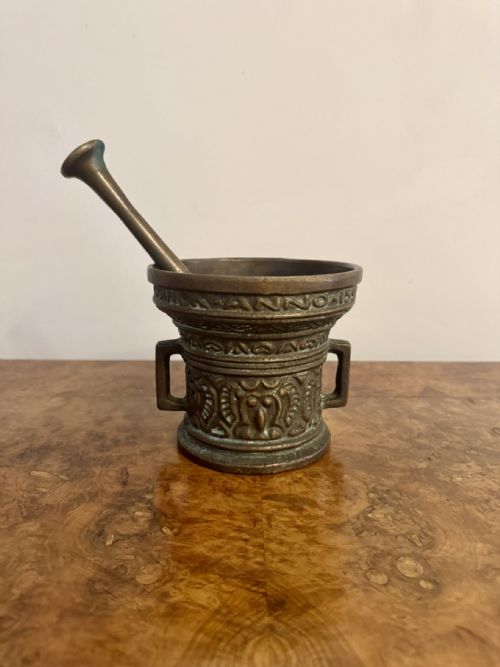
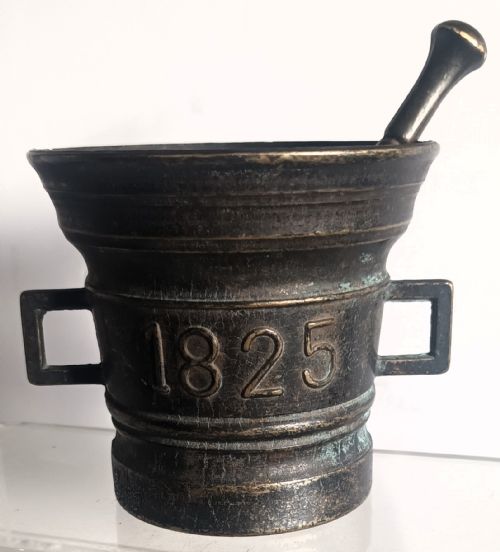
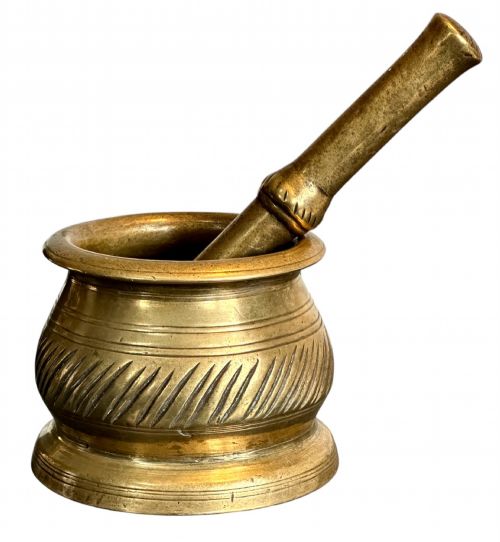
A brass pestle and bowl, commonly listed as mortar and pestle sets, combines a deep metal vessel with a matching heavy striker used for crushing herbs, spices, and medical ingredients. These functional domestic implements span several centuries of British and continental metalware production.
The versions most commonly met on this page date from the seventeenth century through to the nineteenth century, including Georgian and Victorian examples. These pieces typically appear in cast bronze or brass, reflecting durable kitchen and apothecary equipment from earlier domestic and commercial spaces.
Makers produced these utilitarian objects in various forms, from plain kitchen workhorses to heavily decorated vessels featuring Gothic Revival, Renaissance Revival, or Indo-Persian motifs. Collectors encounter both English pieces bearing motifs like the Tudor rose and continental or eastern influenced designs.
How they were made
Foundries manufactured these vessels primarily through metal casting, pouring molten brass, bronze, or bell metal into sand or mould systems to achieve thick, robust walls capable of enduring heavy impacts. This casting method leaves characteristic surface textures and structural heft.
Artisans finished the rough castings by turning them on lathes and hand-chiselling decorative bands, ribbed mouldings, or cast motifs such as the Tudor rose directly into the exterior metal. Pestles were shaped to match the interior curvature of the bowl for efficient grinding.
Brass Pestle and Bowl Retail Price Guide 2026
Typical asking prices for brass pestle and bowl among the pieces listed under this phrase on Sellingantiques today, from the lower quarter to the upper quarter. They describe what is for sale here now, not the wider market.
Current listings demonstrate a concentration of seventeenth century bronze mortars alongside nineteenth century brass kitchen and apothecary vessels.
What varies in quality
Quality rests upon the crispness of the cast decoration and the proportional balance between the pestle and the bowl. Superior examples display sharply rendered surface details and intentional stylistic motifs rather than purely utilitarian wear.
The choice of metal alloy also defines the standard of the piece, with dense bronze and resonant bell metal representing heavier, more substantial construction than lighter brass iterations.
The Brass Pestle and Bowl Glossary
- Pestle
- The heavy handheld club or striker used to crush and grind materials against the interior walls of the mortar. Its weight determines its effectiveness.
- Bell Metal
- An alloy of copper and tin utilised for its high resonance and durability, frequently employed in the casting of early mortars. It produces a clear tone when struck.
- Apothecary
- A historical term relating to the preparation and sale of medicines, denoting vessels used by chemists and pharmacists. These pieces often exhibit robust proportions.
- Renaissance Revival
- A nineteenth century stylistic movement drawing inspiration from fifteenth and sixteenth century European art and architecture. Pieces show classical architectural framing and ornament.
Brass Pestle and Bowl: Frequently Asked Questions
What were brass pestle and bowl sets originally used for?
These sets served a central role in kitchens and apothecary shops for pulverising dry herbs, grinding hard spices, and compounding medical ingredients. The heavy metal walls provided the necessary resistance to break down tough roots and seeds.
Domestic cooks and chemists relied on their durability for daily preparations long before modern mechanical grinders existed. Their solid construction ensured they could withstand generations of heavy rotational friction.
How do I tell seventeenth century pieces from nineteenth century ones?
Seventeenth century examples typically utilise bronze or bell metal with simpler, robust forms, sometimes featuring cast Tudor rose motifs or characteristic square handles. Their surfaces display the darker patination and irregular textures of early foundry work.
Nineteenth century pieces often embrace revival styles like Gothic or Renaissance Revival, sometimes cast in brighter brass or featuring crisper, more mechanically finished decorative banding. Examining the metal composition and the style of the surface ornament helps establish the likely period.
How should I clean a antique brass pestle and bowl?
Maintenance should be limited to gentle dusting with a dry or slightly damp cloth to preserve the historic patination and surface character. Heavy polishing removes the dark oxidation that accumulates over centuries of age.
Avoiding harsh chemical cleaners protects the underlying metal from pitting and keeps the original finish intact. A light application of microcrystalline wax can protect the surface if necessary.
Can I still use an antique mortar and pestle for cooking?
While these historic vessels remain physically sturdy enough for crushing dry spices, older metal alloys may contain trace elements that are unsuitable for food contact. Most collectors prefer to display them as decorative metalware rather than utilising them in modern food preparation.
Using them for culinary purposes can also wear down historic patination and inner surfaces accumulated over centuries. Displaying them allows their sculptural form and heavy craftsmanship to be appreciated safely.