



Brass Paw Feet Games Table
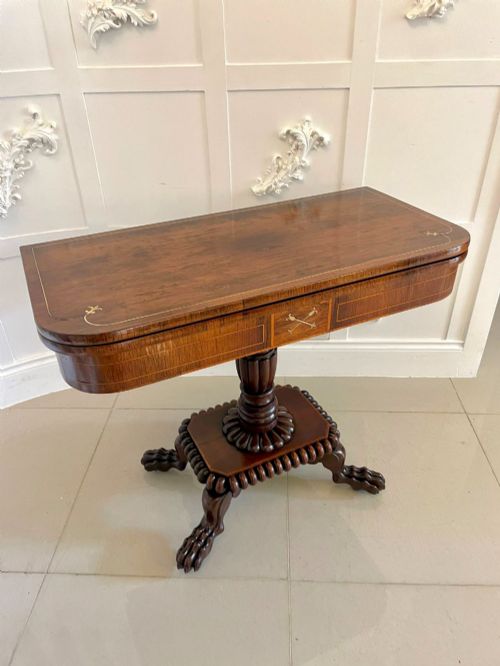
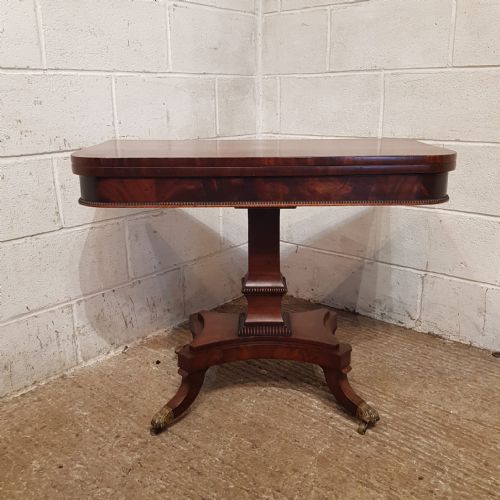
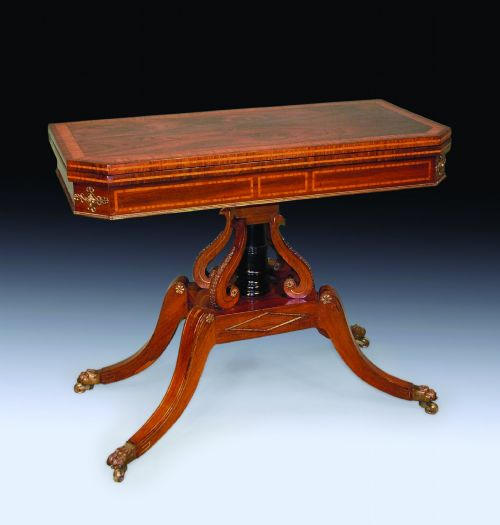
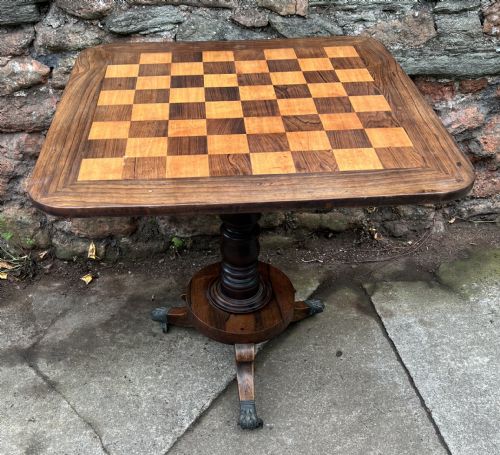
These brass paw feet games table examples offer clever folding surfaces and fine timbers, perfect for an elegant drawing room.
Brass Paw Feet Games Table
A brass paw feet games table is primarily a folding card or occasional table designed for entertainment and display in the home. These pieces date from the Regency, George IV, and late Georgian periods, spanning the nineteenth century.
The version most commonly met on this page is the rosewood or mahogany card table featuring brass inlay, mounts, and castors supporting the frame. Such furniture combines practical surface space with refined decorative timber work.
Materials and construction
Cabinet makers utilised dense native and exotic timbers such as mahogany, rosewood, and satinwood, often enhanced by contrasting crossbanding and delicate brass inlay. These materials provided both structural stability and rich visual grain patterns.
Metalwork played a key role, with cast brass paw feet, gilded mounts, and decorative banding fitted to pedestals and legs to complete the ensemble.
Listings feature rosewood, mahogany, satinwood, and gilt metal, spanning the Regency, George IV, and late Georgian periods.
Assessing quality
Quality rests upon the selection of figured timber veneers, the precision of the brass inlay, and the crispness of the carved details on pedestals and scroll bases. Better examples display harmonious grain matching across the fold-over top.
The integration of the brass paw feet and mounts distinguishes superior workshops from standard production, showing careful casting and secure fitting to the timber structure.
John McLean
The Brass Paw Feet Games Table Glossary
- Card table
- A folding table specifically designed for playing cards, featuring a hinged top that opens to reveal a lined surface. Most examples rotate or swing out to support the opened leaf.
- Crossbanding
- A strip of veneer applied to the border of a table top so that the grain runs at right angles to the central panel. This technique frames the primary timber and adds a decorative contrast.
- Baize
- A woolen felt fabric used to line the playing surface of card and games tables. It provides a soft, tactile texture for dealing cards.
- Pedestal base
- A central column support resting on a platform with legs or feet, replacing traditional four-leg configurations on many nineteenth-century tables.
Brass Paw Feet Games Table: Frequently Asked Questions
What is a brass paw feet games table used for?
These tables served primarily for card games and social gatherings in the nineteenth-century drawing room. The folding top allowed the furniture to function as a side or console table when not in use.
Opening the leaf revealed a baize-lined playing surface suitable for evening entertainment. They combined utility with fashionable interior decoration.
How do I identify a Regency games table?
Regency pieces typically display classical architectural influences, dark timbers like rosewood and mahogany, and distinctive brass mounts or inlay. Look for pedestal bases with scroll work and brass paw feet.
Proportions are generally neat and balanced, reflecting the taste of the early nineteenth century. Cabinet work from this era emphasises contrasting veneers and geometric brass detailing.
What timbers are used on these tables?
Makers relied heavily on dense tropical hardwoods, particularly rosewood and figured mahogany, valued for their deep colour and pronounced grain. Satinwood and specimen woods also appear as contrasting elements in inlay and crossbanding.
These timbers were chosen for their durability and capacity to take a high polish. The choice of wood often indicates the relative status of the piece.
How do I care for a antique games table?
Keep the timber away from direct sunlight and sudden temperature changes to prevent the veneer from drying and cracking. Dust gently with a dry cloth and avoid harsh chemical polishes.
Care should be taken when operating the folding mechanism to protect the hinges and supporting framework. Wax polish applied sparingly helps maintain the lustre of the rosewood or mahogany surface.