



Brass Optical Glass
Brass optical glass instruments combine utilitarian precision with decorative materials, offering collectors functional lenses, magnifying tools and viewing glasses from the nineteenth and early twentieth centuries.
Brass Optical Glass
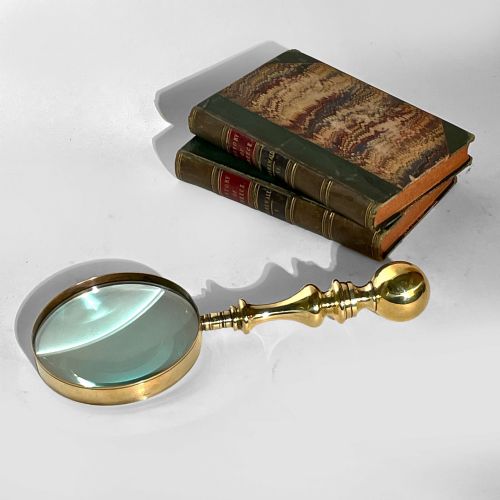
When you search for brass optical glass, you encounter a diverse collection of scientific, navigational and domestic instruments spanning the Victorian, Edwardian and Regency periods. These items range from desk top magnifying lenses and linen tester loupes to multi-draw telescopes, scientific optical mirrors and optometrist test glass kits.
You are most likely to meet magnifying glasses mounted on brass stands, folding pocket loupes and theatre-going opera glasses featuring mother of pearl or guilloche enamel bodies. The selection includes domestic desk accessories alongside specialist scientific and maritime instruments.
The objects originate from English, French and German makers, utilising housing materials such as rosewood, mahogany, leather and brass. Each piece serves either a practical measurement function or a viewing purpose suited to theatre, navigation and study.
How they were made
Makers constructed these optical instruments using turned and polished brass housings paired with clear glass lenses, magnifying optics and bullseye glass. Structural elements incorporate carved rosewood, mahogany and wood for handles and frames.
Surface decoration and detailing frequently involve fitted leather wrappings, inset mother of pearl panels and golden guilloche enamel. Specialist scientific instruments integrate steel components and calibrated measuring scales alongside the primary brass and glass elements.
Brass Optical Glass Retail Price Guide 2026
Typical asking prices for brass optical glass among the pieces listed under this phrase on Sellingantiques today, from the lower quarter to the upper quarter. They describe what is for sale here now, not the wider market.
Optometrists once kept test glass lens kits in velvet-lined wooden cabinets to correct nineteenth century vision.
What varies in quality
Quality in these instruments depends upon the optical clarity of the glass lens and the precision of the brass work, such as smooth focusing draws and stable pivoting stands. Superior examples feature signed maker details, sophisticated mechanical adjustments and intact measuring scales.
The selection of decorative materials elevates certain pieces, separating utilitarian workshop tools from luxury items adorned with guilloche enamel, rosewood mounts or polished mother of pearl inlays.
Casartelli Manchester·Thomas Rubergall·Iris Paris·Francis West of Fleet Street London
The Brass Optical Glass Glossary
- Loupe
- A small magnifying glass used to examine details closely. These often feature folding brass frames or integrated measuring scales.
- Stanhope lens
- A type of cylindrical lens that yields a microscopic photograph view when held to the eye. It is associated with optical innovations of the nineteenth century.
- Guilloche enamel
- A decorative technique involving precise mechanical patterns engraved beneath translucent enamel. It appears on luxury opera glasses from the early twentieth century.
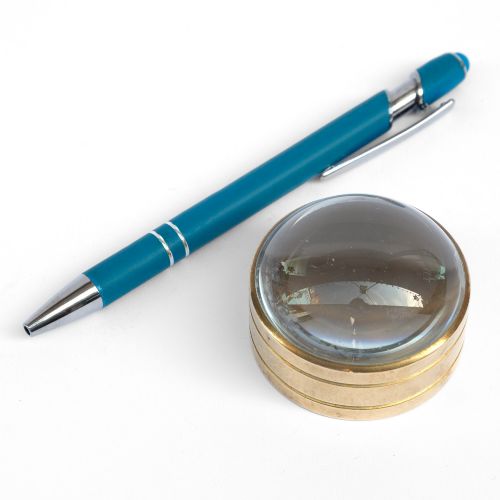
- Bullseye glass
- A thick, convex lens shape utilised for gathering light and magnifying text on desk stands. It provides strong optical enlargement.
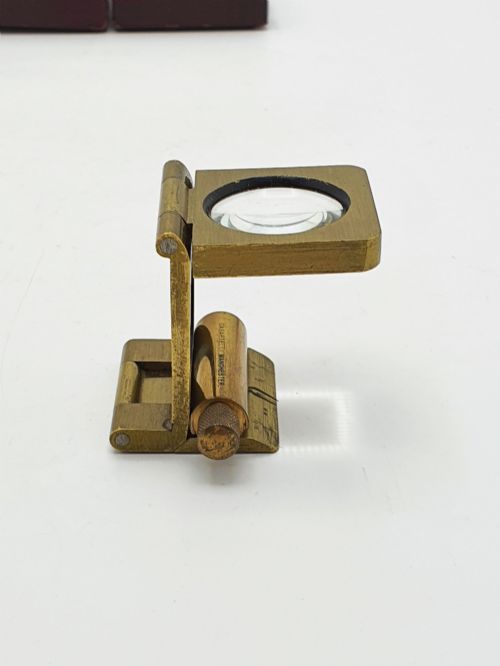
- Linen tester
- A folding magnifying glass designed originally for inspecting woven fabric density. It includes a calibrated base plate for measurement.
Brass Optical Glass: Frequently Asked Questions
What are brass optical glass pieces?
These pieces comprise historical magnifying glasses, opera glasses, telescopes, and scientific lenses manufactured primarily during the nineteenth and early twentieth centuries.
They combine functional glass optics with brass mountings, often incorporating decorative materials like mother of pearl, rosewood, and leather.
How were opera glasses used?
Opera glasses served as compact binoculars for theatre and concert audiences to bring distant stages into closer view.
Spectators carried them as fashionable accessories, frequently matching their evening wear through the use of enamel and mother of pearl body panels.
How do I date an antique magnifying glass?
Dating relies on the manufacturing materials, screw types, case styles, and any engraved maker signatures found on the brass frame or lens mount.
Stylistic indicators from periods such as Regency, Victorian, Edwardian, and Art Deco help narrow down the production era.
How should I display desk magnifiers?
Desk magnifiers with pivoting stands or heavy brass mountings sit well on wooden writing tables, bookshelves, or cabinets alongside other scientific instruments.
Keep them away from direct, harsh sunlight to protect any delicate rosewood, mahogany, or leather components surrounding the brass.