



Brass Movement Longcase Clock
A brass movement longcase clock stands as the mechanical heart of a room, measuring time through swinging brass and wooden cases.
Brass Movement Longcase Clock
A brass movement longcase clock combines an upright wooden housing with a weighted gear train and a visible metal dial. Buyers seeking a brass movement longcase clock encounter forms ranging from tall eighteenth-century examples to compact twentieth-century grandmother clocks.
The selection includes tall oak and mahogany cases alongside lacquered chinoiserie finishes and specialised dials featuring lunar moonphases. Pieces span the eighteenth century, the nineteenth century, and later Edwardian periods with distinct regional characteristics.
Materials and construction
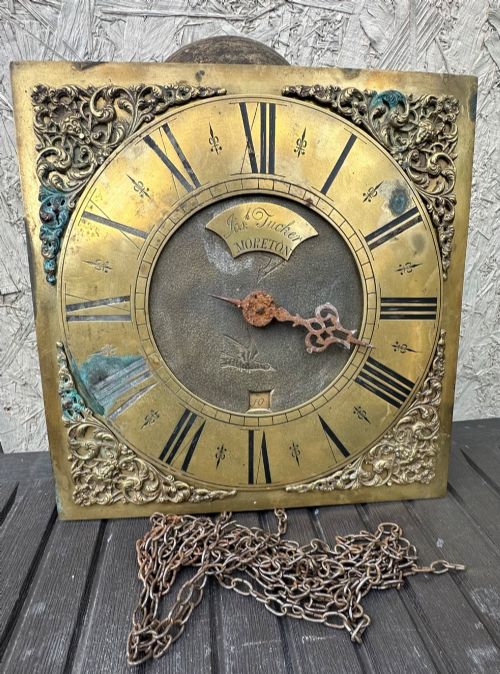
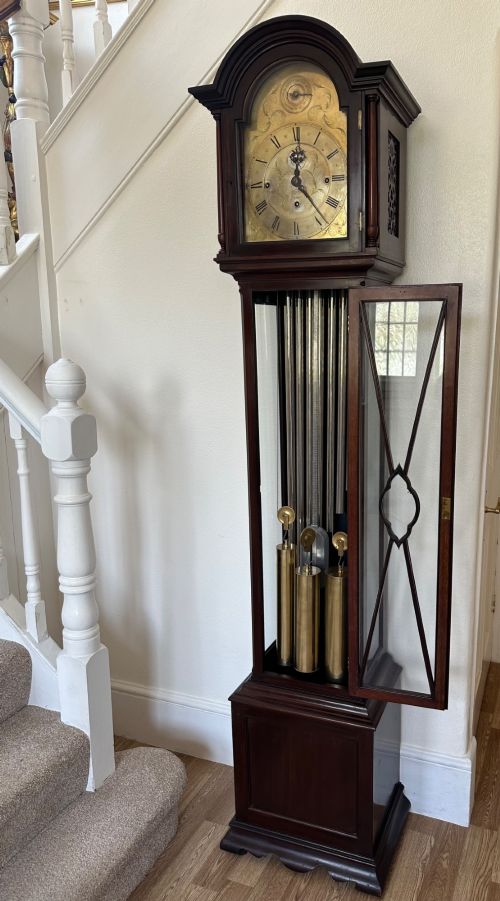
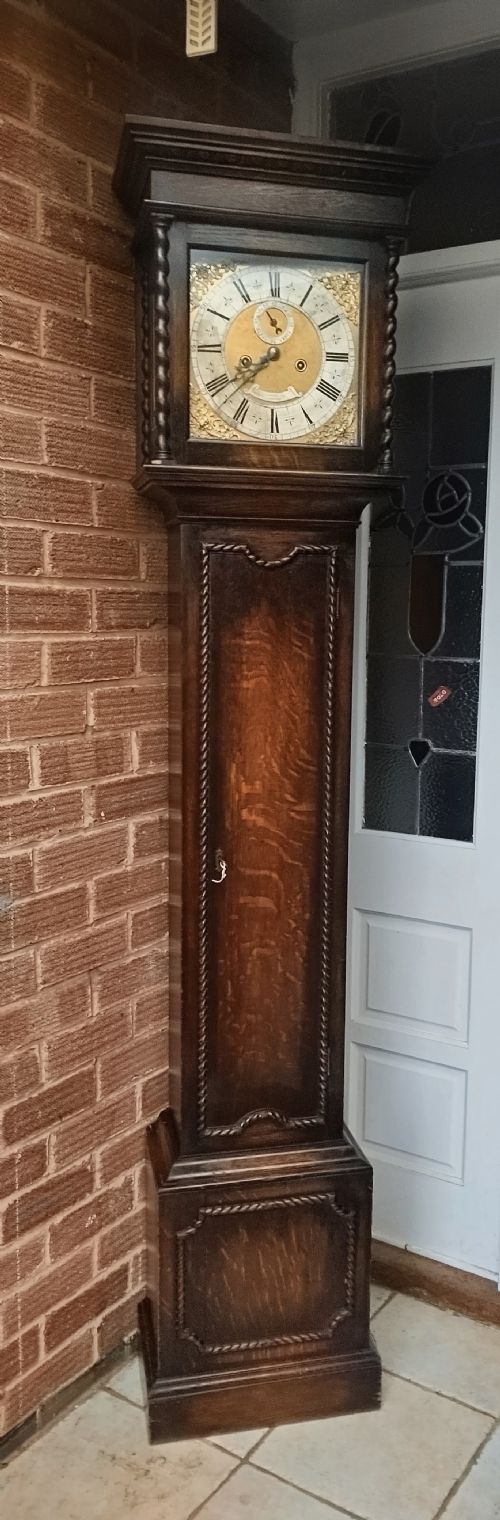
Maker workshops built the tall housings using solid timbers such as mahogany and oak, frequently embellished with gold leaf and glass panels. Dials combined engraved brass plates with steel hands and cast brass spandrels to frame the central chapter ring.
Internal gear trains relied on brass wheels and steel pinions, sometimes arranged across five pillars in robust movements. Certain specialised versions incorporated tubular bell mechanisms or musical cylinders to mark the hours.
Brass Movement Longcase Clock Retail Price Guide 2026
Typical asking prices for brass movement longcase clock among the pieces listed under this phrase on Sellingantiques today, from the lower quarter to the upper quarter. They describe what is for sale here now, not the wider market.
Evaluating the craftsmanship
Finely executed brass movement longcase clocks display crisp engraving on the dial plate and precise wheel cutting within the movement. Cabinets demonstrate superior timber selection, subtle inlay work, and proportioned mouldings that suit the height of the trunk.
Simpler versions prioritize utility with plain oak cases and standard brass dials, whereas higher-tier examples feature complex lunar phases, striking mechanisms, or sophisticated lacquer decoration.
John Fielder of Alton·Elliott Burr
The Brass Movement Longcase Clock Glossary
- Count wheel
- An external locking plate on the movement that controls the number of strikes the clock emits. This traditional mechanism relies on notches cut into the edge of a rotating brass disc.
- Spandrel
- The decorative corner piece set between the dial chapter ring and the outer edge of the clock face. These cast brass ornaments evolved significantly in style across different decades.
- Grandmother clock
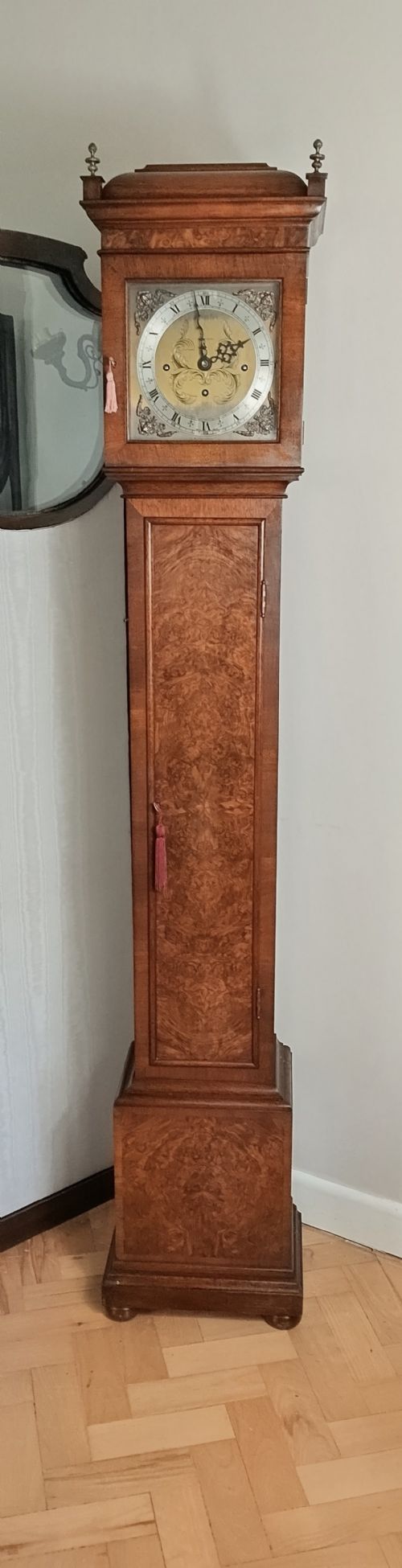
- A smaller, more slender version of the traditional longcase clock, typically produced in the nineteenth and twentieth centuries. It occupies less floor space while retaining a brass movement.
- Regulator
- A precision timekeeping clock designed for high accuracy, often featuring a simplified dial layout for clear reading. These movements were calibrated carefully for domestic or scientific use.
- Lunar moonphase
- A rotating dial mechanism that tracks the phases of the moon through a painted lunar disc. It sits above the main chapter ring on specialised clock faces.
Brass Movement Longcase Clock: Frequently Asked Questions
How do I wind a brass movement longcase clock?
Most eight-day movements require the weights to be pulled up using a crank key inserted into winding holes on the dial face. Care must be taken not to over-wind the mechanism.
Daily or weekly routines depend on the specific gear train configuration and whether the clock includes chiming or striking trains.
What is the difference between a grandfather and a grandmother clock?
Grandfather clocks are standard full-sized floor-standing timepieces measuring six to eight feet tall. Grandmother clocks are scaled-down versions introduced later, standing significantly shorter.
Both varieties utilise similar brass movement systems but suit different interior proportions.
How do I date a brass movement longcase clock?
Dating relies on stylistic clues in the dial engraving, the shape of the cabinet hood, and the materials used for the case construction. Earlier eighteenth-century faces feature square brass dials, while arched tops became popular later.
Signatures inscribed on the brass dial plate often link the piece to a specific maker and working period.
Where should I place a longcase clock in my home?
These tall timepieces require a stable, dry interior wall away from direct sunlight and strong drafts to maintain accurate timekeeping. Floor stability is essential so the case remains completely vertical.
Securing the upper trunk to the wall prevents accidental tipping while ensuring the pendulum swings evenly.