




Brass Mounted Desk Clock
A brass mounted desk clock brings precise timekeeping and warm metal highlights to a working surface, combining mechanical interest with traditional proportions.

Brass Mounted Desk Clock
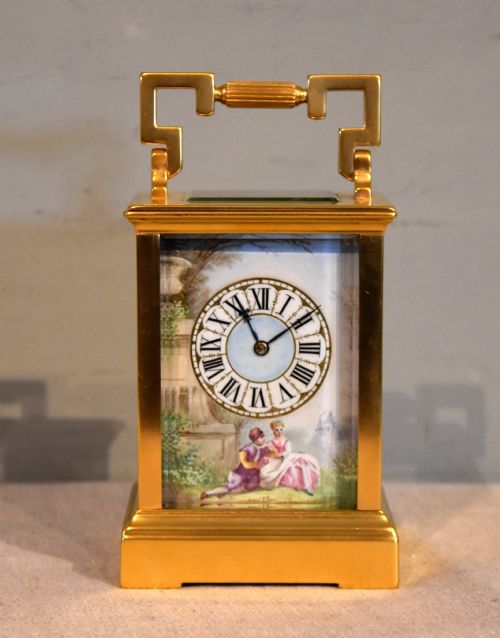
A brass mounted desk clock is a compact timepiece designed for domestic or professional surfaces, frequently incorporating metal mounts into timber or marble cases. Buyers encounter examples originating from the Georgian, Regency, and Victorian periods, alongside later continental European interpretations.
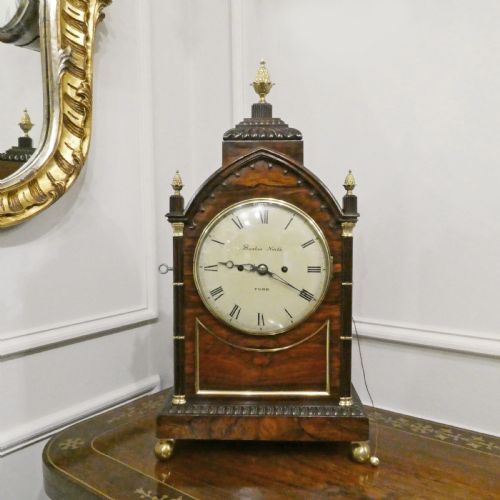
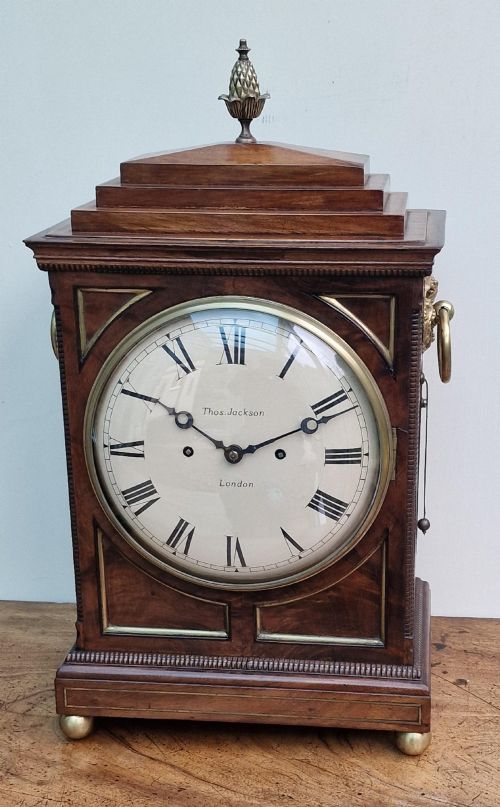
The form encompasses various functional layouts, including mantel pieces, library clocks, and bracket designs adapted for smaller spaces. These objects often display architectural mahogany, rosewood, or walnut cases embellished with cast brass or ormolu mounts.
English and French workshops dominate the available selection, ranging from simple portable timepieces to complex fusee movements housed in heavy wooden or stone bodies. The brass mountings serve both structural and decorative purposes, framing dials and reinforcing corners.
Materials and construction methods
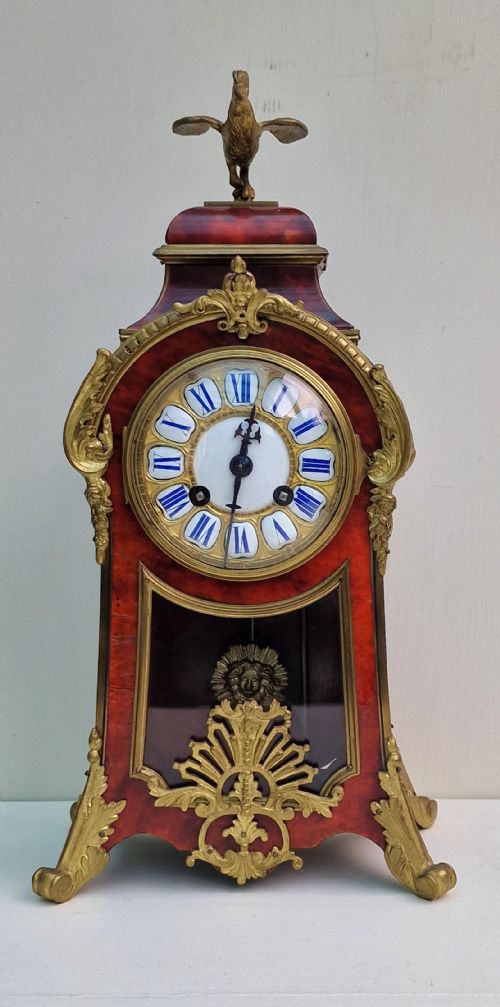
Cabinetmakers constructed the primary housings from dense hardwoods like mahogany and walnut, frequently applying veneers of rosewood, kingwood, or tortoiseshell over oak carcases. Ormolu and cast brass provided structural feet, bezels, and decorative mounts fixed with traditional pins or screws.
Dial faces combined white enamel with painted numerals or cast brass chapters, protected behind heavy bevelled glass doors. Movement plates, wheels, and escapements utilised brass and steel, driven by weighted pendulums or spring-powered fusee mechanisms.
Some travel timepieces come with fitted leather carrying cases, proving that past owners insisted on taking their ticking companions on tour.
Distinguishing quality and execution
Superior examples reveal themselves through the crispness of the cast brass or ormolu mounts, where chiselling and finishing define the decorative details. Inferior versions rely on softer castings with smoothed-over foliage and simpler geometric patterns.
The caliber of the clockwork dictates overall value, with double fusee movements and signed backplates representing higher standards of horological engineering. Timber selection also matters deeply, as finely figured mahogany and well-matched veneers elevate the stature of the case.
Barber and North of York·Thomas Jackson·Turner of London·Lenzkirch·Budgen Croydon·Berguer of the Strand·McCabe London·John Taylor·Payne and Co of London·Marti
The Brass Mounted Desk Clock Glossary
- Fusee
- A conical pulley used in spring-driven clocks to maintain equal power as the mainspring unwinds. This mechanism ensures more consistent timekeeping throughout the running cycle.
- Ormolu
- Gilded bronze produced by applying a mercury-gold amalgam to cast brass or bronze. The technique creates a durable, warm metallic finish common on French mantel pieces.
- Bracket clock
- A portable spring-driven clock originally designed to sit on a wall bracket or table. Many examples feature arched bell tops and carrying handles.
- Boulle work
- A decorative inlay technique using tortoiseshell and brass, popularised in France during the seventeenth century and revived in later periods. The contrasting materials create intricate scrolling patterns across the wooden carcase.
- Escapement
- The internal mechanism that controls the release of power from the gear train to the pendulum or balance wheel. It produces the characteristic ticking sound of mechanical timepieces.
Brass Mounted Desk Clock: Frequently Asked Questions
How do I wind a mechanical desk clock?
Most spring-driven clocks require a specialised key inserted into winding holes on the dial face to tension the mainspring.
Care must be taken not to overwind the mechanism, stopping as soon as resistance is felt.
What is the difference between a timepiece and a clock?
A timepiece indicates the hours and minutes without incorporating any striking or chiming mechanism.
A clock traditionally includes an acoustic strike to announce the passing of hours.
Where should I place a antique desk clock?
These pieces require stable, level surfaces away from direct sunlight, heat sources, and damp environments to protect wooden veneers and delicate internal oils.
Placing them on sturdy desks or mantelpieces ensures the pendulum hangs plumb for accurate operation.
How can I date a brass mounted desk clock?
Dating relies on stylistic cues in the case design, the materials used, and signatures or inscriptions engraved upon the movement backplate.
Georgian and Regency pieces favour architectural wood housings, while later Victorian and Edwardian examples often incorporate marble or elaborate cast metal mounts.