

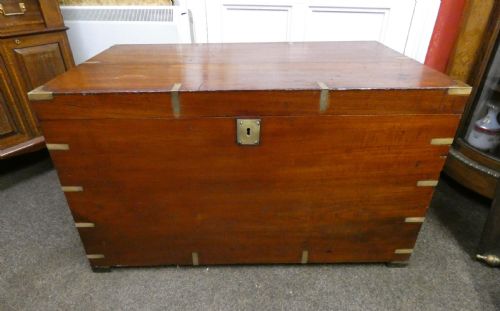
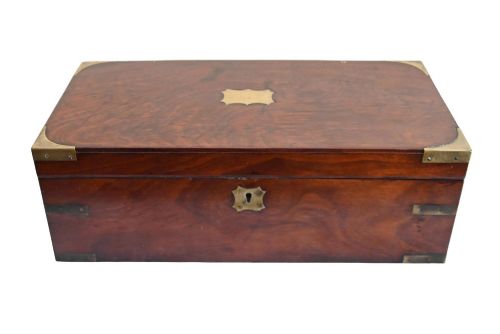
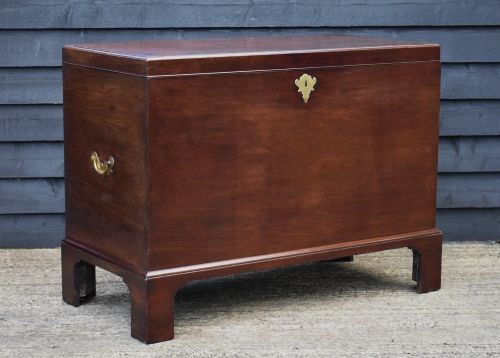
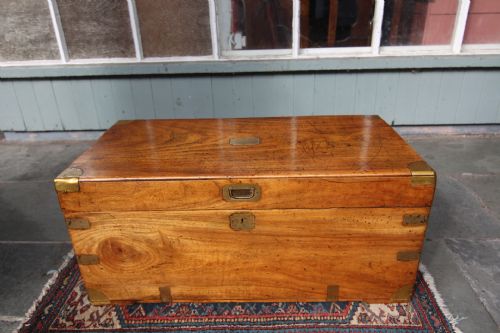

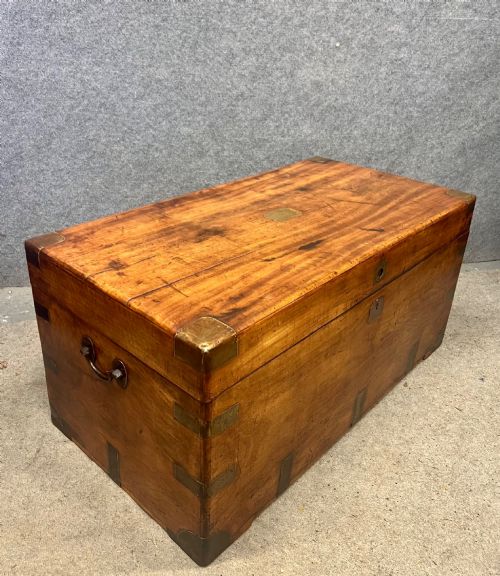
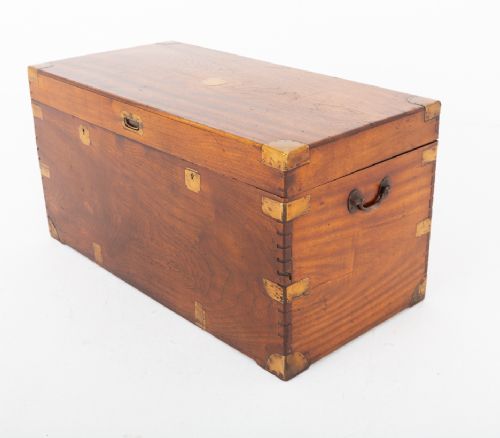
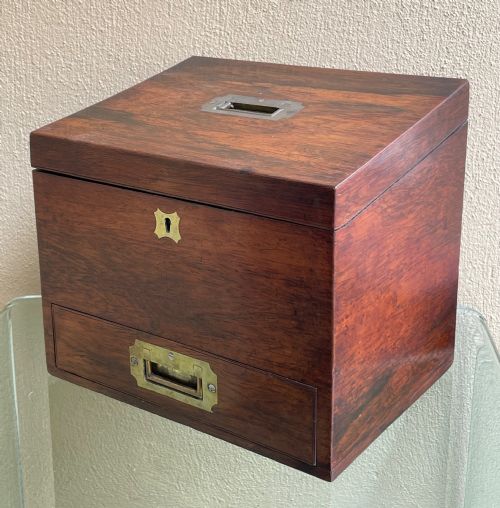
Brass Military Box
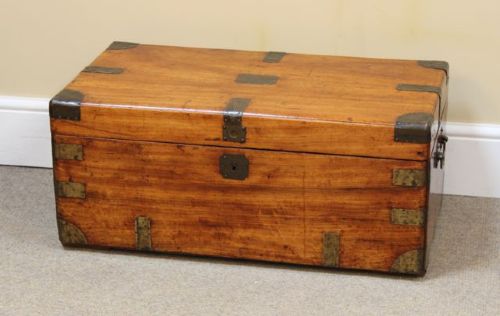
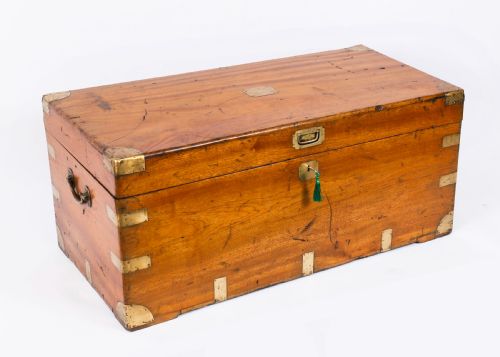
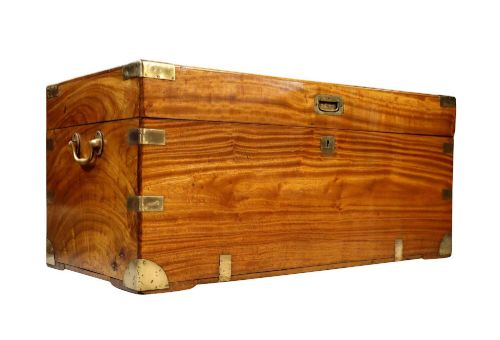
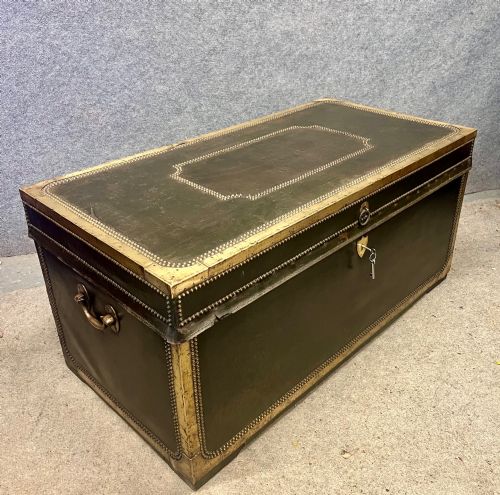
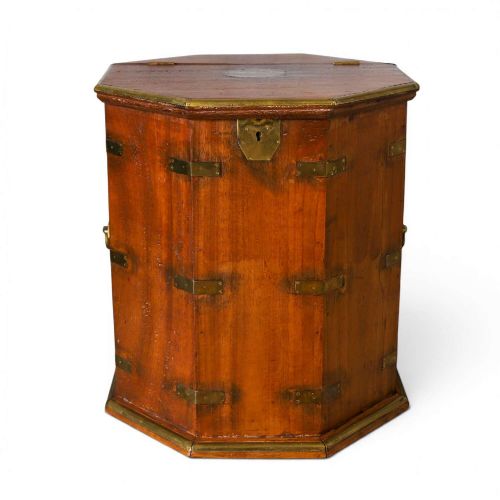
A brass military box combines structural stamina with fitted brass corners, built to travel through campaigns.
Brass Military Box
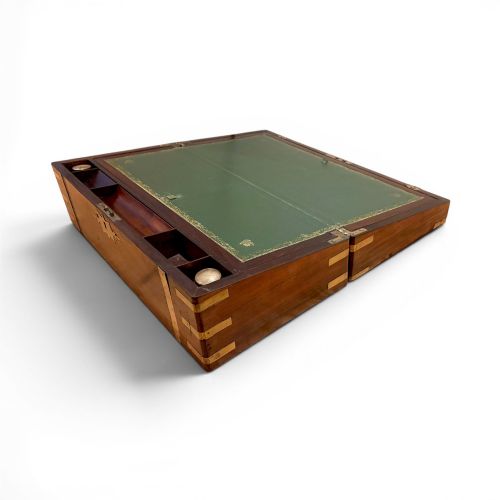
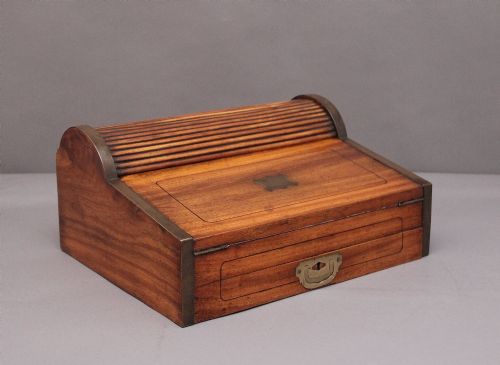
When searching for a brass military box, buyers encounter items designed for transit and field use by officers and diplomats during the Georgian and Victorian eras. These range from substantial storage trunks and blanket chests to compact writing slopes, correspondence boxes, and jewellery cabinets.
Camphor wood and mahogany form the core of the selection, frequently bound in brass strapping to protect edges from heavy handling. Teak, rosewood, and walnut also appear, particularly in pieces originating from colonial trade routes or domestic workshops.
The most common variants on this page are camphor wood trunks designed to resist insects during overseas transport, alongside portable writing boxes fitted with internal secret drawers and compartments for ink and paper.
How they were made
Cabinetmakers utilised dense timbers such as mahogany, teak, and camphor wood, joining carcass corners with secure dovetails to withstand the shifts of travel. These woods resisted warping in humid climates while providing a stable foundation for external metal reinforcement.
Heavy brass corners, strapwork, and flush-fitting drop handles were screwed or riveted directly into the wood to absorb impact and lift heavy weights. Recessed brass escutcheons and carrying handles kept profiles flat so multiple chests packed tightly into wagons or ships.
Brass Military Box Retail Price Guide 2026
Typical asking prices for brass military box among the pieces listed under this phrase on Sellingantiques today, from the lower quarter to the upper quarter. They describe what is for sale here now, not the wider market.
Listings span the Georgian and Victorian eras, dominated by camphor wood and mahogany chests.
What varies in quality
The standard of construction shows in the precision of the brass work, where mounts sit flush with the timber surface rather than standing proud. Original hardware, including functioning locks with matching keys and inset corner plates, elevates the integrity of an item.
Internal complexity dictates distinction, separating simple storage boxes from elaborate double-action writing slopes with secret compartments and fitted stationery sections. The choice of secondary timbers and the grain figure of surface veneers also mark the distinction between utility pieces and officer-commissioned luxury goods.
Chapman Son And Co·Drew And Sons·J Newman
The Brass Military Box Glossary
- Campaign chest
- A modular set of drawers built in two or more stacking sections for ease of transport on military expeditions.
- Writing slope
- A portable slant-topped box that opens to reveal a velvet or leather writing surface and pigeonholes for correspondence.
- Brass bound
- Edges and corners reinforced with brass stripwork and plates to protect against heavy knocks during transit.
- Escutcheon
- A protective brass plate surrounding a keyhole that strengthens the surrounding wood against strain.
- Flush handle
- A folding handle that drops into a recessed pocket in the wood to maintain a flat exterior surface.
Brass Military Box: Frequently Asked Questions
What is a brass military box?
A brass military box is a sturdy wooden chest, trunk, or desk fitted with brass corners and handles designed for transport during campaigns.
Officers and officials used these containers to store uniforms, documents, and writing materials while travelling across colonies and battlefields.
How do I identify a campaign chest?
Campaign chests feature sectional construction with inset brass side handles and protective metal corners for stacking and moving.
They break down into separate modular units to fit easily into baggage carts and ship cabins.
Why use camphor wood?
Makers selected camphor wood for its natural insect-repelling properties and resistance to humidity during long sea voyages.
The timber releases a distinct aroma that protected stored uniforms and papers from moths and mildew in tropical climates.
How are writing slopes arranged?
Writing slopes open to form a slanted writing surface lined with leather or velvet for comfortable correspondence.
Inside, they hold compartments for inkwells, nibs, stamps, and secret drawers concealed beneath stationery trays.