


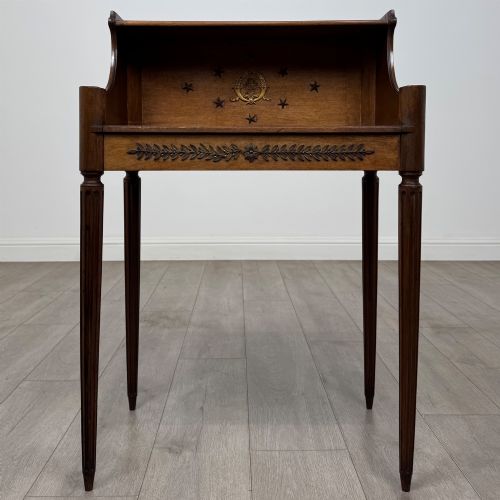
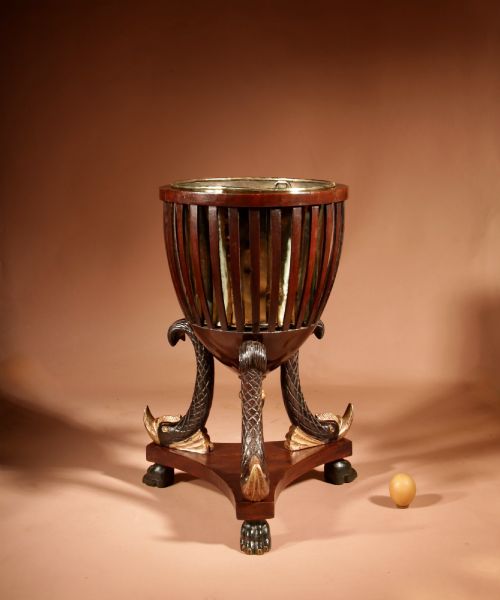
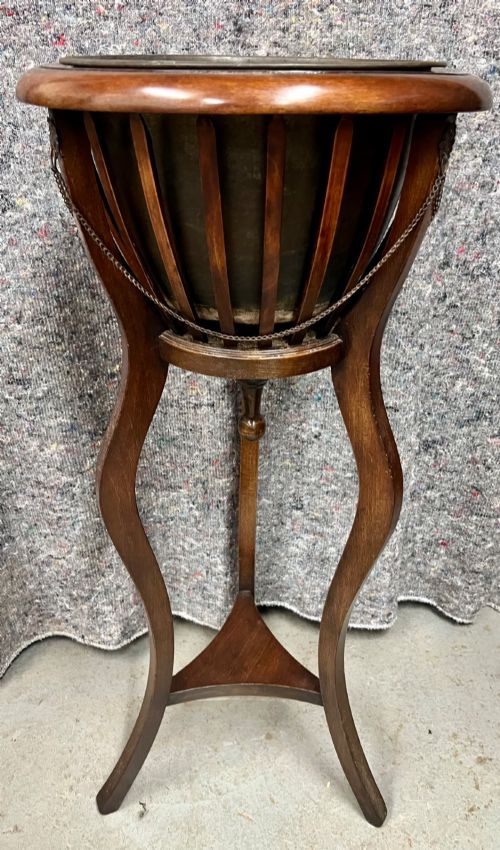
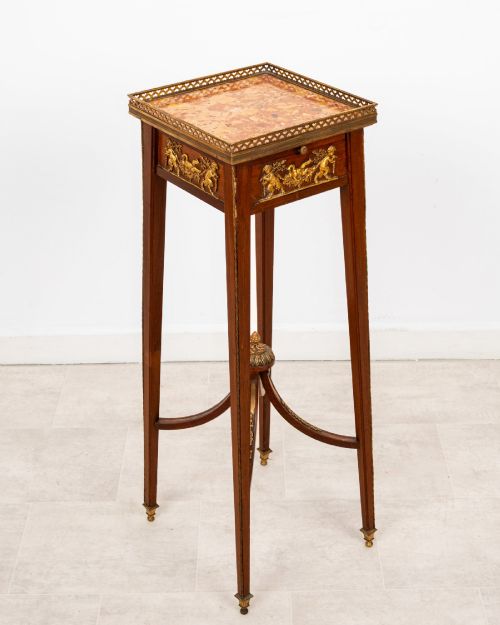




Brass Mahogany Plant Stands
These brass mahogany plant stands bring together rich timbers and metalwork to elevate greenery, decorative urns or lamps in a room.
Brass Mahogany Plant Stands
Brass mahogany plant stands encompass a variety of elevated display pieces, jardiniere buckets, torchieres and occasional side tables designed to hold plants and decorative objects. These items range from Georgian and Victorian periods through to the Edwardian era and the early twentieth century.
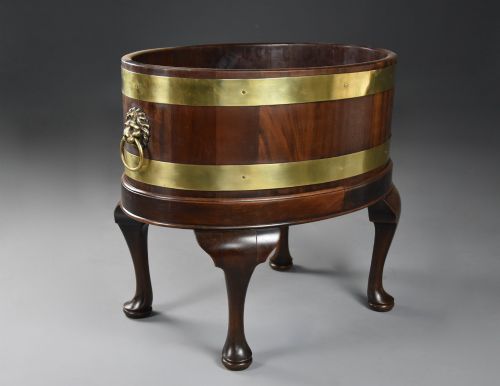
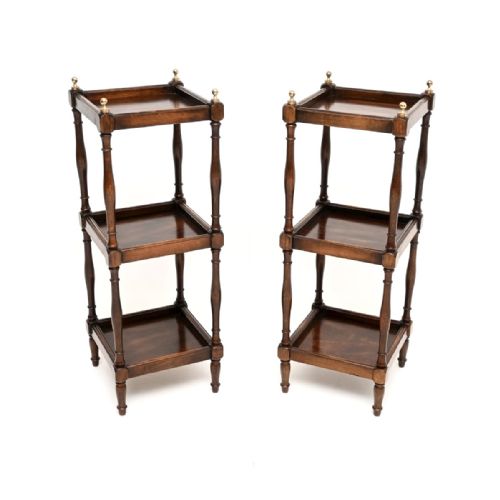
The forms vary considerably across the selection, appearing as round planters, three-tier side tables, tall pedestals and brass-bound wine coolers adapted for botanical display. French Empire, Regency and Louis styles appear frequently alongside traditional British cabinet-making.
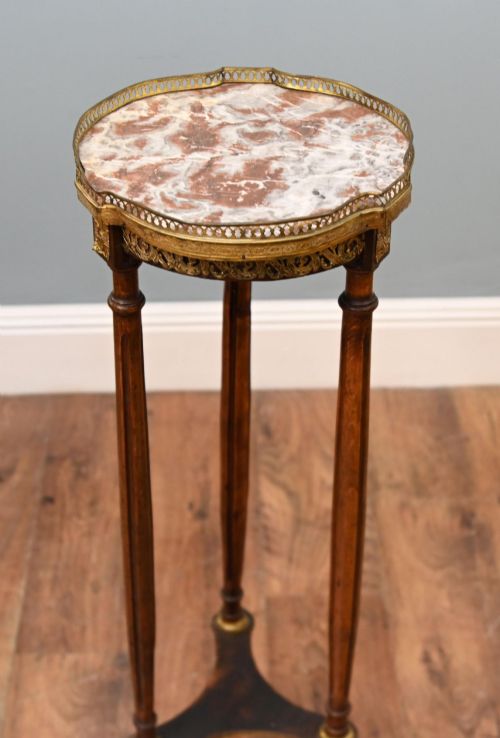
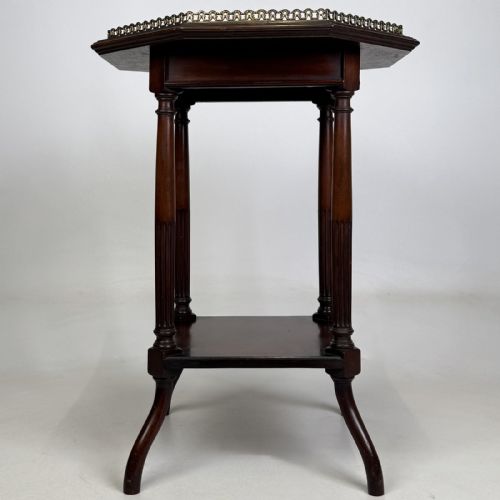
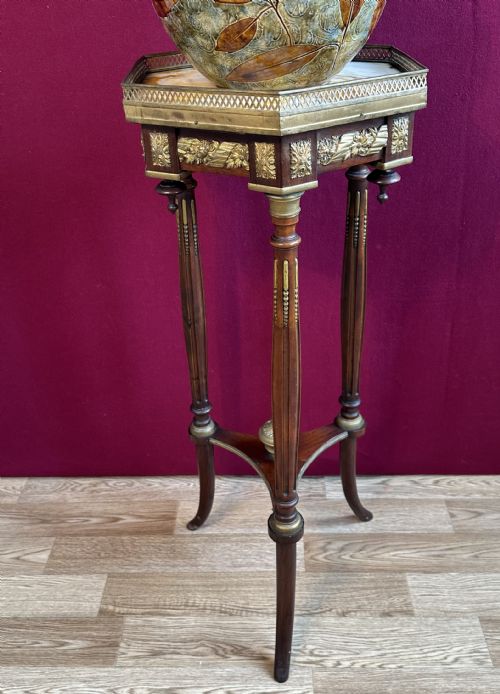
Buyers will encounter pieces featuring inset marble tops, raised brass galleries and metal mounts. The combination of dense timber and polished metal defines the functional elegance of these furnishings.
Materials and construction
The primary timber used is mahogany, frequently paired with secondary woods like walnut or box, and sometimes finished with ebonised details or intricate inlaid patterns. Metal elements are integral, utilising cast brass, gilded or ormolu mounts, and sturdy copper or brass bands for coopered buckets.
Many examples incorporate polished marble inserts, ranging from rouge to white varieties, fitted neatly into timber tops. Bronze mounts and delicate wire galleries are secured by hand, joining the structural woodwork with decorative hardware.
Brass Mahogany Plant Stands Retail Price Guide 2026
Typical asking prices for brass mahogany plant stands among the pieces listed under this phrase on Sellingantiques today, from the lower quarter to the upper quarter. They describe what is for sale here now, not the wider market.
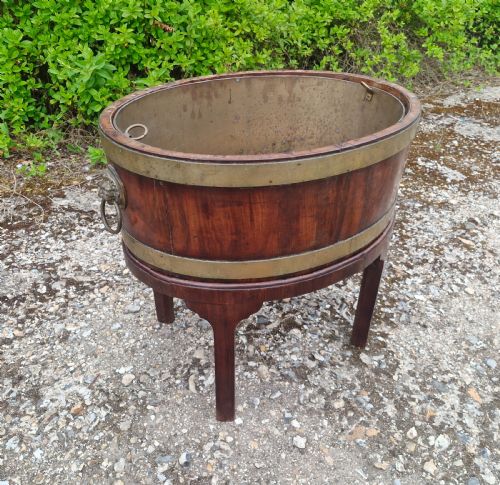
Several sturdy wooden buckets originally built for chilling wine happily retired into botanical duty as heavy-duty plant holders.
Distinctions in quality
Quality rests upon the crispness of the brass casting in the mounts, galleries and handles, alongside the density and grain of the mahogany selected by the maker. Finer examples display meticulous joinery and well-fitted marble slabs that sit flush within the timber frame.
The integration of decorative styles, such as French Empire or Neoclassical motifs, distinguishes standard utility pieces from high-status items created in the manner of renowned designers. Proportions and the weight of the metal hardware dictate the overall presence of the stand.
François Linke
The Brass Mahogany Plant Stands Glossary
- Jardiniere
- A decorative pot or stand designed to hold a plant or flower arrangement. These often feature metal liners or brass banding to protect the timber from moisture.
- Ormolu
- Gilded bronze or brass applied as a decorative mount to furniture. It provides bright metallic contrast against dark mahogany surfaces.
- Torchere
- A tall, slender stand or pedestal originally intended to support a candelabrum or lamp. In later periods, these frequently serve to display urns or potted plants.
- Coopered
- Constructed from vertical staves of wood bound together with metal hoops, a technique borrowed from barrel-making. This method appears frequently on cylindrical planters and wine coolers.
- Gallery
- A small raised rail, often pierced brass, fitted around the perimeter of a tabletop. It prevents items from sliding off the edge.
Brass Mahogany Plant Stands: Frequently Asked Questions
How were these stands originally used?
These pieces served primarily to hold potted plants, floral displays or large vases within formal reception rooms and drawing rooms. Many variations originated as wine coolers or cellarettes before being repurposed as plant holders.
The raised galleries and metal linings protected fine wooden floors and tabletops from water damage during indoor gardening and entertaining.
Are the marble tops original?
Marble inserts were standard additions on French Empire, Neoclassical and continental side tables to provide a durable, cool surface for plants and lamps. Examining the underside reveals whether the stone rests securely in a rebated wooden frame suited to the period.
Variations in marble colour, such as rouge or white, reflect the specific regional workshop and the stylistic preferences of the nineteenth century.
What defines the French Empire style?
The French Empire style draws heavily on classical antiquity, featuring strong architectural lines, dark mahogany veneers and prominent ormolu mounts. Pieces often incorporate classical motifs like wreaths, sphinxes or paw feet.
This aesthetic conveys symmetry and formal dignity, distinguishing these items from lighter Edwardian or Georgian designs.