





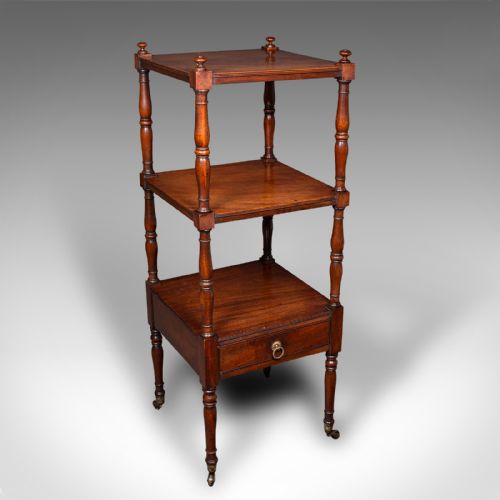
Turned Column Tier Table
A turned column tier table offers stacked display surfaces and architectural framing, bringing versatile tiered storage and distinct periods into your room.
Turned Column Tier Table
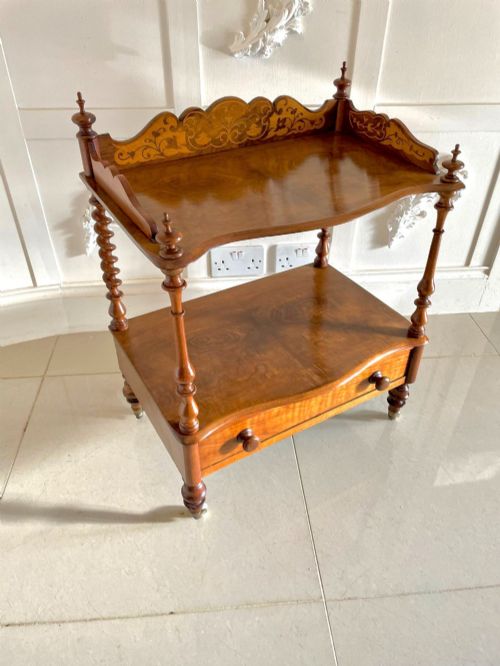
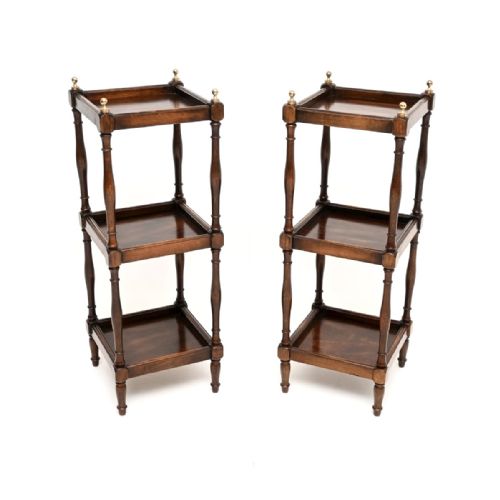
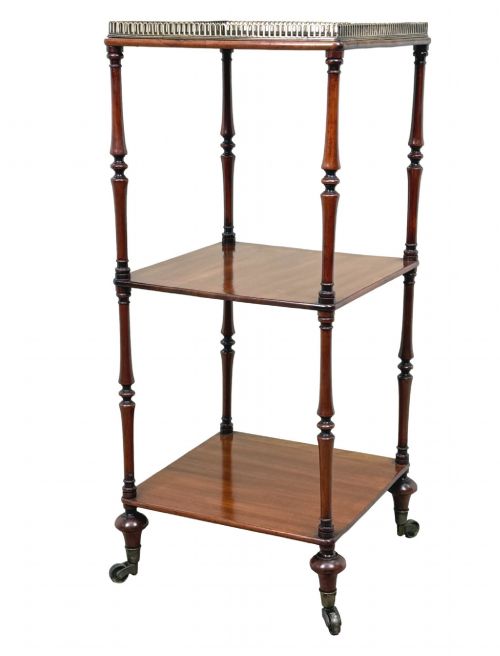
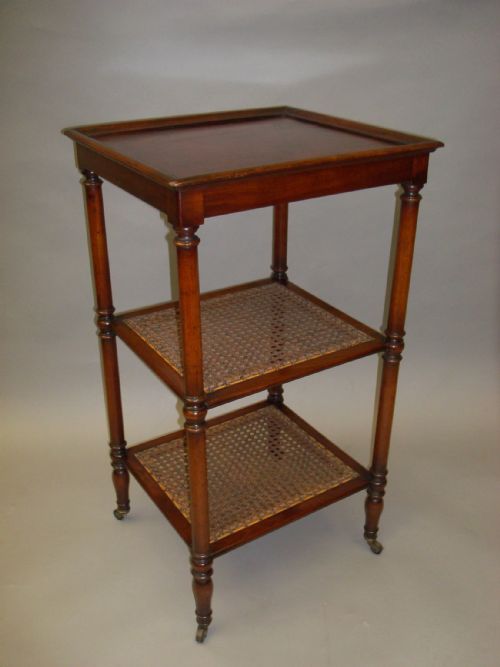
When you search for a turned column tier table, you are looking at multi-tiered freestanding furniture designed for display and serving across Georgian, Regency, and Victorian periods. These pieces take forms such as etageres, whatnots, dumb waiters, and lamp tables, functioning as practical multi-level surfaces.
You are most likely to meet mahogany, walnut, and burr walnut examples featuring two or three open tiers supported by turned vertical columns. These items originate from English country houses and domestic interiors, spanning the late eighteenth century through to the Edwardian era.
How they were made
Cabinet makers utilised dense hardwoods like mahogany, walnut, and rosewood, often applying burr walnut veneer or birdseye maple to prominent display surfaces. These timbers were turned on lathes to form the characteristic upright columns that separate each horizontal tier.
Joinery techniques tied the vertical turned supports securely into the stacked shelves, sometimes incorporating brass castors, drawers, or drop leaves into the rigid framework.
Turned Column Tier Table Retail Price Guide 2026
Typical asking prices for turned column tier table among the pieces listed under this phrase on Sellingantiques today, from the lower quarter to the upper quarter. They describe what is for sale here now, not the wider market.
Several tier tables roll on original brass castors, ready for hasty tea service deployment.
What varies in quality
The distinction between standard examples and finer items rests in the selection of timber figures, such as burr walnut veneer or birdseye maple, and the crispness of the turned column details. Superior pieces display harmonious proportions across multiple tiers, integrating thoughtful additions like inlaid banding or matched grain patterns.
Construction methods also separate grades, where heavier framing, stable tier joints, and original brass hardware elevate a piece above simpler utilitarian items.
The Turned Column Tier Table Glossary
- Etagere
- A tiered piece of furniture designed for displaying small objects, ornaments, or books. These open stands appear frequently in mahogany and walnut.
- Whatnot
- An open shelving unit with multiple tiers supported by upright posts, used historically for ornaments and books. They span Georgian, Regency, and Victorian eras.
- Dumb waiter
- A multi-tiered serving table or stand used in dining rooms for holding dishes or utensils without servants present. Examples often feature graduated circular or rectangular tiers.
- Burr walnut
- A prized wood veneer harvested from the burl growths of walnut trees, displaying swirling patterns. Cabinet makers utilised this timber on high-status tables and etageres.
Turned Column Tier Table: Frequently Asked Questions
What is a tier table?
A tier table is a multi-level piece of furniture featuring stacked horizontal surfaces connected by vertical supports. These designs provided additional display and storage space in historic interiors.
They appear in forms such as whatnots, etageres, and dumb waiters, constructed from timbers like mahogany and walnut across the Georgian and Victorian periods.
How were whatnot tables used?
Whatnot tables served as versatile open display stands in nineteenth-century rooms. Households placed them in parlours and drawing rooms to hold ornaments, books, and collections.
Their stacked shelves allowed owners to exhibit decorative items while keeping floor space clear.
How do I date a tier table?
Dating relies on examining the timber species, joinery methods, and the style of the turned columns. Georgian and Regency pieces often show simpler linear forms in mahogany, while Victorian examples introduce burr walnut veneers and heavier proportions.
Comparing the edge profiles of the tiers and the turning style of the upright supports helps clarify the period of manufacture.
Where should I place an etagere?
An etagere suits corners, hallways, or living rooms where vertical display space is useful. Their open tiered design prevents rooms from feeling overcrowded.
They work well holding lamps, books, or small decorative objects while adding architectural interest through their turned columns.