





Brass Inlay Dresser
A brass inlay dresser brings striking linear precision to classic timber furniture, offering both deep storage and a refined decorative surface.
Brass Inlay Dresser
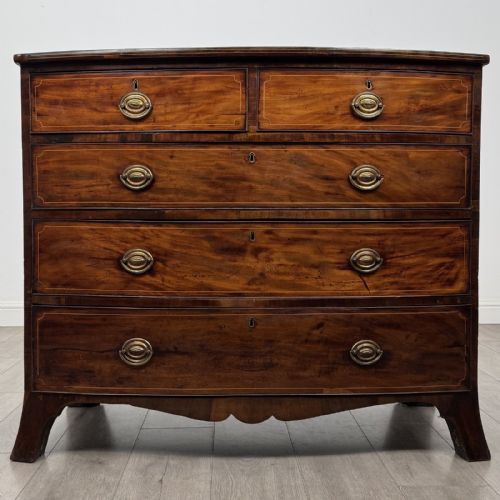
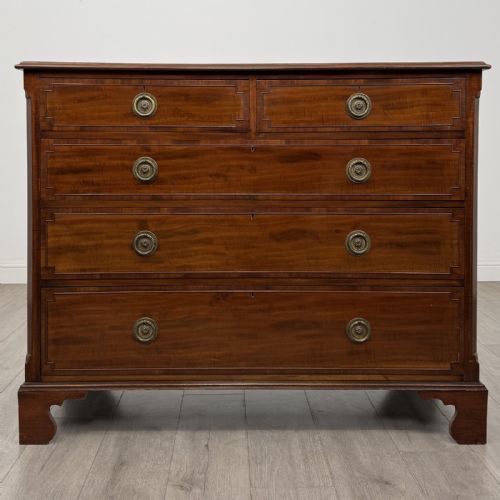
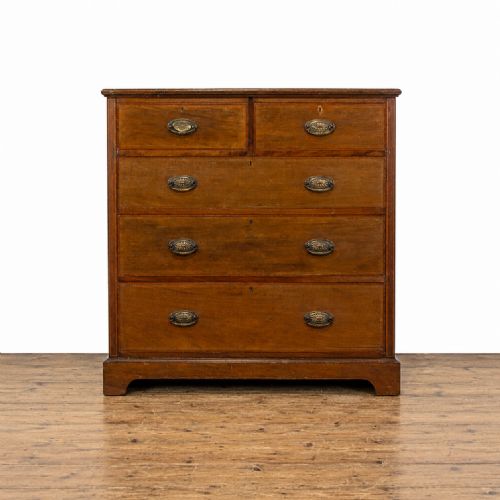
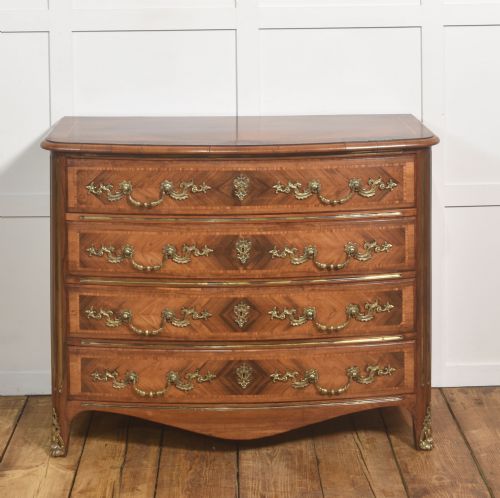
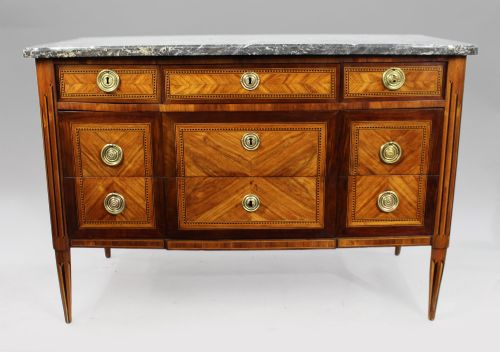
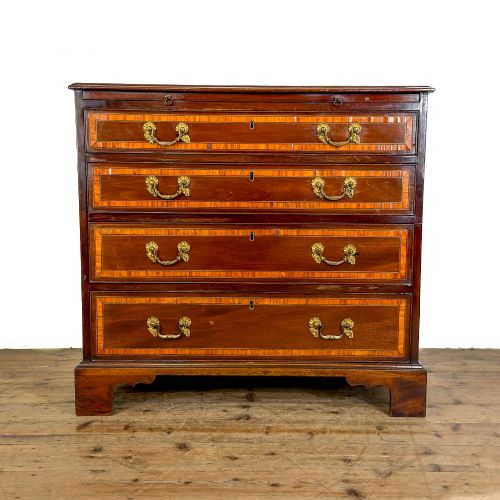
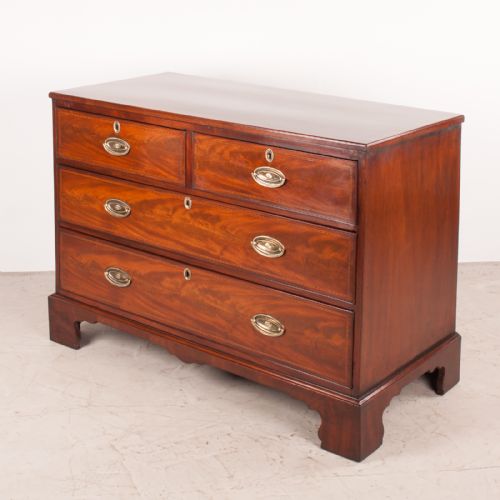
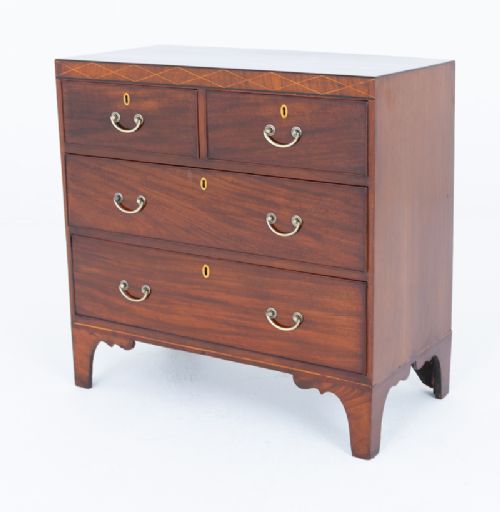
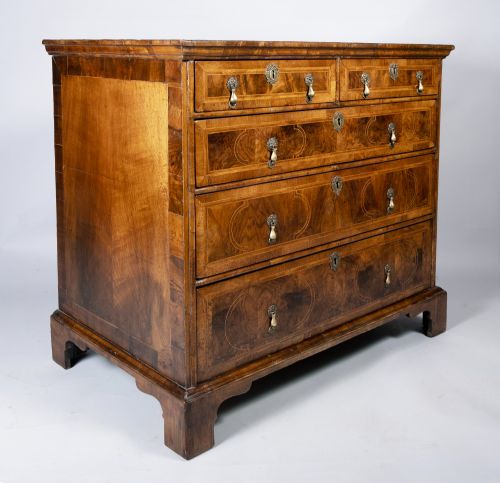
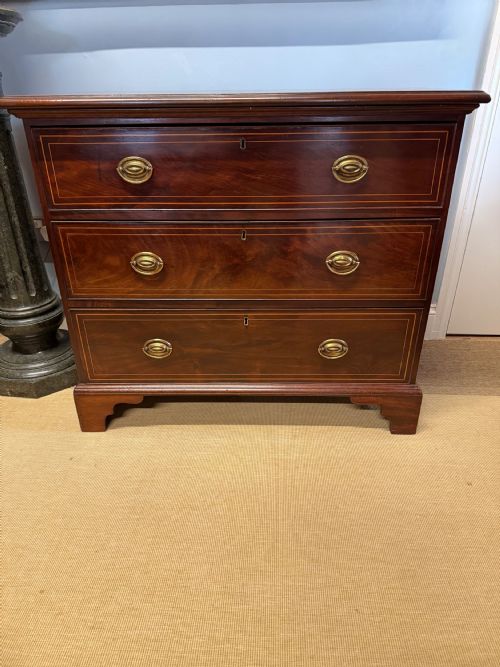
When you search for a brass inlay dresser, you examine case furniture that primarily takes the form of chests of drawers, commodes, and chiffoniers. These storage pieces originate from periods spanning the eighteenth century through to the Edwardian era, incorporating Georgian and Regency designs.
The pieces you are most likely to meet on this page include mahogany and walnut chests of drawers featuring contrasting stringing or detailed metal work. Makers across the eighteenth and nineteenth centuries applied these metallic accents to outline drawer edges, frame panels, and define top surfaces.
Beyond standard drawer chests, the selection encompasses bow-front models, serpentine fronts, and compact side cabinets. Each configuration utilises the inherent warmth of timber to ground the bright, reflective quality of the metallic embellishments.
Materials and Construction Methods
Cabinetmakers constructed the foundational carcases using dense timbers such as mahogany, walnut, oak, and pitch pine, often applying veneers of satinwood or fruitwood across the main facades. They prepared precise channels within the wood grain to receive hammered or rolled strips of brass, securing the metal flush with the surrounding surface.
Details such as boxwood inlay, marquetry, and crossbanding frequently accompany the brass work, adding tonal depth to the primary timber. Joinery relied on traditional techniques like dovetailing for drawer construction, ensuring structural stability alongside ornamental refinement.
Brass Inlay Dresser Retail Price Guide 2026
Typical asking prices for brass inlay dresser among the pieces listed under this phrase on Sellingantiques today, from the lower quarter to the upper quarter. They describe what is for sale here now, not the wider market.
Distinctions in Execution
Quality rests upon the precision of the metal inlay work and the harmonious selection of timber veneers. Finely executed pieces display uninterrupted flush integration where the brass meets the wood, whereas simpler examples show slight gaps or irregular depth in the channels.
The choice of secondary woods and the subtlety of grain patterning across drawer fronts further separate standard production from superior cabinet work. Well-balanced proportions and crisp execution of bracket feet or base mouldings complete the hierarchy of manufacture.
Mawer & Stephenson
The Brass Inlay Dresser Glossary
- Stringing
- A narrow inlaid line of contrasting wood or metal set into the surface of a piece. It creates delicate borders around drawer fronts and tabletops.
- Crossbanding
- A strip of veneer laid around the border of a panel or drawer front with the grain running perpendicular to the central area. This technique frames the primary timber.
- Serpentine
- A front shape characterised by a central convex curve flanked by concave sections, or vice versa. It requires advanced woodworking skill to execute properly.
- Bracket Feet
- Simple architectural supports shaped like a bracket, projecting beneath the corners of a case piece. They provide a stable and understated base.
- Commode
- A low decorative chest of drawers or cabinet originating from French furniture traditions. The term frequently applies to sophisticated eighteenth-century case pieces.
Brass Inlay Dresser: Frequently Asked Questions
What is a brass inlay dresser?
A brass inlay dresser refers to case furniture, specifically chests of drawers and commodes, embellished with fine lines or motifs of brass set directly into the wood.
These pieces combine functional storage with decorative metalwork, spanning Georgian, Regency, and later periods of cabinetmaking.
How do I care for inlaid wood furniture?
Maintain the timber and metal by dusting gently with a soft dry cloth and avoiding excessive moisture or direct sunlight.
Apply high-quality wax polish periodically to nourish the wood without damaging the embedded brass lines.
What woods were used for these chests?
Cabinetmakers primarily utilised mahogany, walnut, and oak for the structural carcase and primary drawer surfaces.
They frequently added secondary veneers such as satinwood, fruitwood, and boxwood alongside the brass inlay to create visual contrast.
How can I tell a Regency chest apart from a Georgian one?
Regency pieces often display bolder brass inlay, gilt mounts, and heavier architectural proportions influenced by classical antiquity.
Georgian examples tend to favour restrained mahogany or walnut surfaces, relying on bracket feet and subtle stringing for decoration.