



Brass Inlaid Tray
A brass inlaid tray brings tactile warmth and disciplined geometry into a room, joining timber surfaces with bright metallic line.
Brass Inlaid Tray
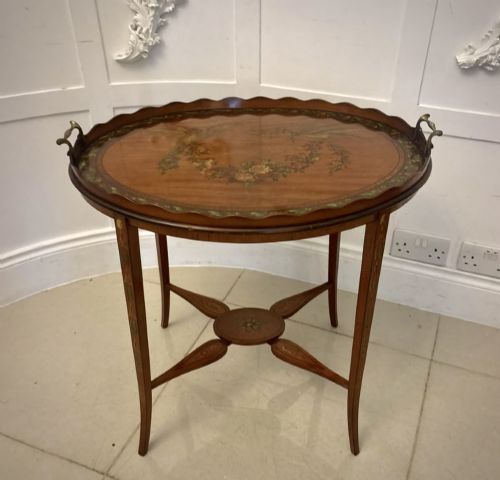
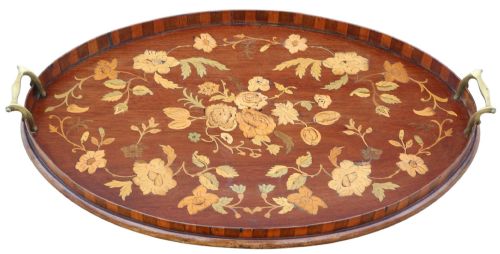
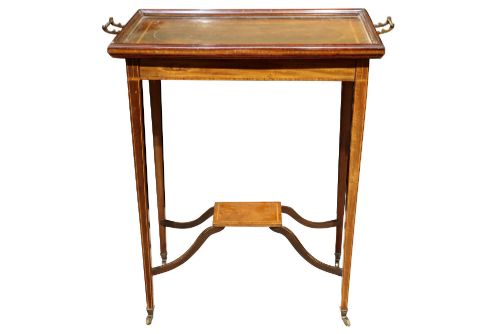
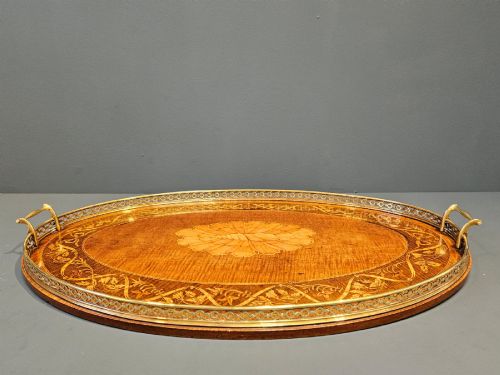
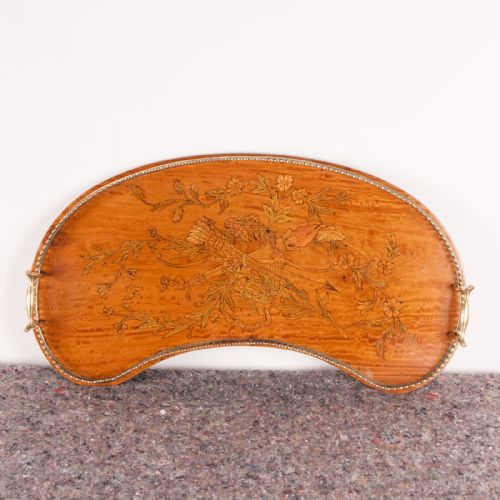
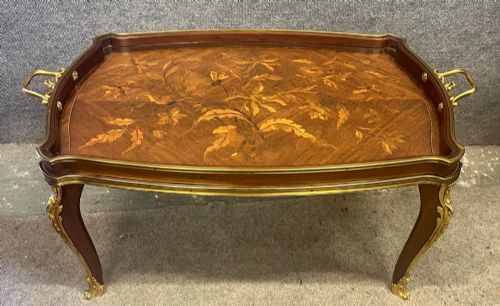
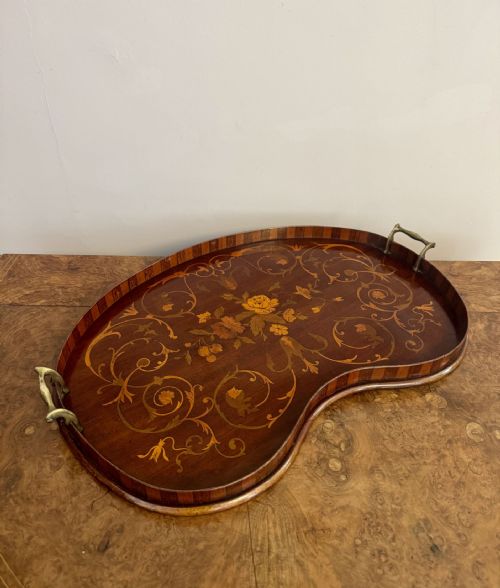
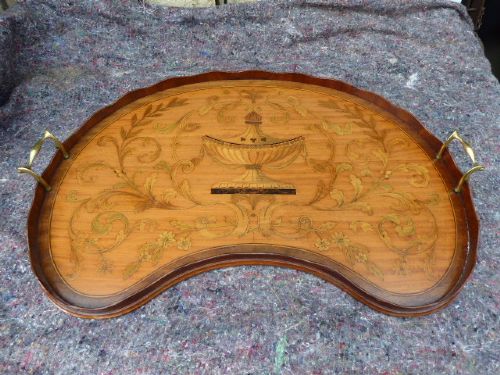
A brass inlaid tray takes several distinct shapes across the periods represented here, appearing most frequently as an oval or kidney-shaped serving piece in mahogany or satinwood, alongside occasional folding stands and low tables.
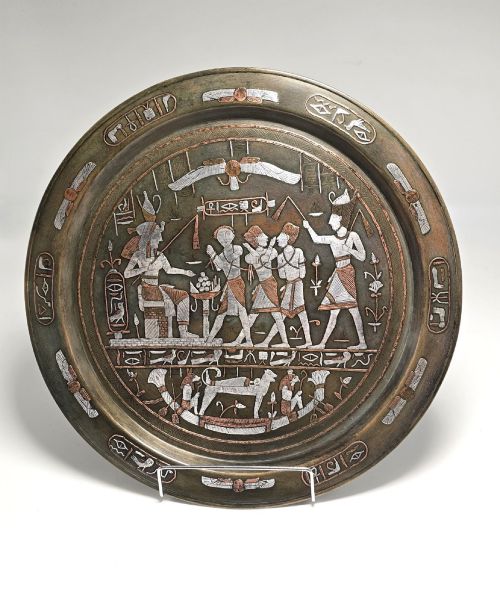
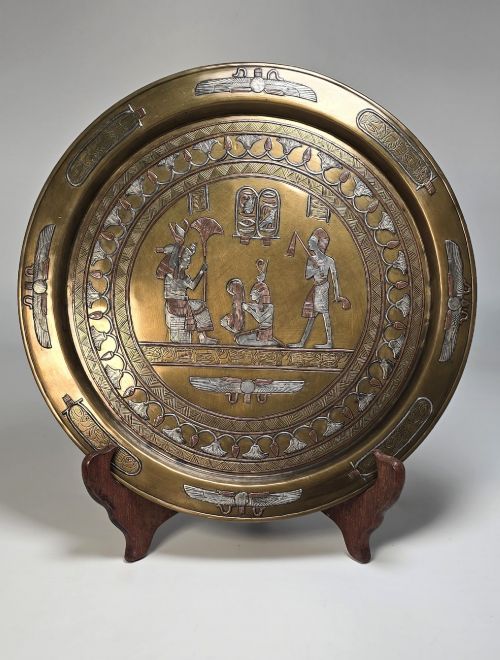
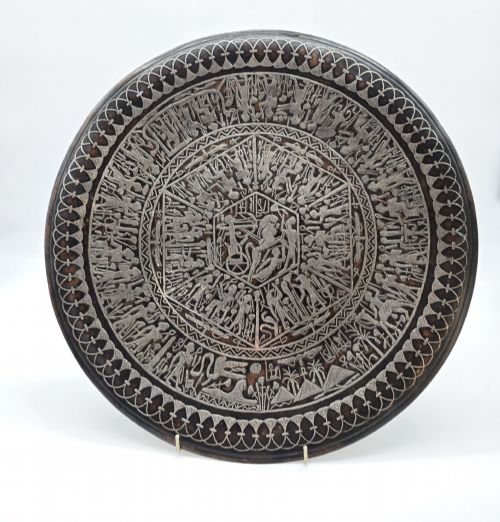
The material vocabulary stretches from Georgian and Victorian mahogany and rosewood foundations to Edwardian satinwood and exotic Middle Eastern metalwork, including Cairo Ware chargers and Japanese mixed-metal dishes.
Buyers seeking a brass inlaid tray encounter British serving utensils and tea platters sitting alongside continental desk stands, etageres, and occasional tables adapted for display.
Materials and Technique
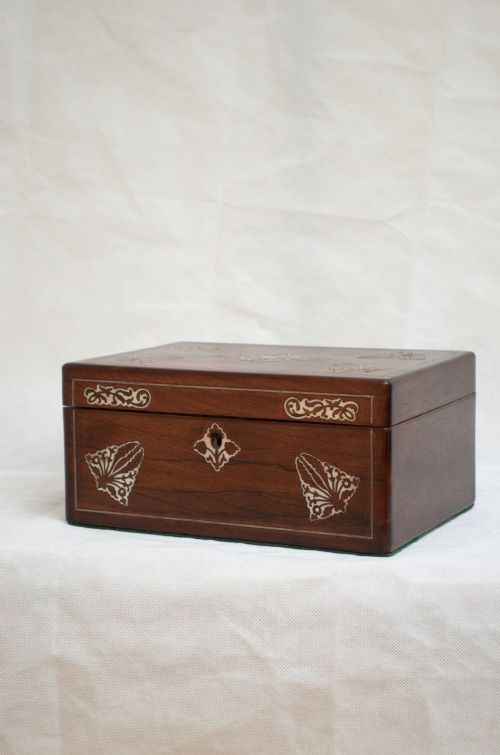
Cabinetmakers constructed the wooden bases of these trays using dense timbers such as mahogany, satinwood, and rosewood, often pairing them with contrasting stringing and marquetry motifs.
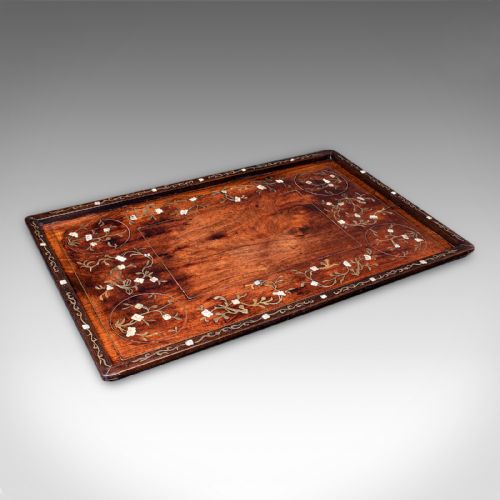
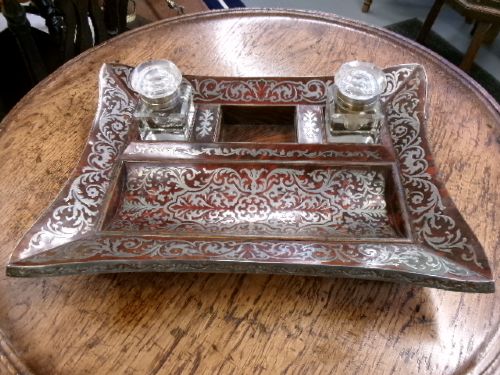
Makers set brass wire, sheet, and silver into precise hand-cut channels within the timber or patinated copper surfaces, securing the metal flush with the surrounding plane.
Middle Eastern and Japanese workshops applied divergent techniques, fusing silver and brass wire into patinated copper or bronze chargers through careful hammering and etching.
Brass Inlaid Tray Retail Price Guide 2026
Typical asking prices for brass inlaid tray among the pieces listed under this phrase on Sellingantiques today, from the lower quarter to the upper quarter. They describe what is for sale here now, not the wider market.
Even a tea tray needs to rest sometime; several here double as coffee tables on folding stands.
Distinctions in Execution
The standard of a brass inlaid tray rests upon the precision of the joinery and the snugness of the metal inlay within its timber or bronze bed.
Superior examples display crisp hand-cut marquetry lines and unblemished metal surfaces where brass and wood meet as a single smooth plane.
Lesser items reveal gaps around the metal insertions or clumsy repairs where timber has shrunk and forced the brass out of alignment.
Edwards and Roberts
The Brass Inlaid Tray Glossary
- Marquetry
- The art of forming decorative patterns on a wooden surface by fitting together small pieces of veneer, timber, shell, or ivory. It differs from inlay by covering the entire foundational surface rather than sitting within routed channels.
- Cairo Ware
- Brass, bronze, or copper vessels inlaid with silver and copper wire, produced in Egypt primarily during the late nineteenth century for European travellers on the Grand Tour.
- Kidney-shaped
- A curved, indented outline popular in Edwardian occasional trays and writing surfaces designed to fit comfortably against the body of the user.
- Stringing
- Thin lines of contrasting timber or metal let into the surface of furniture or trays to form borders, geometric frames, and linear decoration.
- Etagere
- A set of open shelves for displaying small objects, sometimes constructed with a removable tray top that lifts directly off the frame.
Brass Inlaid Tray: Frequently Asked Questions
How do I care for a brass inlaid tray?
Keep wooden trays away from direct heat sources and moisture to prevent the timber from warping and loosening the metal wire. Dust gently with a dry cloth and avoid harsh liquid polishes that can seep beneath the brass inlay.
Wax the timber occasionally with a quality beeswax to maintain the sheen of the mahogany or satinwood without disturbing the metal elements.
Were these trays used for serving food?
Many mahogany and satinwood examples functioned primarily as tea trays or afternoon tea platters in nineteenth-century drawing rooms. The raised rims and integrated handles kept porcelain secure during transit.
Heavier metal chargers and decorative plates served largely as display items on side tables or walls rather than functional dining implements.
What is Cairo Ware?
Cairo Ware describes brass, copper, and bronze vessels and chargers inlaid with silver and copper wire, made in Egypt during the late nineteenth century. These pieces were acquired by European travellers on the Grand Tour and brought back to British homes.
The distinctive metallic patterns combine traditional Islamic geometric designs with revivalist aesthetics popular during the Victorian and Edwardian eras.