


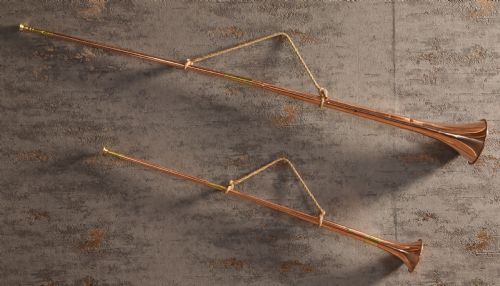
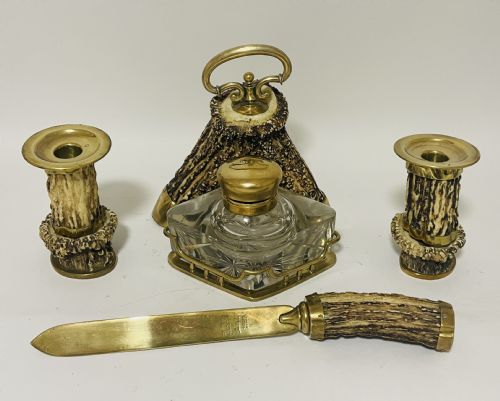


Brass Hunting Horn
These brass hunting horn pieces bring the bold, resonant character of the sporting field directly into your home.
Brass Hunting Horn
A brass hunting horn delivers a striking visual statement rooted in nineteenth-century sporting traditions. You will encounter forms ranging from long coaching horns to dinner gongs and desk accessories mounted with cattle horn.
Most examples hail from the Victorian period, reflecting an era deeply enamoured with equestrian and field sports. These items combine polished metalwork with organic materials such as oak, leather, and genuine horn.
Beyond standalone horns, the category embraces domestic items like table gongs and oil lamps incorporating horn elements. Each piece captures a distinct slice of nineteenth-century decorative metalwork.
Materials and construction methods
Artisans formed these pieces primarily from bright brass and warm copper, frequently pairing them with natural cattle horn or antler. Metal components were shaped using traditional beating and mounting techniques to achieve durability and acoustic resonance.
Secondary materials such as oak bases, leather fittings, and nickel accents provided structural support and textural contrast. Gilt bronze and cord details occasionally appeared on more ornate decorative objects from the period.
Brass Hunting Horn Retail Price Guide 2026
Typical asking prices for brass hunting horn among the pieces listed under this phrase on Sellingantiques today, from the lower quarter to the upper quarter. They describe what is for sale here now, not the wider market.
Cattle horns were occasionally turned into dinner gongs so diners could be summoned by the sound of the hunt echoing through the hallway.
Assessing quality and craftsmanship
Superior examples display crisp joins between the metal tubing and natural horn components, showing deliberate hand-finishing rather than hasty assembly. The weight and gauge of the brass or copper dictate the overall solidity of the piece.
Finer items integrate materials like oak and nickel with precise alignment, ensuring that organic elements complement the polished metalwork harmoniously. The clarity of form in mounted horns and gongs separates standard utilitarian items from finer decorative works.
The Brass Hunting Horn Glossary
- Coaching horn
- A long, straight brass or copper horn historically used by coachmen to signal their approach. These pieces are characterised by their slender conical bore and flared bell.
- Dinner gong
- A percussion instrument consisting of a horn or metal disk suspended for domestic use. They were struck with a mallet to announce meals in large country houses.
- Powder flask
- A small container used for holding gunpowder, often fashioned from horn with brass fittings. These items frequently feature adjustable charging mechanisms.
- Gilt bronze
- Bronze treated with a gold or gold-coloured wash to enhance its decorative appeal. This material provided a rich, enduring lustre on nineteenth-century accessories.
Brass Hunting Horn: Frequently Asked Questions
What is a brass hunting horn used for?
These horns served practical signalling purposes during field sports and coaching journeys in the nineteenth century. Today, they function primarily as decorative objects or striking interior accents.
Larger versions and dinner gongs were integrated into domestic routines to summon household members. Their distinctive metallic gleam brings an authentic equestrian aesthetic to modern spaces.
How do I date a brass horn?
Dating relies heavily on manufacturing techniques, material combinations, and stylistic cues typical of the nineteenth century. Victorian examples often display specific mounting styles and patination patterns.
Examining the fixings, such as brass screws or rivets, reveals the age of construction. Comparing the piece against documented nineteenth-century forms helps narrow down the decade of origin.
Are these horns still playable?
While many survive in sound structural condition, their primary value today lies in their decorative and historical merit. Some coaching horns retain their acoustic properties, though they are rarely used for actual signalling.
Displaying them on stands or mounting them on walls preserves their delicate metal and horn structures. Owners generally treat them as sculptural artefacts rather than functional instruments.
How should I clean brass and horn?
Maintenance requires a gentle approach to preserve the historical patination on both the metal and organic material. Avoid harsh chemical polishes that strip away the character accumulated over the centuries.
Dusting regularly with a soft, dry cloth is usually sufficient for routine care. Natural horn benefits from occasional light conditioning to prevent drying.