

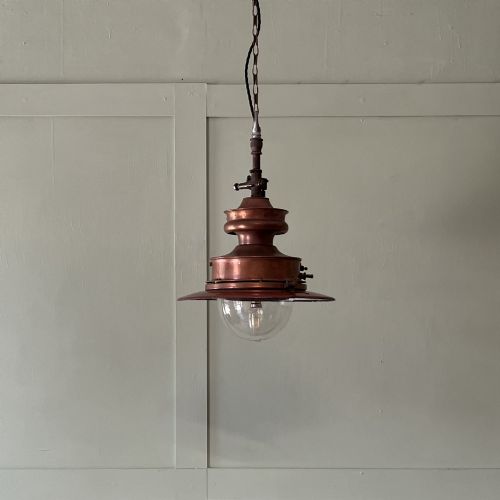
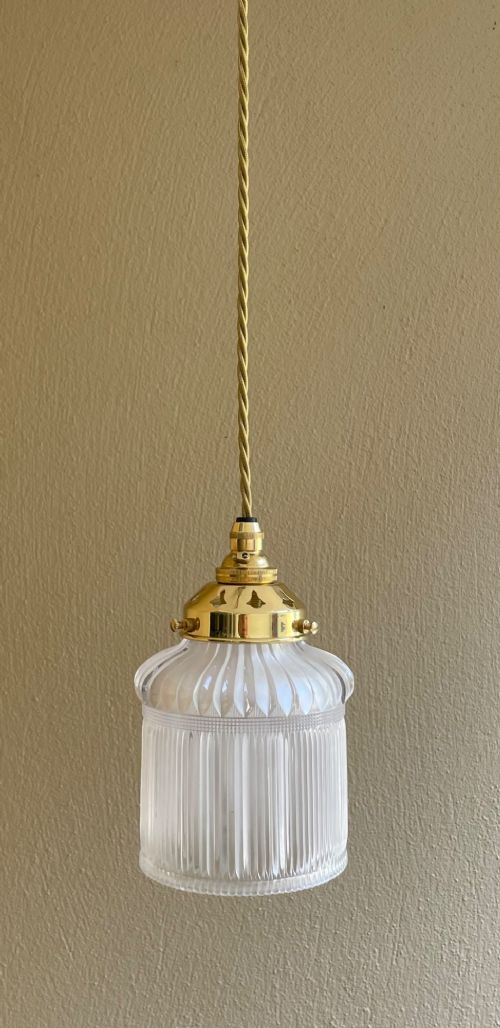
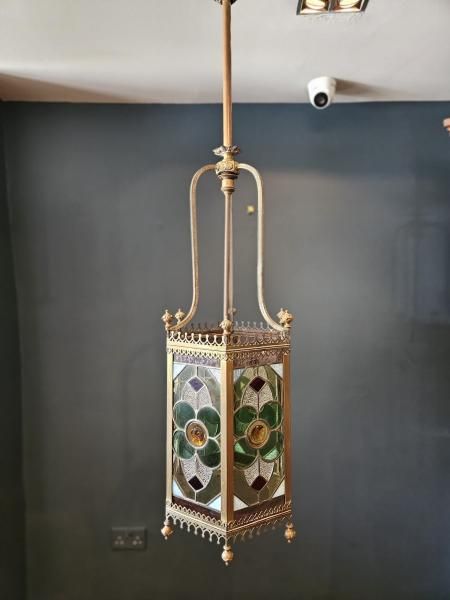
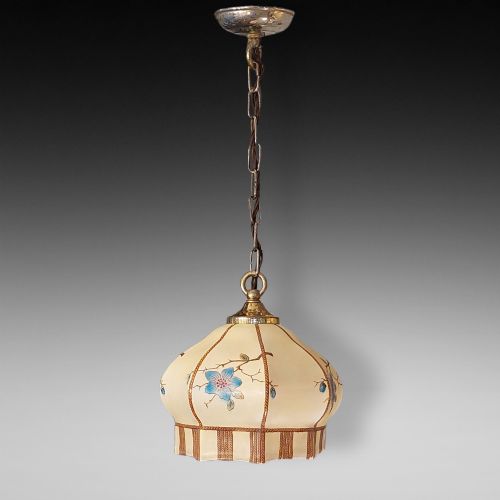
Brass Hanging Shade
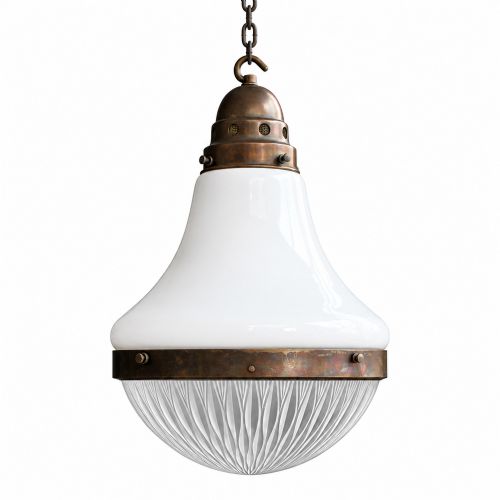
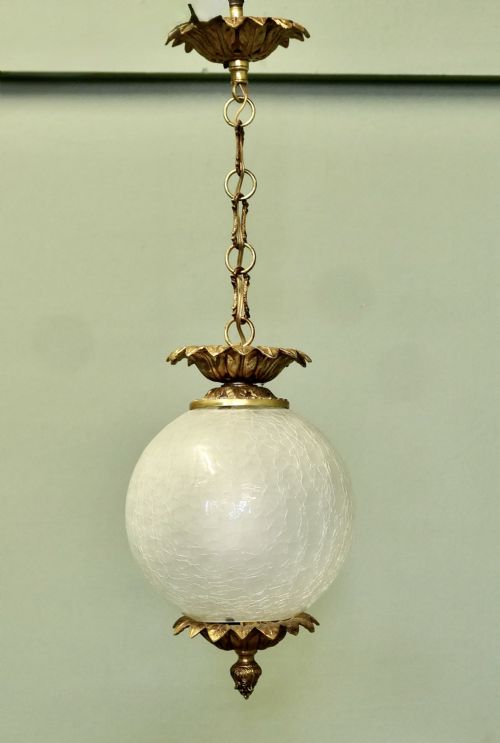
A brass hanging shade brings immediate task or ambient illumination from the ceiling, combining structural metalwork with glass bowls, globes, or prisms.
Brass Hanging Shade
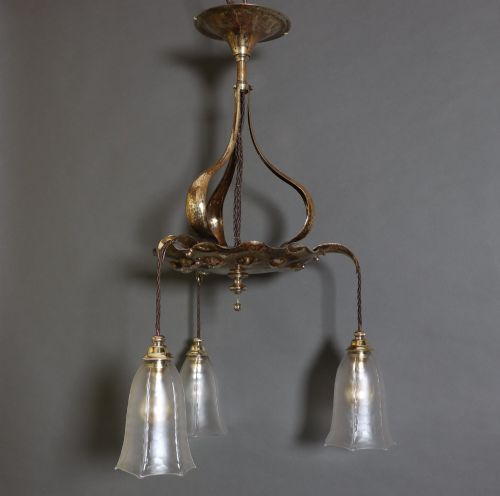
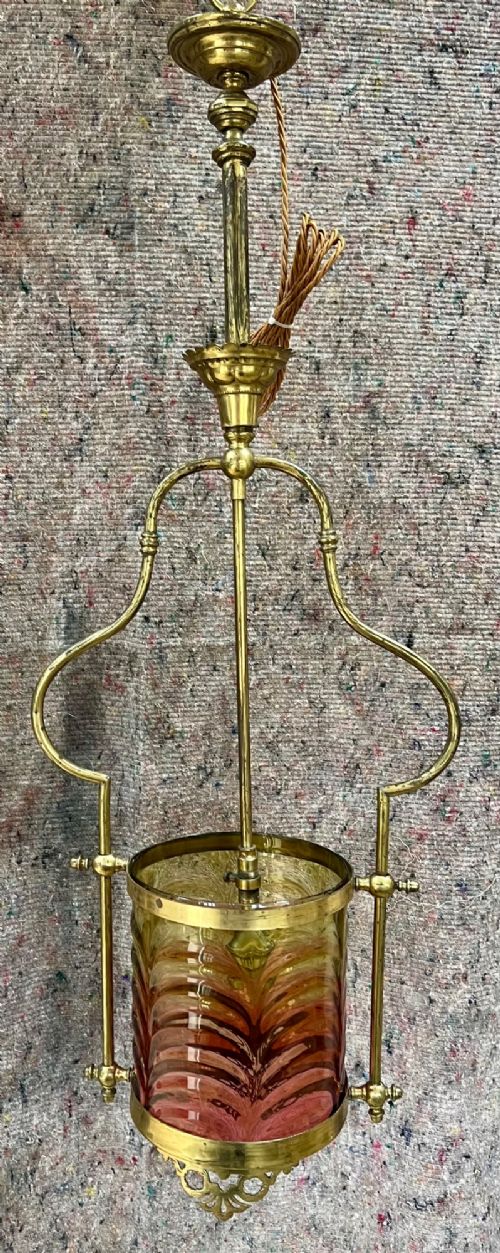
A brass hanging shade is a suspended ceiling fixture designed to cast light downward in domestic or institutional spaces. When you search for this phrase, you encounter diverse forms ranging from single pendants to multi-arm chandeliers and lanterns.
The pieces on this page span the Victorian era, the Edwardian period, and the 20th century up through the 1940s. Styles stretch across Victorian, Edwardian, Arts and Crafts, Art Nouveau, Art Deco, Industrial, and Mid-Century Modern.
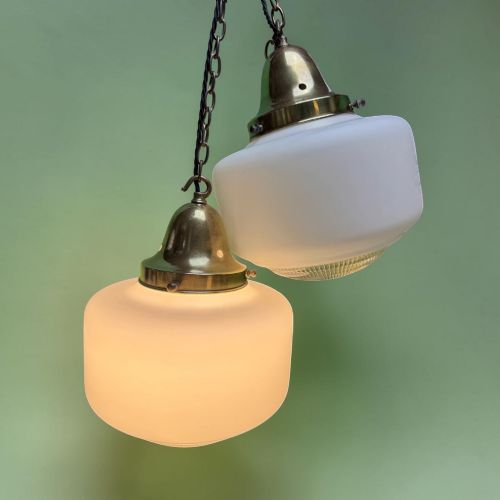
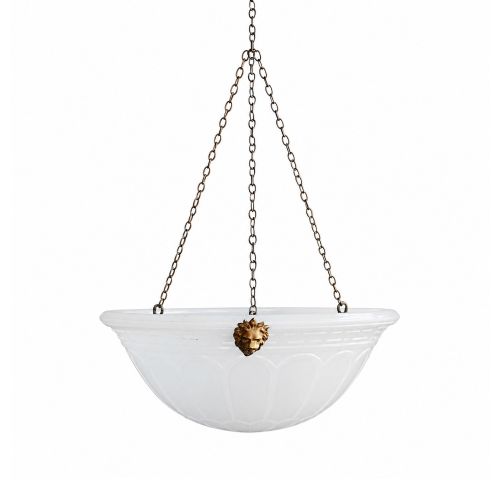
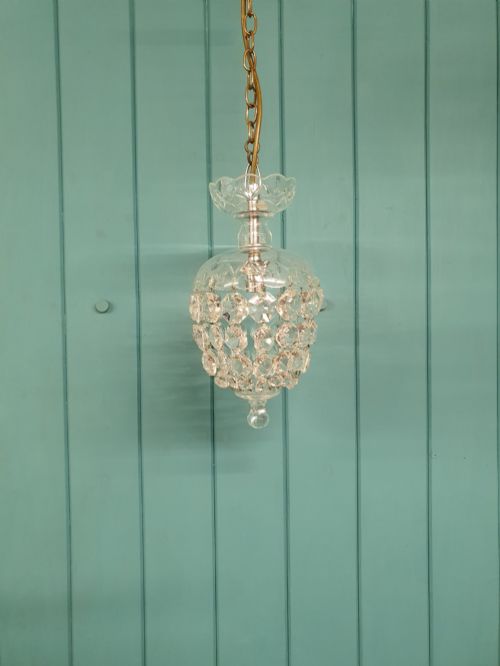
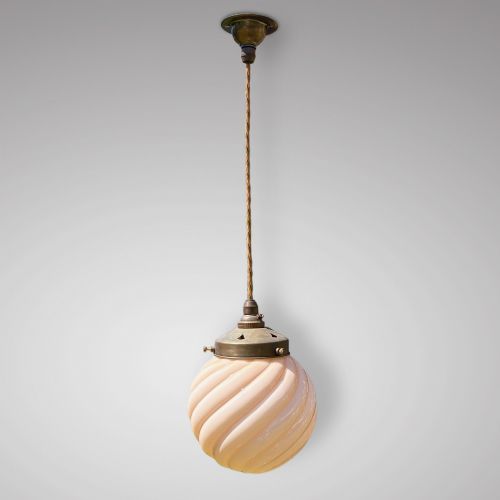
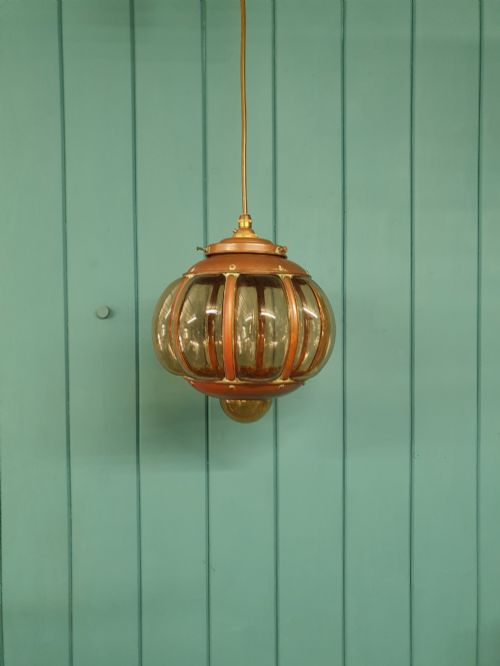
Most examples combine a brass frame, canopy, or gallery with glass elements. You will frequently find pendant lights, ceiling lights, and hall lanterns among the selections.
Materials and construction
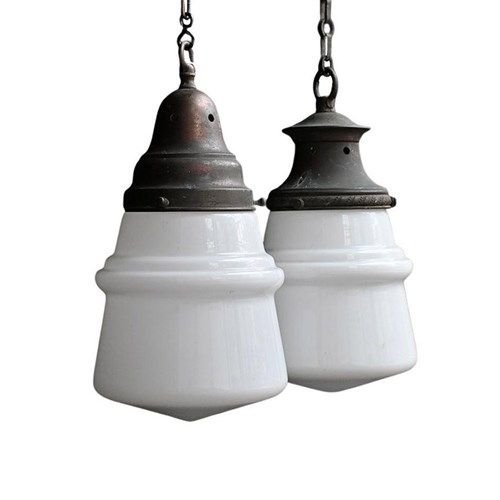
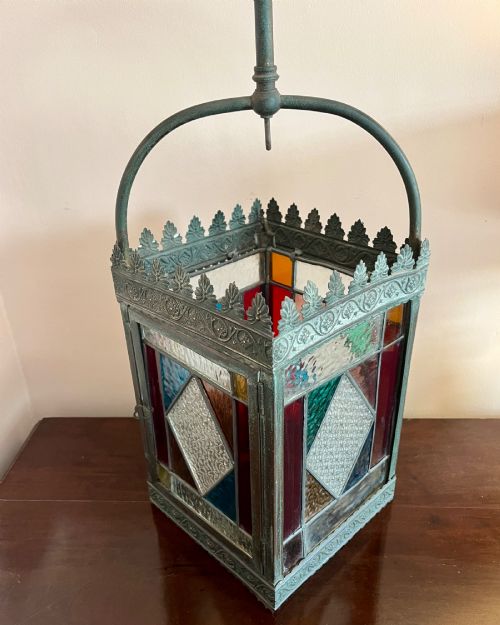
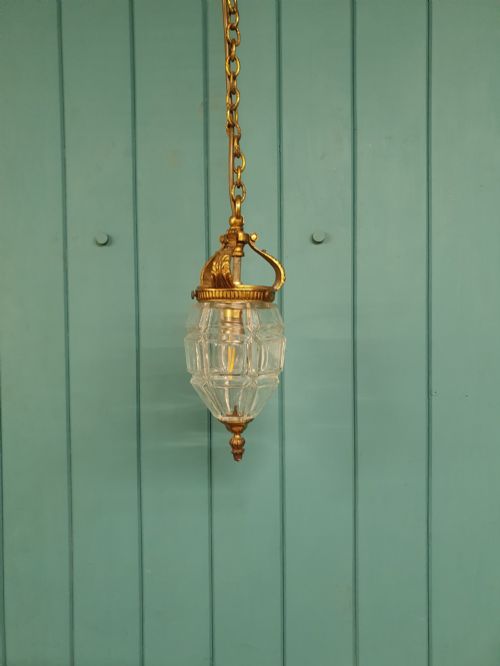
The primary metal components consist of brass and copper, sometimes forming structural frames, galleries, and chains. These metals are paired with various glass configurations including opaline glass, frosted glass, moonstone, cut glass, leaded glass, and crackle glass.
Manufacturing techniques combine metal casting and spinning with glass blowing, moulding, and etching. Makers incorporated prismatic glass such as Holophane alongside hand-painted glass shades and stained glass panels.
Brass Hanging Shade Retail Price Guide 2026
Typical asking prices for brass hanging shade among the pieces listed under this phrase on Sellingantiques today, from the lower quarter to the upper quarter. They describe what is for sale here now, not the wider market.
Listings span the 19th Century, Edwardian period, and 1920, 1930, and 1940, uniting brass and copper with opaline, moonstone, and cut glass.
Assessing quality in hanging shades
Quality reveals itself in the weight and substance of the metalwork and the clarity or depth of the glass. Finer pieces display crisp casting in the brass mounts and substantial thickness in the moulded or cut glass shades.
Design integrity separates standard utility lighting from exceptional examples. Superior items feature harmonious proportions between the brass suspension and the glass globe, alongside original decorative details like leaf designs or specialised prismatic patterns.
The Brass Hanging Shade Glossary
- Brass
- A yellow alloy of copper and zinc used extensively for the structural frames, galleries, and canopies of hanging lights. It provides a warm metallic tone that polishes bright or ages to a darker patina.
- Opaline glass
- A milky, semi-translucent white glass that diffuses light evenly without harsh glare. It appears frequently in spherical and conical pendant shades from the early twentieth century.
- Holophane
- A brand of scientific prismatic glass engineered to direct and diffuse light efficiently. These ribbed shades are prized for their optical properties and industrial aesthetic.
- Pendant light
- A single light fixture suspended from the ceiling by a cord, chain, or metal rod. It hangs downward to illuminate a specific zone or surface.
Brass Hanging Shade: Frequently Asked Questions
What is a brass hanging shade?
A brass hanging shade is an overhead light fixture suspended by a chain, cord, or rod, featuring a brass structure paired with a glass diffuser.
These pieces were traditionally installed in hallways, parlours, porches, and billiard rooms to provide functional illumination.
How do I install a hanging shade?
Hanging shades require ceiling suspension hooks or mounting brackets wired securely to the mains electrical supply. Professional installation by a qualified electrician ensures the weight of the brass and glass is safely supported.
Height adjustments are typically made by shortening or lengthening the supporting chain or cord before final connection.
How do I date a brass light?
Dating relies on stylistic clues, manufacturing techniques, and materials characteristic of specific eras such as Victorian, Edwardian, or Art Deco. Heavy cast brass mounts and elaborate ornamentation generally point to nineteenth-century or early twentieth-century origins, while geometric lines suggest the 1920s and 1930s.
Examining the type of glass, such as Holophane optics or opaline bowls, further narrows the period of production.
Where should I hang these lights?
These fixtures suit spaces with sufficient ceiling clearance, such as entrance halls, dining tables, kitchens, and stairwells. Pendants and lanterns distribute light downward, making them ideal as focal points in period interiors.
Matching the scale of the shade to the dimensions of the room ensures the proportions remain balanced.