


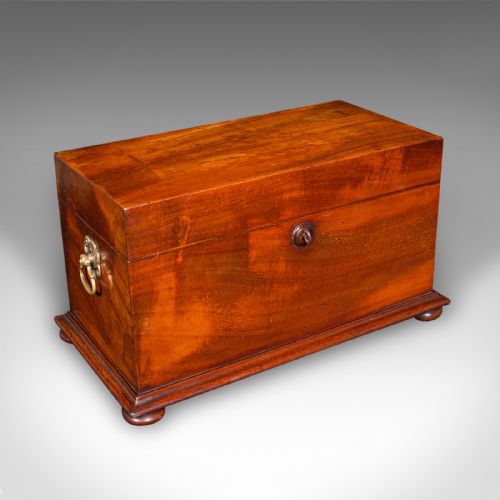


Brass Handle Tea Caddy
A brass handle tea caddy combines secure storage for precious leaves with the rich grain of mahogany, rosewood, and yew wood.
What these brass handle tea caddies are
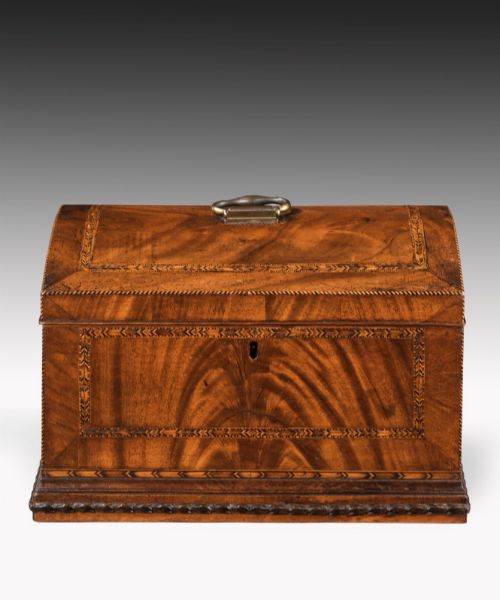
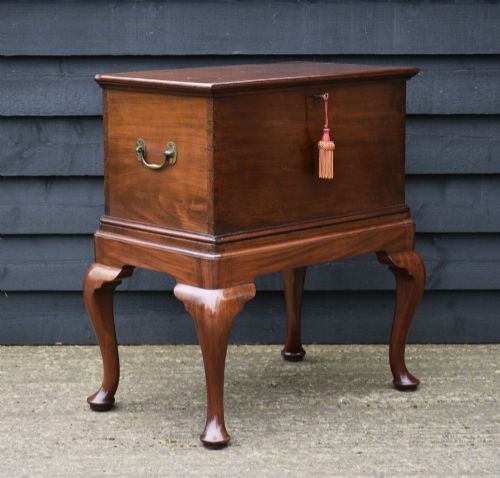
A brass handle tea caddy is a wooden box designed to store tea leaves during the eighteenth and nineteenth centuries, when tea was an expensive commodity. The examples on this page span the Georgian, Regency, and eighteenth-century periods, showing forms such as the sarcophagus shape and boxes fitted with secret drawers.
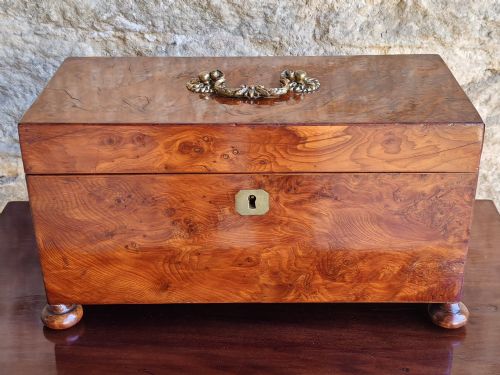
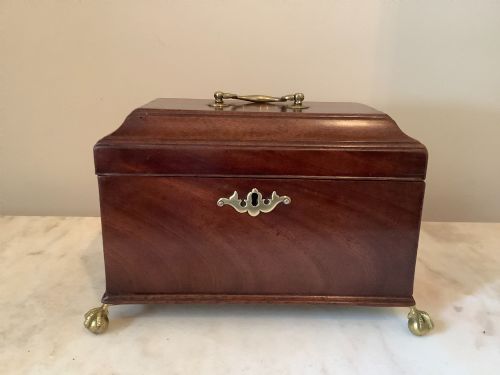
The materials recorded in the listings include mahogany, yew wood, burr thorn wood, and rosewood, often enhanced with ebony, boxwood, and burr wood veneers. These containers usually feature a brass handle on the lid, allowing the caddy to be moved easily from the sideboard to the drawing room table.
Buyers will encounter single and multiple compartment variants, including triple tea caddies equipped with interior tin containers and cast brass handles. The surviving pieces demonstrate the evolution of domestic tea storage from simple eighteenth-century boxes to elaborate Regency sarcophagi.
How they were made
Cabinet makers constructed these caddies using solid timbers and decorative veneers such as rosewood, mahogany, and yew wood over a sturdy carcase. They frequently applied contrasting stringing in boxwood and ebony to outline the lids and panels.
Interior fittings included secret drawers and fitted compartments designed to hold loose tea leaves securely. Cast brass handles were affixed to the tops and sides, while brass lion mask handles and working locks provided both utility and decoration.
Retail Price Guide 2026
Typical UK retail prices for brass handle tea caddy, calculated from the Sellingantiques database of over a million retail prices indexed since 2003. This retail price guide relies exclusively on Sellingantiques data; no external sources or auction records are used, so the figures do not describe the wider market.
Listings feature eighteenth-century and Regency periods, utilising materials like mahogany, rosewood, yew wood, ebony, boxwood, and burr wood.
What varies in quality
Quality rests in the choice of timber and the complexity of the cabinet work, ranging from plain mahogany boxes to richly figured burr thorn wood and rosewood sarcophagus forms. The crispness of the boxwood and ebony stringing also indicates the maker's skill.
The refinement of the hardware distinguishes finer pieces, particularly where cast brass handles, lion mask mounts, and fitted interior tea canisters survive intact. Superior examples balance decorative presence with functional integrity in their secret drawers and working locks.
The Brass Handle Tea Caddy Glossary
- Sarcophagus tea caddy
- A box shape featuring a sloping or domed lid reminiscent of an ancient stone coffin, popular during the Regency period. This form often stands on small bun feet or bracket feet.
- Stringing
- Thin inlay lines of contrasting wood, such as boxwood or ebony, used to edge panels and lids. It highlights the geometric form of the tea caddy.
- Secret drawer
- A concealed compartment built into the interior of the caddy, accessed by removing a divider or lifting a false bottom. These were used to hide valuables alongside the tea.
- Burr wood
- Wood taken from a tree growth where the grain has swirled in a deformed manner, producing intricate patterns. It was highly prized for veneering luxury items like tea caddies.
Frequently Asked Questions
What is a brass handle tea caddy used for?
These boxes were utilised in the eighteenth and nineteenth centuries to store high-value tea leaves under lock and key. The brass handle allowed the container to be carried safely by the master or mistress of the house.
Today, collectors use them as decorative decorative storage objects on sideboards or mantelpieces.
How do I date a tea caddy?
Dating relies on stylistic clues, timber choices, and construction methods. Pieces from the eighteenth century often show simpler rectilinear forms or burr thorn veneers, while Regency examples lean towards sarcophagus shapes with lion mask handles.
Hardware styles and secondary woods inside the compartments also help place the piece within the Georgian or nineteenth-century periods.
Are all tea caddies lockable?
Many surviving examples include working locks and original keys because tea was an expensive commodity that required strict household control. Servants were typically excluded from accessing the contents directly.
Listings often note whether the original lock remains functional within the timber carcase.
What woods were commonly used?
Cabinet makers utilised dense hardwoods like mahogany and rosewood as primary materials for their durability and rich colour. Yew wood and burr thorn wood provided striking decorative surfaces.
Details were frequently added using contrasting strips of lighter boxwood and dark ebony.