
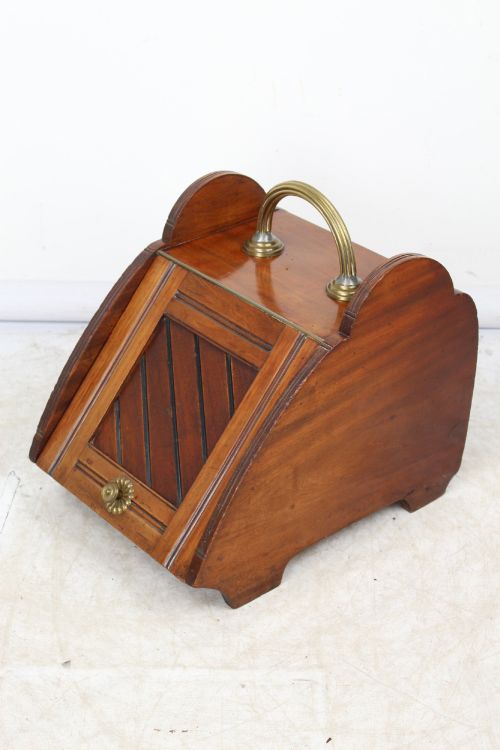
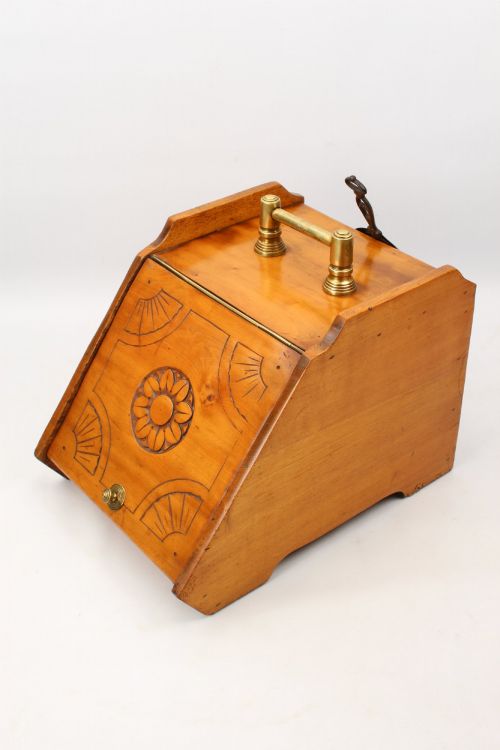


Brass Handle Purdonium
A brass handle purdonium is a fireside coal container designed to keep fuel tidy, combining solid function with period joinery and metalwork.

Brass Handle Purdonium
A brass handle purdonium is a fireside accessory used for holding coal or logs beside the hearth, appearing primarily in Victorian and Edwardian forms. You will most frequently meet mahogany, oak, or walnut coal boxes and scuttles that incorporate substantial brass handles and decorative metalwork.
The evidence shows these containers span the Victorian period through to Edwardian times, utilising styles such as the Aesthetic Movement alongside standard period joinery. Pieces range from simple metal bins to carved and inlaid boxes designed to sit in the parlour.
Makers such as William Soutter & Sons produced notable copper and brass coal buckets, while many other examples remain unattributed yet skillfully constructed. The form functions as both a fuel store and a decorative element of hearth accessories.
How they were made
Makers utilised timber such as mahogany, oak, walnut, pine, and rosewood, often pairing the wooden bodies with copper and brass handles, hinges, and liners. Selected examples feature carved fronts, inlaid details, or painted metal surfaces.
Metal components like iron and brass were cast or beaten to form buckets, bins, and coal scuttles, complete with matching shovels for tending the fire.
Listings feature items spanning the Victorian and Edwardian periods, utilising mahogany, oak, walnut, copper, and brass.
What varies in quality
Quality varies through the choice of timber and the sophistication of the woodworking, ranging from plain pine or painted metal to finely carved mahogany and inlaid rosewood. The weight and finish of the brass handles and associated metalwork also define the grade of the piece.
The presence of internal metal liners, designated shovels, and works attributed to known makers like William Soutter & Sons elevate certain coal boxes above standard utilitarian items.
William Soutter & Sons
The Brass Handle Purdonium Glossary
- Purdonium
- A box or cabinet specifically designed to hold coal for a domestic fireplace. It typically includes a hinged front or lid and a metal liner.
- Coal Scuttle
- A bucket or container used for carrying coal to the fire, often fitted with a swinging brass handle. This form dates strongly to the Victorian era.
- Aesthetic Movement
- A late nineteenth-century design style focusing on visual and material qualities rather than narrative storytelling. Pieces from this period often display refined decorative restraint.
- Metamorphic
- Describing furniture that transforms from one function to another. In coal scuttles, this involves clever mechanical movement for easy tipping.
Brass Handle Purdonium: Frequently Asked Questions
What is a purdonium?
A purdonium is a dedicated piece of fireside furniture built to store coal neatly inside a room. It keeps domestic fuel out of sight while complementing the hearth.
Most examples open via a sloping front or a hinged lid, often containing a removable metal liner to catch coal dust.
How do I use a coal box?
Coal boxes sit beside the fireplace to hold fuel supplies for daily use. They often come with a matching shovel stored in an internal rack or a side compartment.
The sturdy brass handles allow you to lift the container safely when replenishing the fuel supply from a larger cellar store.
How do I date a coal purdonium?
Dating relies on identifying the primary wood, the style of carving, and the overall period characteristics. Victorian pieces frequently use mahogany, walnut, or heavy brass, whilst Edwardian examples often show lighter oak construction.
Makers' marks, when present, provide a direct link to specific workshops active in the late nineteenth century.
What timber was used for coal boxes?
Makers utilised a variety of hardwoods and softwoods depending on the desired finish. Mahogany, oak, walnut, and rosewood appear frequently in finer parlour pieces.
Pine and painted metal were also used for simpler utilitarian fireside bins and buckets.