
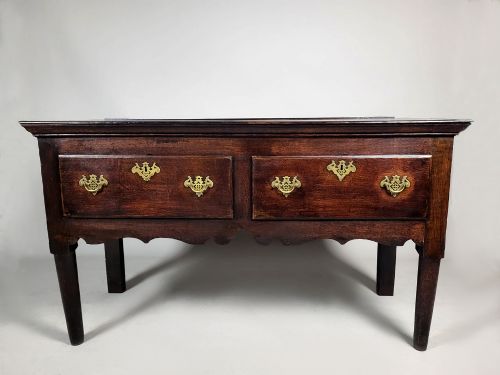
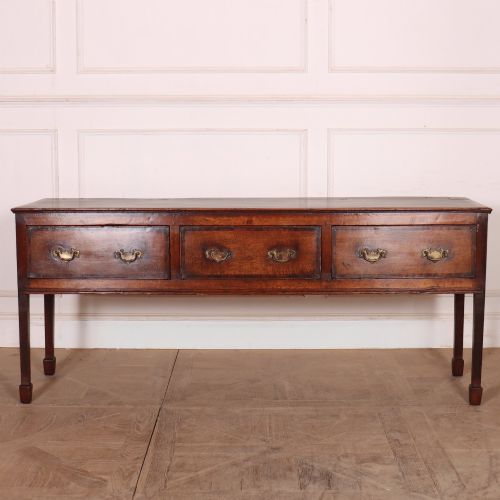
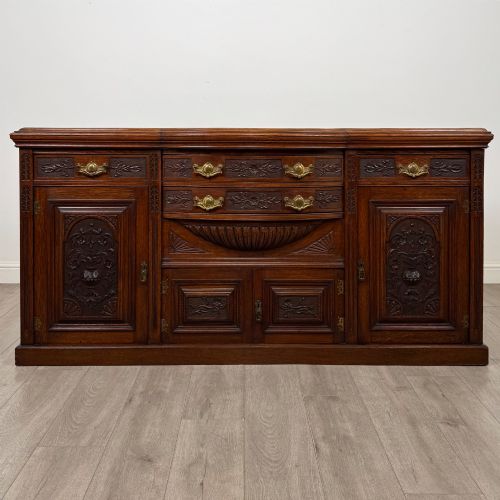
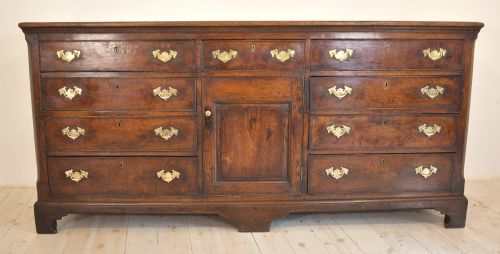
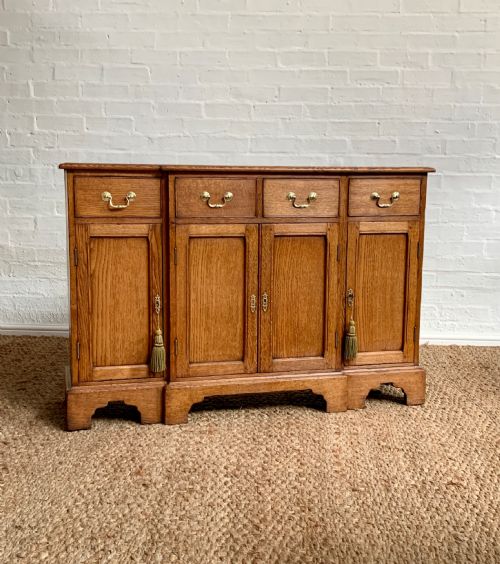
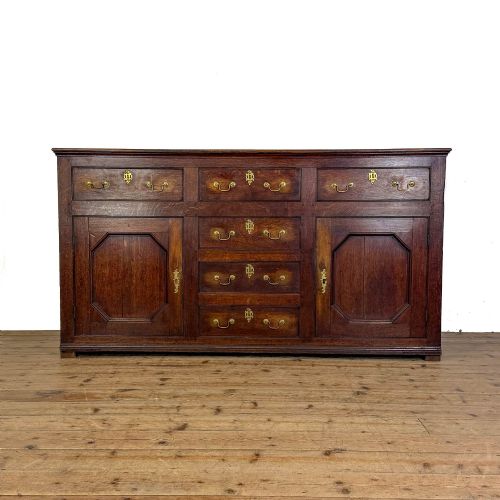
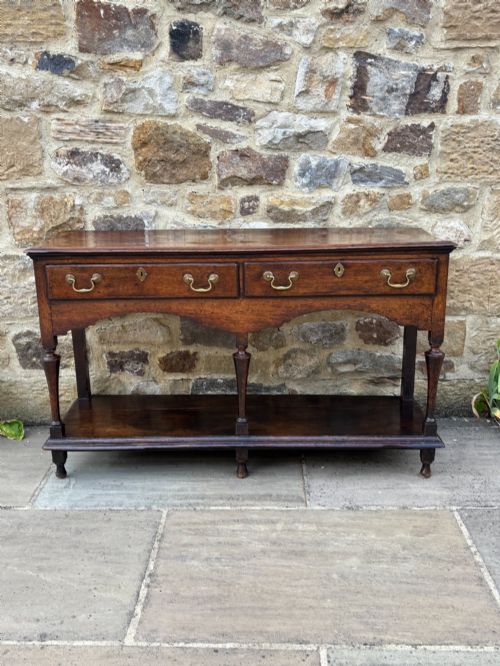
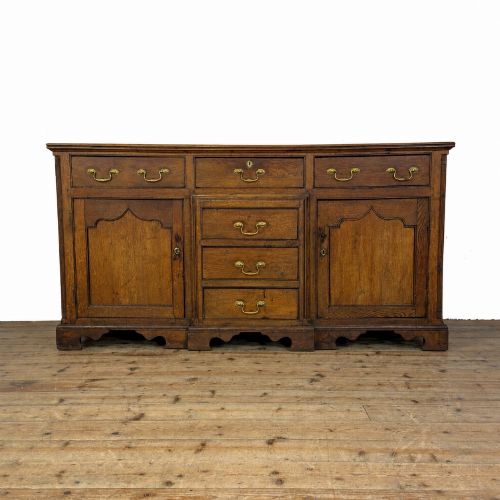



Brass Handle Oak Credenza
A brass handle oak credenza brings together heavy timber and polished metal in a piece built to anchor a dining room.
Brass Handle Oak Credenza
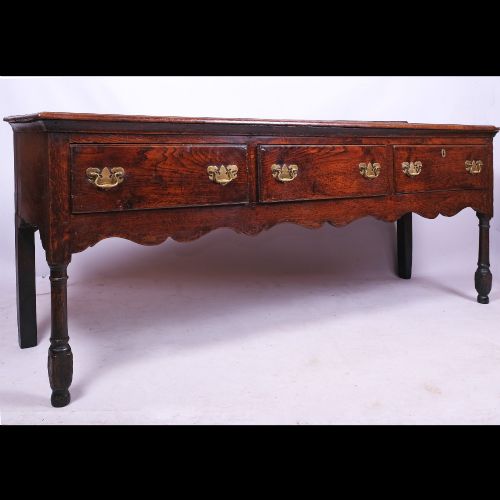
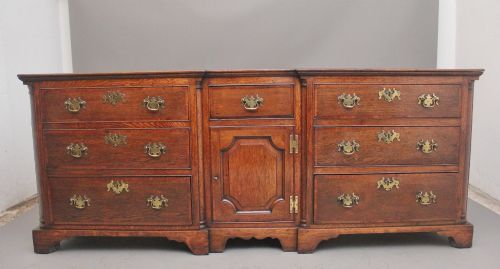
Buyers seeking a brass handle oak credenza encounter sturdy oak furniture originating primarily from the seventeenth, eighteenth, and nineteenth centuries. These pieces generally take the form of dresser bases and sideboards, designed for storage and display in domestic spaces.
The current selection spans Georgian country pieces, George III designs, and Victorian interpretations alongside seventeenth-century styles. Regional variations, such as Lancashire examples, appear frequently among the listings.
Makers of the period utilised local hardwoods and fitted them with substantial metal hardware. Most examples function as low storage cabinets with multiple drawers and cupboards.
Materials and construction methods
Craftsmen built these pieces using solid oak, often complemented by inlay timber or painted wood details on select variants. The primary timber provides durability and a distinct grain pattern that deepens in tone over centuries.
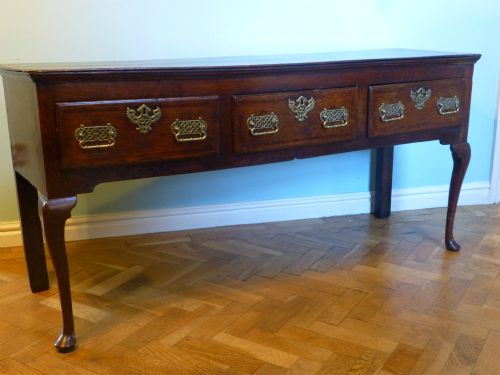
Metalwork plays a central role through the inclusion of brass handles and associated hardware. These brass mounts are secured to the timber drawers and doors, offering contrast against the dark wood.
Lancashire joiners clearly loved a deep drawer, packing three wide ones into bases built to outlast the houses they stood in.
Assessing quality in oak sideboards
Quality rests on the integrity of the timber and the retention of original fittings like brass handles. Pieces featuring period brassware command greater interest than those with later replacements.
Carving detail and leg formation, such as cabriole legs on Georgian examples, differentiate standard utilitarian storage from finer regional pieces. The proportion and balance of the drawers define the visual success of each item.
The Brass Handle Oak Credenza Glossary
- Dresser base
- A low wooden cabinet featuring drawers and sometimes cupboards below a flat surface. This form served as a primary storage unit in historic kitchens and dining rooms.
- Cabriole leg
- A furniture leg that curves outward and then tapers inward, terminating in a foot. This style appears on select eighteenth-century pieces.
- George III
- The period spanning the reign of George III from seventeen sixty to eighteen twenty. Furniture from this era displays refined proportions and classical restraint.
- Inlay timber
- Wood pieces inserted into a recessed surface to form a decorative pattern. This technique enhances the visual texture of the oak body.
Brass Handle Oak Credenza: Frequently Asked Questions
How do I date an oak sideboard?
Dating relies on examining construction marks, timber grain, and hardware style. Eighteenth-century pieces typically show hand-planed surfaces and pegged joints.
Later Victorian interpretations often feature machine-cut elements and different internal construction methods.
Where were these pieces used?
Historic households placed these sturdy cabinets in kitchens, dining halls, and parlours. They served to store tableware, linens, and provisions.
Today, they function well in modern dining rooms and hallways as storage consoles.
Are the brass handles original?
Many pieces retain their period brasses, while others feature later replacements fitted during centuries of use. Inspecting the fixing points reveals whether the hardware matches the age of the timber.
Original brass mounts add historical integrity to the furniture.
How do I maintain oak furniture?
Maintaining solid oak requires steady indoor humidity levels to prevent the wood from splitting. Regular waxing protects the surface and preserves the natural lustre of the grain.
Avoid placing wooden furniture near direct heat sources.