
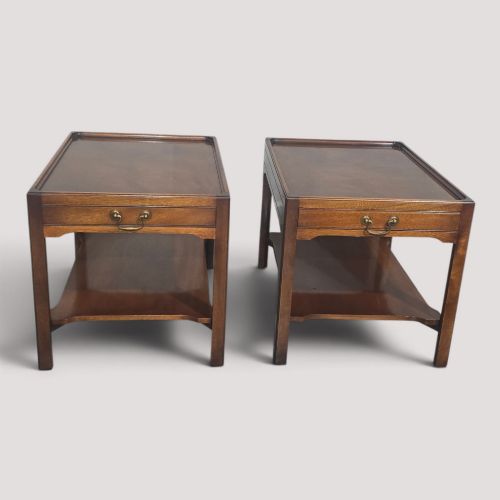
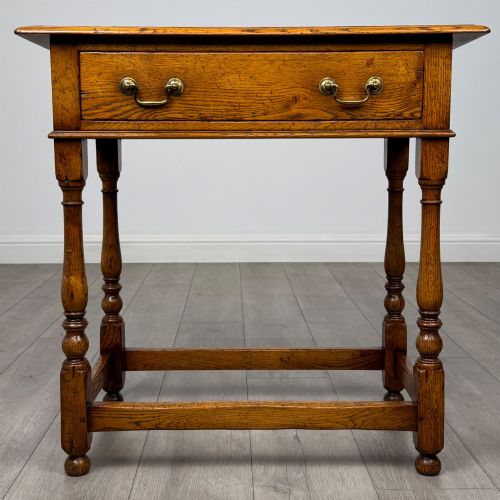
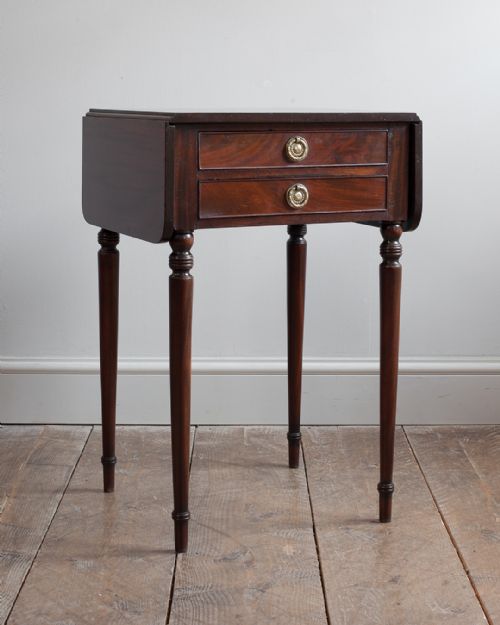
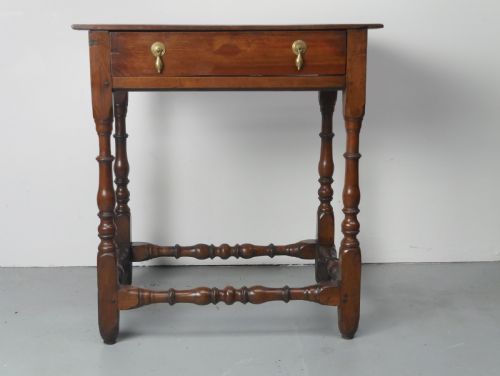



Brass Handle Nightstands
These brass handle nightstands are compact tables and cabinets designed for bedside storage, combining period timber and metal hardware.
Brass Handle Nightstands
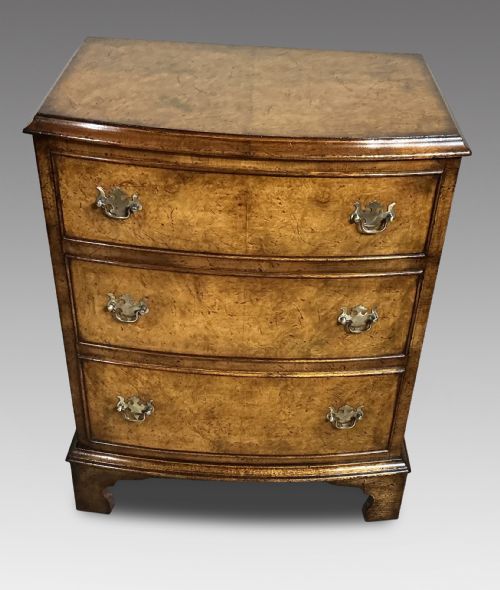
Brass handle nightstands encompass a variety of bedside storage forms, including bedside cabinets, bedside chests, and side tables fitted with brass hardware. The selection draws from periods spanning the 18th century, Georgian, Regency, Victorian, and Edwardian eras.
Buyers encounter forms constructed in timber varieties such as mahogany, oak, walnut, rosewood, fruitwood, and elm. Styles range from Georgian and campaign to English country vernacular and late Victorian designs.
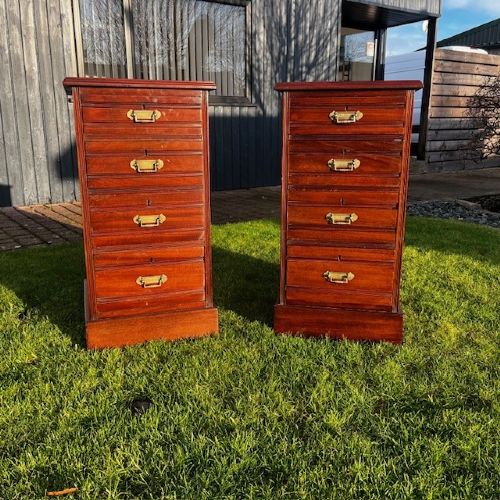
The objects function as practical bedroom storage, appearing singly or in matched pairs. The forms include small chests of drawers, cupboards, and commodes adapted for modern domestic use.
How they were made
Construction relies on solid hardwoods and decorative veneers applied to secondary woods, utilising traditional cabinet-making joints. Timbers such as mahogany, oak, and burr walnut provide structural integrity and visual grain patterns.
Metalwork forms an integral part of the construction, with brass handles, campaign mounts, and pulls secured to drawers and doors. Timber preparation involves turning, carving, and occasional wood inlay or French polishing.
The inventory spans 18th century, Georgian, Regency, Victorian, and Edwardian eras, encompassing campaign style and country vernacular pieces.
What varies in quality
Quality separates pieces through the selection of timber, such as figured mahogany or burr walnut veneer, versus plain secondary woods. Superior examples show refined proportions, original brass hardware, and precise joinery.
The sophistication of the design dictates distinction, moving from utilitarian country vernacular pieces to high-style Georgian or Regency cabinet-making. Originality of surface finish and the retention of period mounts elevate individual items.
The Brass Handle Nightstands Glossary
- Campaign style
- Furniture designed for military travel, characterised by recessed brass handles, corner brackets, and sectional construction. This military origin ensures robust construction and portable dimensions.
- Burr walnut veneer
- A thin slice of wood taken from the knotty growth of a walnut tree, exhibiting intricate swirls. It decorates the exterior surfaces of finer Victorian and Edwardian cabinets.
- Commode chest
- A low cabinet or chest originally enclosing a chamber pot, often adapted for general bedside storage. These pieces typically feature cupboard doors or drawers above a concealed interior.
- Fruitwood
- Timber sourced from fruit-bearing trees such as pear or apple, utilised in vernacular furniture. It yields a warm tone and fine grain when polished.
- Close stool
- An 18th-century cabinet enclosing a pan seat, designed to resemble a small chest or table. They demonstrate clever domestic carpentry from earlier centuries.
Brass Handle Nightstands: Frequently Asked Questions
Are these nightstands sold in pairs?
Many of the bedside chests and cabinets appear as matched pairs, though single side tables and individual cupboards also feature.
Buyers seeking symmetrical bedside arrangement often look specifically for these paired sets.
What woods were used for these cabinets?
The selection includes mahogany, oak, walnut, fruitwood, rosewood, and elm, often paired with decorative wood inlay.
Finer pieces utilise burr walnut veneer or polished mahogany to create rich exterior surfaces.
How do campaign bedside cabinets differ?
Campaign style pieces incorporate recessed brass handles and corner brass strapping, originally built for military portability.
Their robust construction makes them durable additions to contemporary bedrooms.
Can I use an antique close stool as a bedside table?
An 18th-century close stool or commode chest provides enclosed storage suitable for modern bedside use.
These pieces offer compact dimensions and historical character while functioning as small cupboards.