

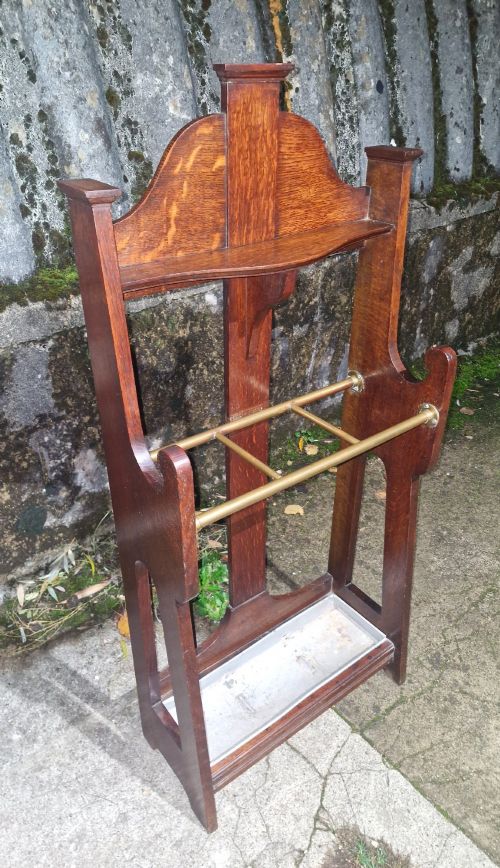
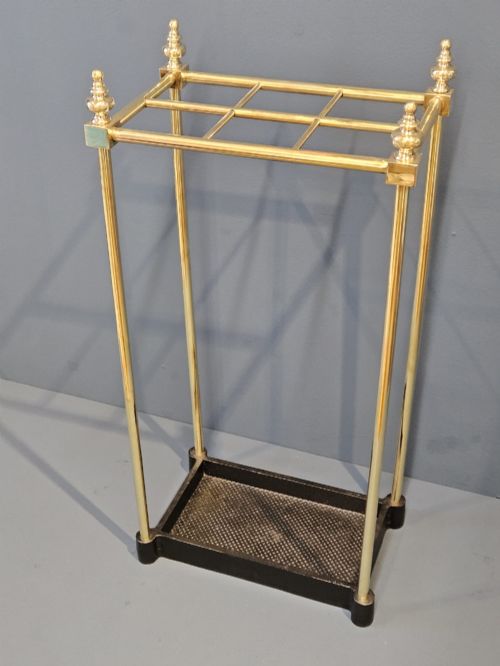
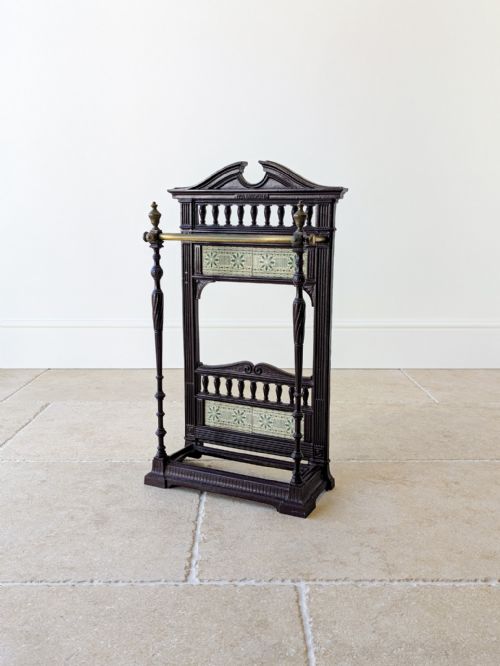
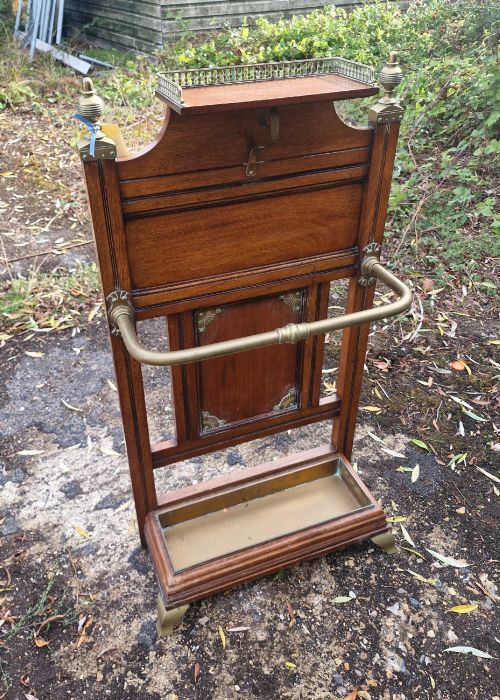
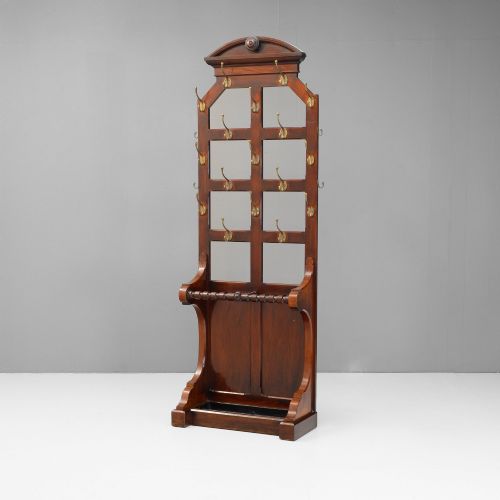


Brass Hallstand
These brass hallstand examples combine metal, wood, and utility to tidy an entranceway with period character.
Brass Hallstand
A brass hallstand is a practical furniture form designed for entranceways to hold coats, hats, and walking sticks. The pieces meeting this search phrase span the nineteenth century, the Edwardian era, and the early twentieth century.
Most examples combine brass with materials such as oak, mahogany, cast iron, and ceramic components. Forms range from narrow hall stands and coat stands to dedicated stick stands and umbrella racks.
The styles recorded across these items include Victorian, Aesthetic Movement, Gothic Revival, and Arts and Crafts. Buyers encounter both standalone umbrella holders and large hall pieces fitted with coat hooks.
How they were made
Makers utilised cast iron and brass for structural hooks, frames, and stick rings. Metal elements were frequently combined with solid oak or mahogany panels and frames to build durable hallway furniture.
Ceramic inserts often appeared on these stands to serve as drip pans for wet umbrellas. Joinery and metal casting techniques of the nineteenth and early twentieth centuries ensured these functional objects endured daily domestic use.
Brass Hallstand Retail Price Guide 2026
Typical asking prices for brass hallstand among the pieces listed under this phrase on Sellingantiques today, from the lower quarter to the upper quarter. They describe what is for sale here now, not the wider market.
Country house umbrella stands were built heavy enough to support damp walking sticks without tipping over when loaded.
What varies in quality
Quality rests upon the execution of the materials and the sophistication of the style. Pieces reflecting specific design movements like the Aesthetic Movement or Arts and Crafts display more deliberate artistic intent.
The integration of secondary materials, such as fitted ceramic drip trays and substantial cast brass hooks, separates standard utility items from finer examples.
Coalbrookdale·James Shoolbred
The Brass Hallstand Glossary
- Aesthetic Movement
- A late nineteenth-century design style focusing on visual and decorative qualities rather than narrative content. Objects from this movement often feature stylised forms and distinctive metalwork.
- Gothic Revival
- An architectural and decorative style drawing inspiration from medieval forms. Pieces in this style utilise pointed arches, heavy moulding, and robust cast iron or oak construction.
- Arts and Crafts
- A design philosophy championing traditional craftsmanship and honest construction. Furniture from this tradition typically highlights the natural grain of oak and visible structural fixings.
- Stick Stand
- A domestic item designed specifically to hold walking sticks and canes. These often incorporate metal rings above ceramic or metal drip trays.
- Coat Hook
- A wall or panel-mounted fixture designed for hanging garments. In hall furniture, these are frequently cast in brass or iron with prominent proportions.
Brass Hallstand: Frequently Asked Questions
What is a brass hallstand used for?
These pieces serve as functional furniture for an entrance hall, providing designated spaces for hanging outdoor garments. They keep everyday items organised and accessible near the front door.
Many versions also incorporate specific holders for umbrellas and walking sticks, often paired with drip trays to catch rainwater. This dual purpose made them central fixtures in nineteenth-century and Edwardian hallways.
How do I date a hall stand?
Dating relies on identifying the prevailing style, timber choices, and construction methods used in the piece. Victorian and Edwardian examples often display distinct decorative motifs associated with those periods.
The presence of specific design influences, such as Gothic Revival or Arts and Crafts details, helps narrow the timeframe of manufacture. Examining the hardware and secondary materials like cast iron or ceramic provides further clues.
Where should I place a hall stand?
These items suit entrance halls, porches, or boot rooms where coats and umbrellas are naturally deposited upon entry. Their vertical orientation allows them to occupy minimal floor space while offering significant storage.
Placing them against a sturdy wall ensures stability, particularly for freestanding coat stands and tall umbrella racks. They function best in well-ventilated areas where damp items can dry safely.
How do I care for brass and wood?
Maintaining the wood involves dusting regularly and occasionally applying appropriate wax or polish to nourish the surface. Harsh chemical cleaners should be avoided to preserve the original finish of the timber.
Brass elements benefit from gentle cleaning to remove dust while retaining their natural patina. Care must be taken around integrated ceramic or iron components to prevent moisture buildup.