



Brass Gong on Stand
A brass gong on stand brings a resonant, historic voice to a hall or dining room, combining functional metalwork with timber framing.
Brass Gong on Stand
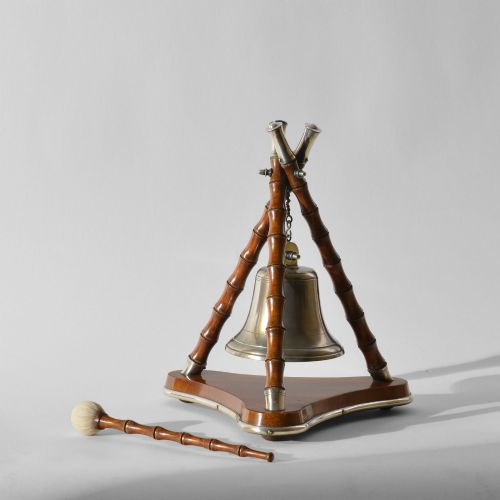
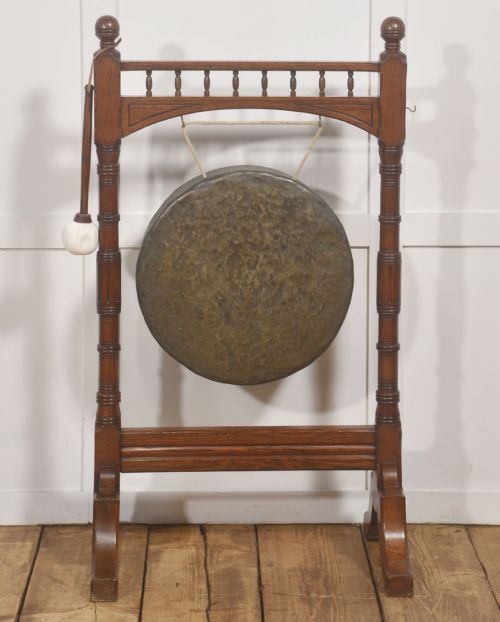
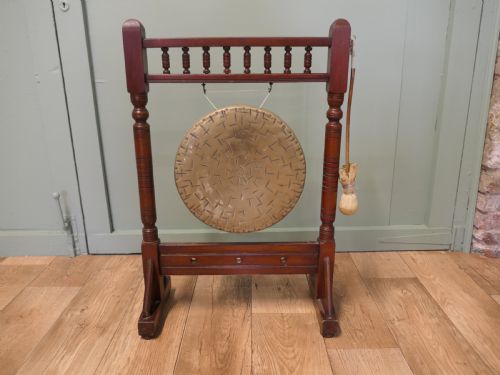
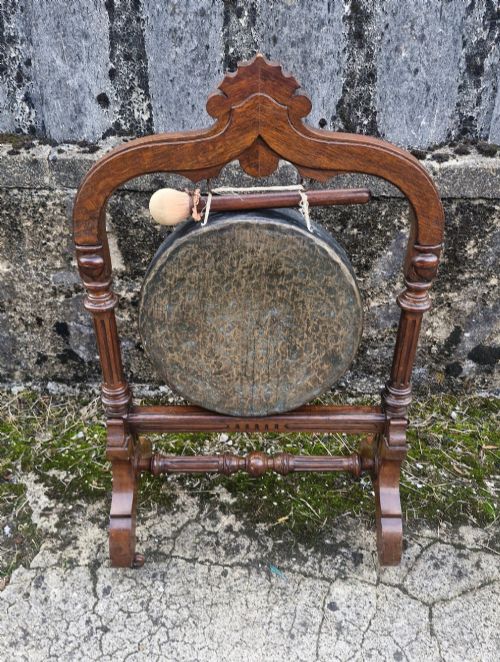
When you search for a brass gong on stand, you encounter a variety of striking instruments designed for domestic service, particularly summoning guests to meals. These pieces typically combine a cast or hammered metal disc with a substantial timber or iron support structure.
The selections span the nineteenth century into the twentieth, encompassing Victorian, Edwardian, and Art Deco eras alongside distinct stylistic revivals. You meet table-top versions as well as large floor-standing examples intended for country house settings.
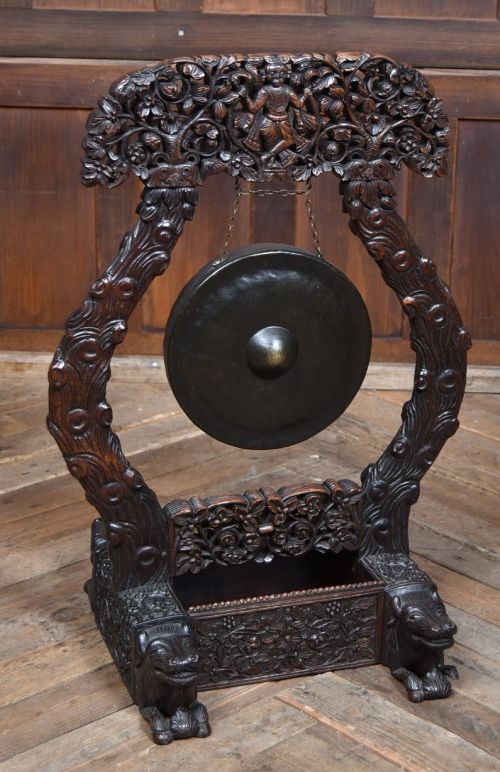
Origin and stylistic influences vary significantly across the inventory, drawing on Gothic Revival motifs, Arts and Crafts ideals, and Chinese export designs. Certain items incorporate carved wooden frames supporting oriental temple bells or tea ceremony gongs.
How they were made
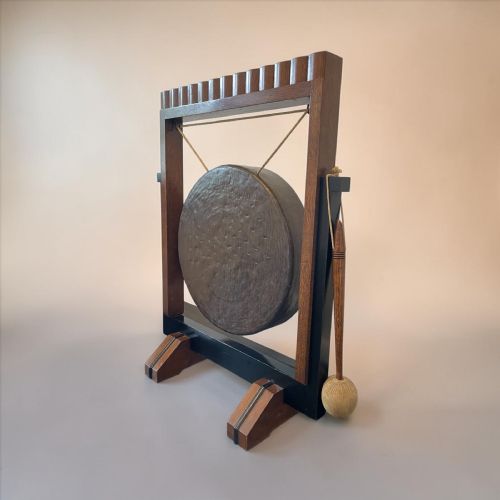
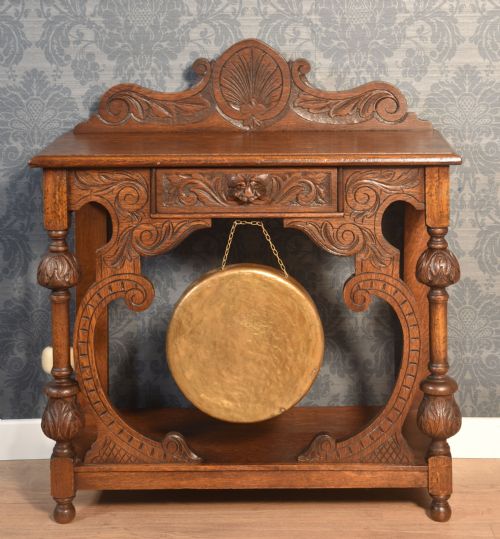
Makers utilised resilient hardwoods such as oak, mahogany, walnut, and teak to construct stable frames capable of supporting heavy suspended metal. These timber supports often feature elaborate hand-carving, incised detailing, or wrought iron work.
The gongs themselves consist of cast brass, bronze, or copper alloys, occasionally displaying engraved decoration or surface patination. Cords, felt, and striking mallets complete the assembly, ensuring the suspended disc resonates cleanly when hit.
Brass Gong on Stand Retail Price Guide 2026
Typical asking prices for brass gong on stand among the pieces listed under this phrase on Sellingantiques today, from the lower quarter to the upper quarter. They describe what is for sale here now, not the wider market.
Listings for a brass gong on stand frequently feature oak and mahogany frames paired with cast brass or bronze discs.
What varies in quality
Quality reveals itself in the acoustic resonance of the metal and the structural integrity of the supporting stand. Superior examples produce a deep, sustained tone, whereas lesser pieces sound flat or muted.
The artistry of the woodwork distinguishes finer items from standard production, with deeply carved oak or walnut frames demonstrating superior craftsmanship. The proportion and balance between the heavy gong and its stand also indicate the maker's skill.
The Brass Gong on Stand Glossary
- Dinner Gong
- A resonant metal disc suspended within a frame, historically utilised in large homes to announce meals. They range from small table-top accessories to monumental floor-standing pieces.
- Gothic Revival
- An architectural and decorative style drawing inspiration from medieval forms, frequently seen in the pointed arches and heavy timber framing of nineteenth-century stands. This aesthetic favours dark woods and solemn ornamentation.
- Arts and Crafts
- A design movement valuing traditional craftsmanship, visible in the honest construction and hand-worked materials of these stands. Pieces from this tradition avoid mass-produced ornamentation in favour of solid joinery.
- Temple Bell
- A bell traditionally used in religious or ceremonial contexts abroad, sometimes adapted into domestic stands during the nineteenth and twentieth centuries. These often feature distinctive oriental casting marks and shapes.
Brass Gong on Stand: Frequently Asked Questions
How were dinner gongs used?
Household staff struck these metal discs with a mallet to announce the evening meal or gather family members. The deep resonant tone carried through large rooms and multiple floors.
In grand houses, the sound functioned as a formal signal for residents to assemble in the dining room or hall. Today they serve as striking decorative furnishings with a functional history.
Where should I place a floor standing gong?
These tall pieces suit entrance halls, landings, or spacious living rooms where their timber frames and metal discs act as a focal point. They require adequate clearance to allow the sound to resonate properly when struck.
Ensure the stand rests on a level surface away from heavy foot traffic to protect the suspended metal from accidental knocks. Positioning them against a solid wall highlights the carved details of the oak or walnut framing.
How do I date a brass gong on stand?
Stylistic clues within the timber framing offer the clearest indication of age, moving from heavy Victorian Gothic revival designs to lighter Edwardian or Art Nouveau forms. The joinery techniques and wood choices also reflect the period of manufacture.
Nineteenth-century examples often feature dense oak with hand-carved motifs, while later pieces from the nineteen-thirties lean towards cleaner lines or distinct regional carving styles.
What is the difference between table and floor gongs?
Table gongs feature compact frames designed to sit upon furniture surfaces such as sideboards or hall tables. They utilise smaller brass discs suited to restricted domestic spaces.
Floor standing versions incorporate heavy timber or iron frames that rest directly on the floor. These monumental pieces command a much larger visual presence and project a louder acoustic volume.