


Brass Glass Perfume Bottle
These brass glass perfume bottle pieces are portable vanity containers made to hold precious scents, prized by collectors for their intricate metalwork and coloured glass.
Brass Glass Perfume Bottle
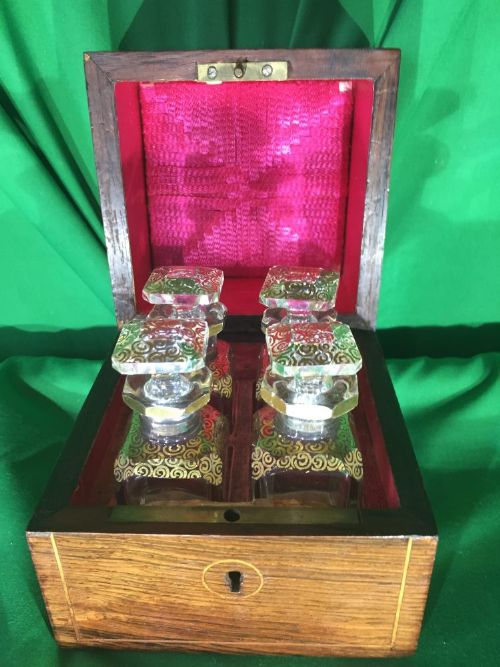
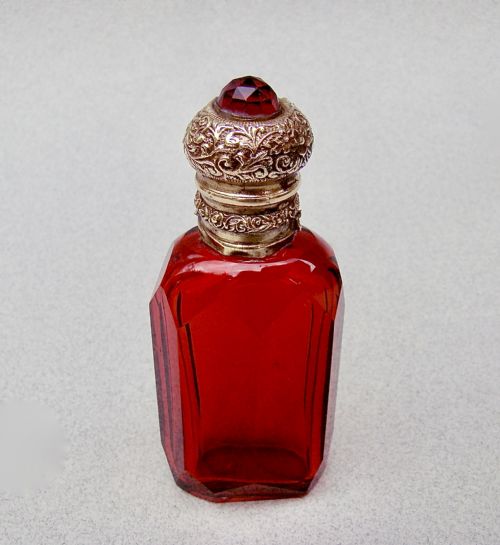
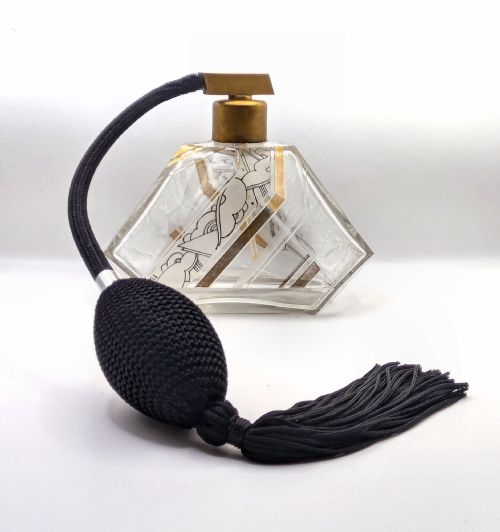
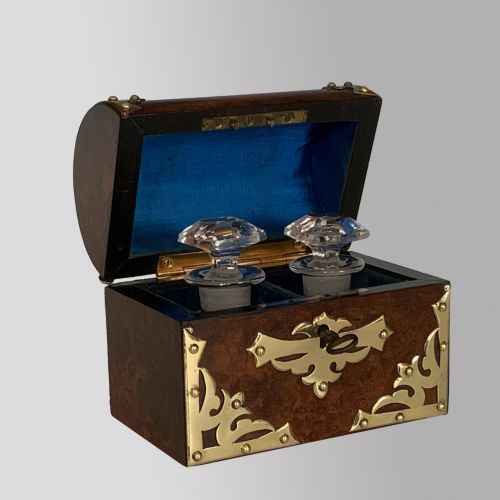
When searching for a brass glass perfume bottle, a buyer encounters vanity containers that range from single French or Art Deco atomisers to fitted wooden caskets housing multiple scent vessels. The pieces appearing here span the Regency, Victorian, and Art Deco periods, encompassing forms like scent caskets, travelling dressing table boxes, and individual bottles.
How they were made
Maker construction combines cast or chased brass and ormolu mounts fitted to blown or cut glass vessels, frequently housed within timber box frames lined with velvet and silk. Glass elements utilise traditional cutting techniques to catch the light, while metal components are shaped into collars, hinges, and decorative mounts.
Caskets and vanity cases incorporate fitted interiors designed to cradle delicate glass bottles securely during travel, uniting cabinet-making with metalwork and glass production.
Some nineteenth-century caskets cleverly combined perfume bottles with jewellery compartments, ensuring a lady could smell delightful while hiding her rings.
What varies in quality
Quality rests in the harmony between the metal mountings and the glass body, alongside the complexity of the enclosing case. Finer examples display crisp chasing in the ormolu or brass, heavy cut glass with sharp facets, and fitted hardwood boxes utilising exotic timbers like coromandel and rosewood.
Simpler pieces rely on basic brass collars and standard blown glass, whereas superior items feature complete matching sets of bottles housed within silk-lined caskets bearing intricate mounts.
Karl Palda·Baccarat
The Brass Glass Perfume Bottle Glossary
- Ormolu
- Gilded bronze or brass mounts applied to furniture, boxes, and scent bottles. This technique gives the metal a rich gold appearance that complements the glass.
- Ruby glass
- Deep red glass created by adding gold chloride to the molten batch. It appears frequently in nineteenth-century French scent bottles.
- Coromandel
- A dense, dark timber with contrasting light streaks imported from Asia. Cabinet-makers used it for luxury nineteenth-century dressing boxes and scent caskets.
- Atomiser
- A perfume bottle fitted with a spray mechanism. Art Deco examples often incorporate geometric glass designs.
- Casket
- A decorative box designed to hold valuables or perfume bottles. These containers often feature secure locks and velvet-lined interiors.
Brass Glass Perfume Bottle: Frequently Asked Questions
What is a scent casket?
A scent casket is a fitted box designed to hold multiple perfume bottles securely inside a lined interior. These boxes often feature brass or ormolu mounts and handle hardware.
Such pieces served as luxury dressing table accessories during the nineteenth century, protecting delicate glass vessels when not in use.
What glass types are used?
Glass varieties include heavy cut crystal and coloured wares such as ruby glass. These materials were chosen for their refractive qualities and rich tones.
Many nineteenth-century French bottles utilise deep red glass paired with gilt metal mounts to create strong visual contrast.
Where were these boxes made?
Origin points span English and French workshops, encompassing regional cabinet-making and glass-producing centres. French makers frequently produced gilt ormolu and ruby glass items.
English makers often housed perfume bottles in rosewood, walnut, or coromandel travelling boxes fitted with brass handles and locks.