





Brass Glass Inkwell Set
A brass glass inkwell set organises correspondence on a writing surface, bringing heavy metal and clear glass together for daily desk use.

Brass Glass Inkwell Set
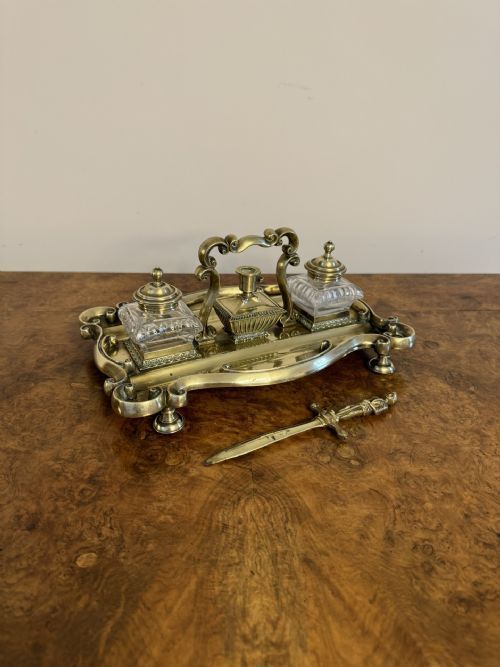
A brass glass inkwell set provides a secure housing for writing fluid alongside pen trays, often taking the form of an inkstand, desk tidy or standish. These pieces surface most frequently from the Victorian era, alongside examples from the Regency period, the Edwardian years and the eighteenth century.
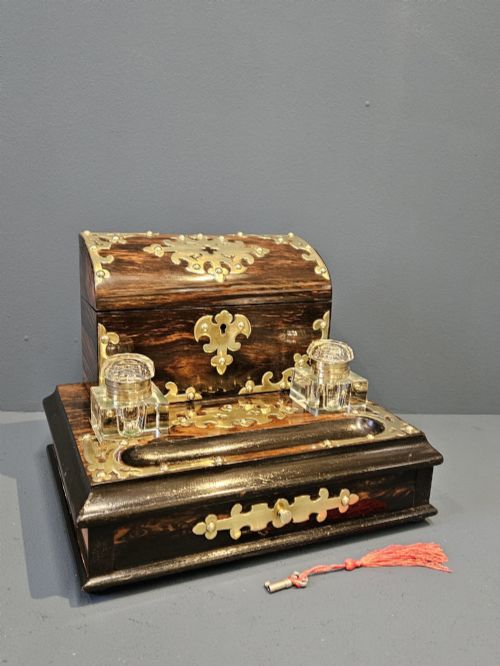
Desks accommodate these objects as fitted stands built from woods like coromandel, walnut, oak and rosewood, mounted with brass frameworks. Many pieces integrate cut glass bottles with hinged metal lids, occasionally incorporating drawers, novelty animal figures or companion compartments.
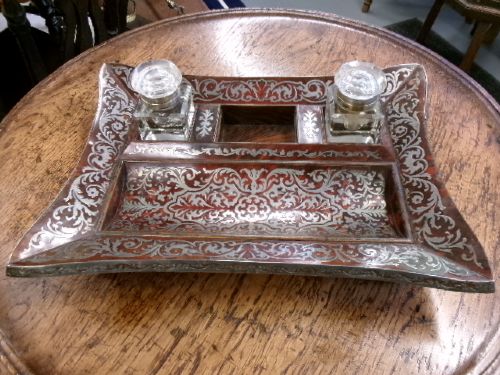
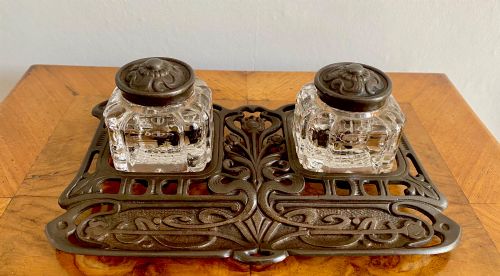
Origin spans English workshops and French centres utilising Boulle work or ormolu mounts. Collectors encounter diverse manifestations ranging from plain solid oak trays to ornate Gothic Revival, Napoleon III and Art Nouveau compositions.
Materials and construction
Foundations rely on dense timber bases or heavy brass castings, frequently inlaid with tortoiseshell, mother of pearl or brass stringing. Woodwork employs cabinet-making techniques to house glass ink inserts safely within fitted channels.
Glass elements utilise heavy cut glass or moulded vessels paired with hinged metal lids, sometimes cast by firms such as James Cartland and Sons. Ormolu mounts and brass galleries are secured to wooden bodies with small threaded pins or screws.
Listings feature brass and glass paired with coromandel wood, tortoiseshell, oak and walnut across the Victorian, Edwardian and Regency periods.
Quality and execution
Superior examples display precise metal casting and crisp chasing on brass mounts, paired with heavier cut glass bottles that retain their original matching lids. Finer stands utilise exotic timbers like coromandel or tortoiseshell with meticulous Boulle inlay.
The integration of secondary functions, such as concealed drawers, swinging novelties or integrated clocks, separates standard desk tidies from ambitious masterworks of the nineteenth century.
James Cartland and Sons·Moser
The Brass Glass Inkwell Set Glossary
- Standish
- A portable desk stand or tray fitted with inkwells, sanders and penholders. These pieces were designed to be carried between rooms on large country house estates.
- Boulle work
- An intricate marquetry of tortoiseshell and brass inlaid into cabinet furniture. This decorative technique appears on French-influenced nineteenth-century pieces.
- Ormolu
- Gilt bronze mounts applied to furniture and decorative objects. The finish provides a rich gold appearance that enhances brass and timber stands.
- Coromandel wood
- A heavy, durable timber featuring dark brown grain with dramatic black stripes. Makers utilised this exotic material for high-status Victorian desk accessories.
- Chaff-cutter escapement
- A specific clockwork mechanism found in desk clocks integrated into inkstands. It regulates the movement within specialised novelty pieces.
Brass Glass Inkwell Set: Frequently Asked Questions
What is a standish?
A standish is an antique inkstand that holds inkwells, sand shakers for drying writing, and pen rests.
These portable writing companions sat upon tables in libraries and studies during the eighteenth and nineteenth centuries.
How do I identify a Victorian desk set?
Victorian pieces frequently combine heavy brass mounts with timbers like walnut, oak or coromandel, often featuring ornate cast details.
Design influences range from Gothic Revival and Napoleon III styles to naturalistic Art Nouveau motifs.
Are the glass ink pots original?
Many surviving desk sets retain their heavy cut glass bottles, though replacements do occur due to accidental breakage over time.
Matching collars and lids that fit the brass mountings precisely indicate original components.
How should I clean brass and glass?
Brass elements benefit from gentle dusting with a dry cloth to preserve the natural aged patina accumulated over decades.
Glass inserts can be removed and washed in warm soapy water, ensuring complete dryness before returning them to the stand.