




Brass Glass Dome Clock
A brass glass dome clock brings intricate brass mechanics and clear blown glass together to protect and display fine horology.
Brass Glass Dome Clock
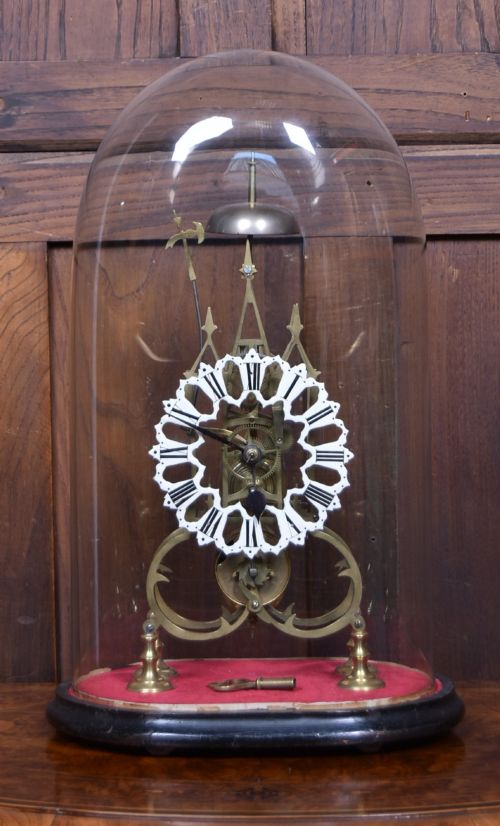
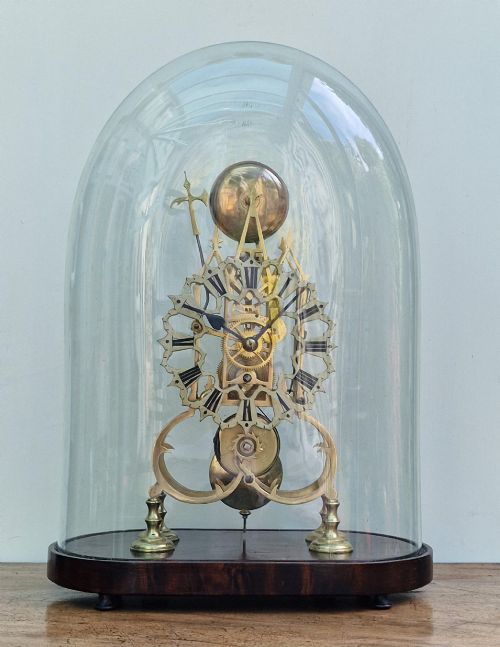
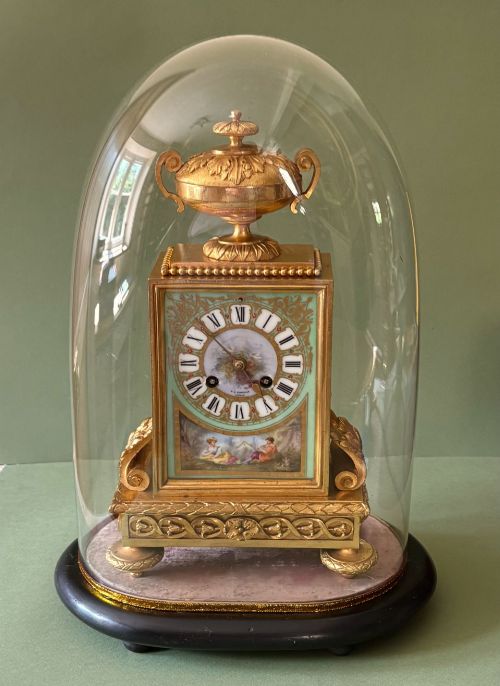
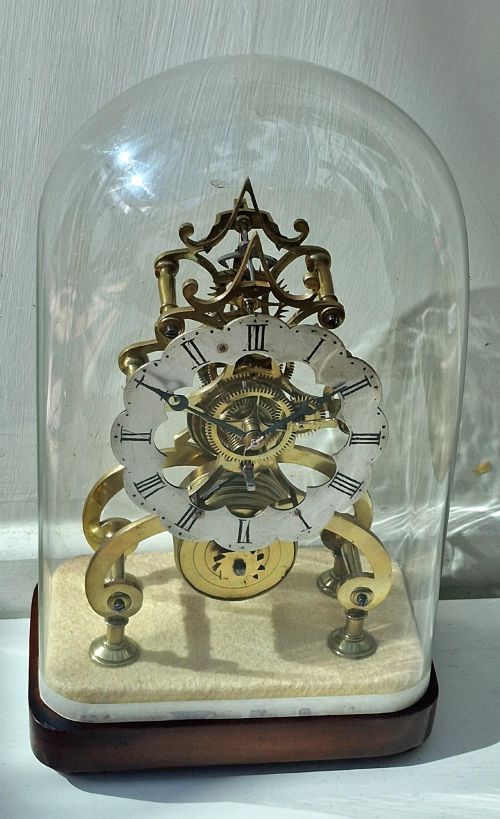
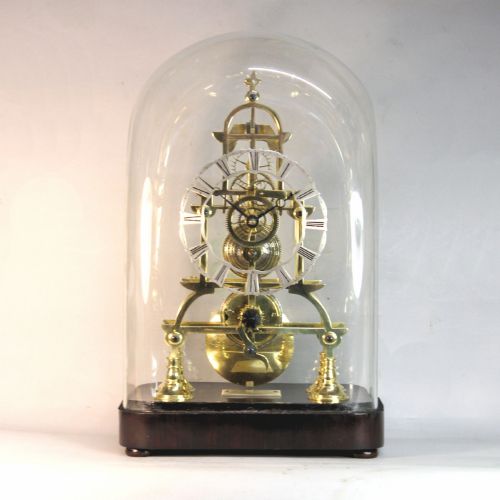
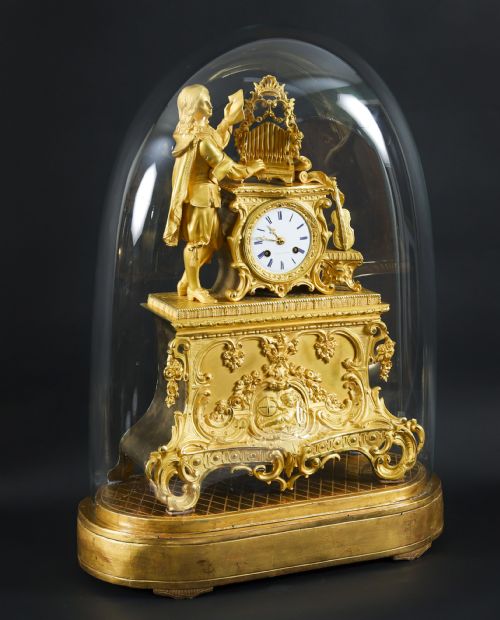
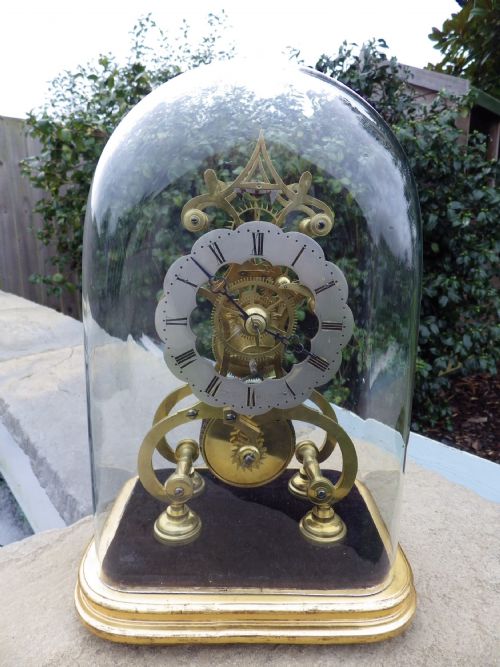
A brass glass dome clock combines a visible brass movement or decorated mantel clock with a protective glass cover, often resting upon a wooden or ebonised base. These pieces range from Victorian skeleton clocks with intricate wheel work to French ormolu mantel clocks and German or English torsion anniversary clocks.
The most common form met on this page is the skeleton clock, where the brass plates and gear trains are fully exposed to view beneath a hand-blown glass dome. Such pieces arrive from various periods including the mid-nineteenth century, the Edwardian era and the nineteen-twenties.
Originating primarily from English, French and German workshops, these clocks serve as functional timekeepers and decorative objects. Materials commonly support the brass and glass structure, utilising mahogany, porcelain, enamel and carved alabaster.
Materials and construction methods
Makers constructed these clocks using cast and polished brass for the frames, movements and dials, often pairing them with gilt ormolu mounts and porcelain panels. Hand-blown glass formed the characteristic domes that shielded the delicate wheel work and escapements from dust.
Bases were frequently shaped from ebonised wood, mahogany or rosewood, providing a stable platform to anchor the glass shade. Dial faces incorporated enamel markings while specialised movements utilised fusee mechanisms, passing strikes or torsion springs.
Brass Glass Dome Clock Retail Price Guide 2026
Typical asking prices for brass glass dome clock among the pieces listed under this phrase on Sellingantiques today, from the lower quarter to the upper quarter. They describe what is for sale here now, not the wider market.
Listings feature Victorian, Edwardian and early twentieth-century pieces, incorporating brass, glass, mahogany, ormolu and porcelain.
Quality variations in the range
The standard of a brass glass dome clock rests upon the precision of the brass wheel work, the crispness of the casting and the presence of original components such as hand-blown domes and wooden bases. Finer examples display elaborate skeletonised plate designs, hand-engraved dials and quality porcelain or ormolu detailing.
Simpler timepieces focus on standard mechanical movements or later electric systems, whilst premier pieces showcase complex double fusee trains or fine architectural portico and Gothic styling. The integrity of the glass dome and the execution of the original base further distinguish the tier of the piece.
Richard Winter of Chieveley·Maurice & Marcel Moulin Favre-Bulle·Leroy Paris·Thwaites of London·Allen Colyer
The Brass Glass Dome Clock Glossary
- Skeleton clock
- A clock designed with open brass plates and exposed gear trains so the mechanism remains entirely visible. These are frequently housed beneath glass domes.
- Fusee
- A conical pulley used in mechanical clocks to maintain even driving force as the mainspring unwinds. This mechanism is common in quality English timepieces.
- Ormolu
- Gilded bronze or brass used for decorative mounts and architectural details on French and Victorian mantel clocks. The technique gives a rich gold-coloured finish.
- Torsion clock
- A clock regulated by a torsion pendulum that rotates back and forth on a thin suspension spring. These are often known as anniversary clocks.
- Portico clock
- A mantel clock styled with architectural columns supporting the movement case. They frequently appear in wood finishes or with glass domes.
Brass Glass Dome Clock: Frequently Asked Questions
Why do these clocks have glass domes?
Glass domes protected delicate brass movements and exposed gear trains from household dust and accidental damage. They also allowed the timekeeper to remain visible from all angles.
Original hand-blown domes are a valued part of these items, preserving the complete antique presentation.
How do torsion clocks work?
Torsion clocks use a suspended spring and a rotating pendulum that twists and untwists in a slow arc. This energy-efficient design allowed some models to run for long periods between windings.
They frequently appear as anniversary clocks housed under clear glass shades.
What is a fusee movement?
A fusee movement employs a conical pulley and a cord or chain to equalise the power delivered by the mainspring as it loses tension. This ensures consistent timekeeping throughout the running cycle.
Fusee movements are a hallmark of better-quality English clockmaking.