

Brass Glass Display Cabinet
These pieces known as a brass glass display cabinet combine clear panes and metal mounts to hold precious objects across Victorian, Edwardian and later interiors.
Brass Glass Display Cabinet
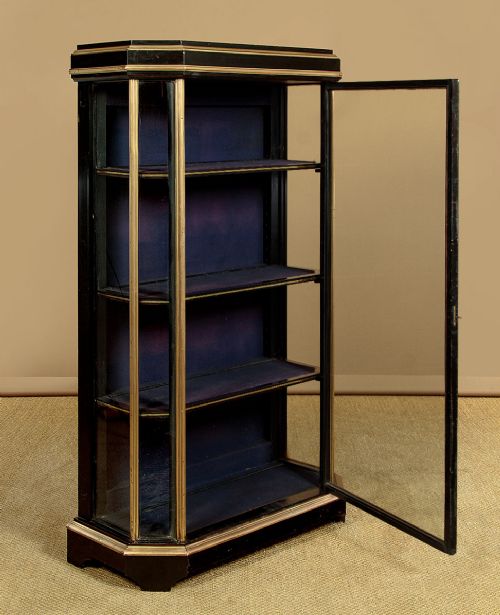
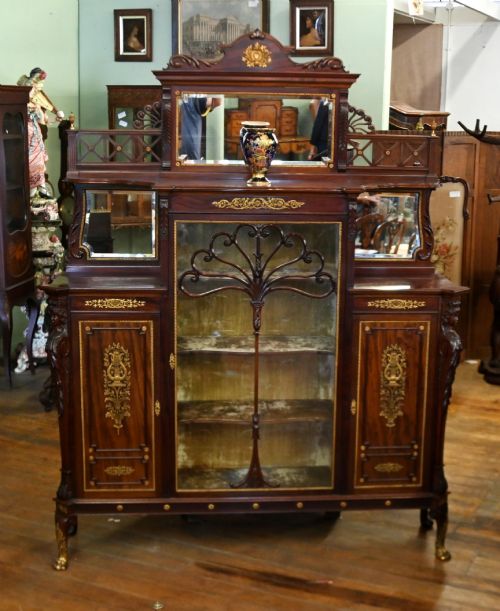
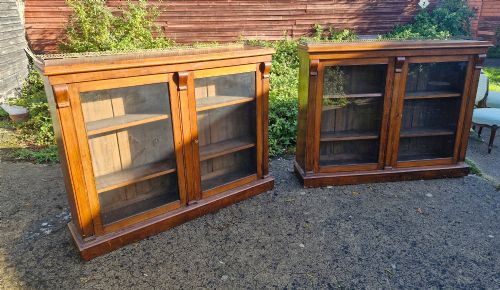
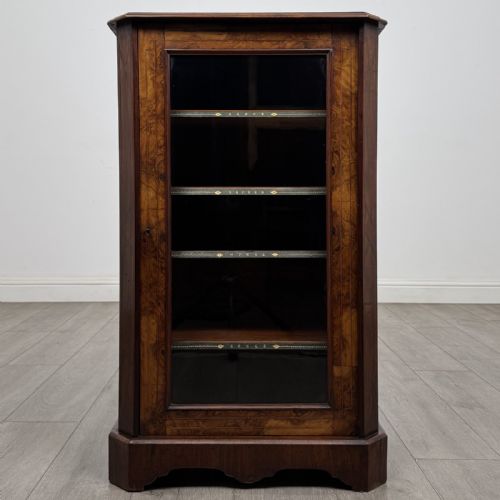
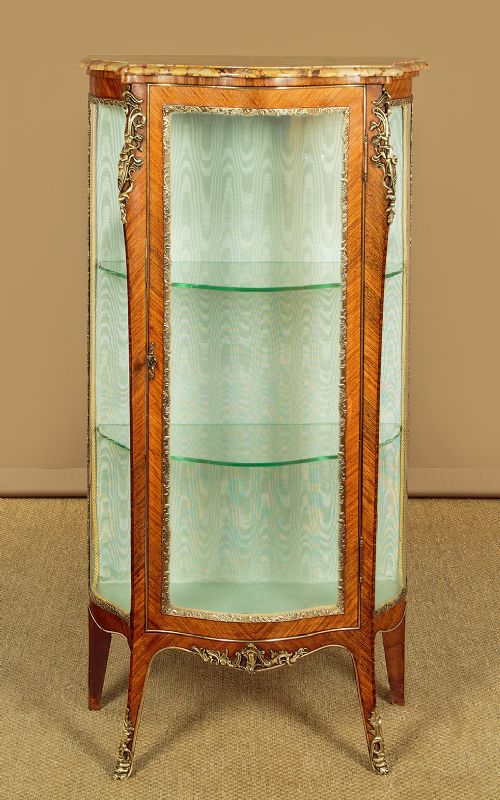
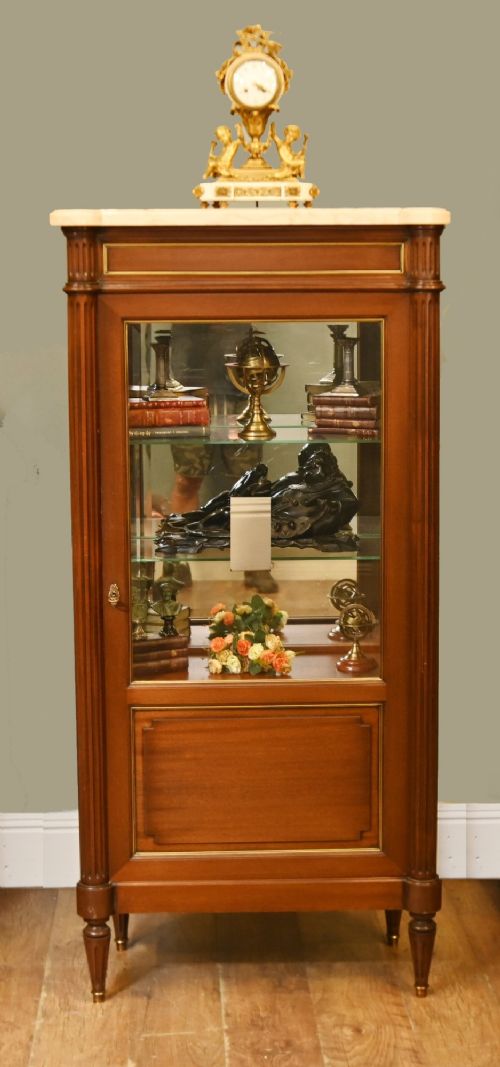
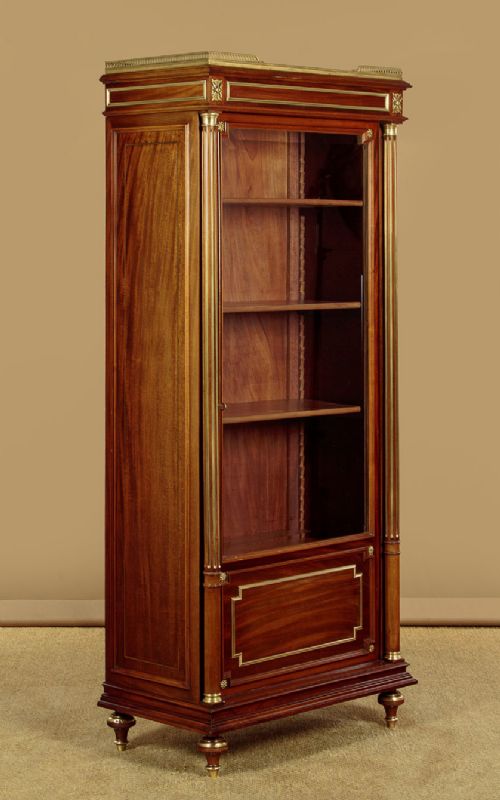
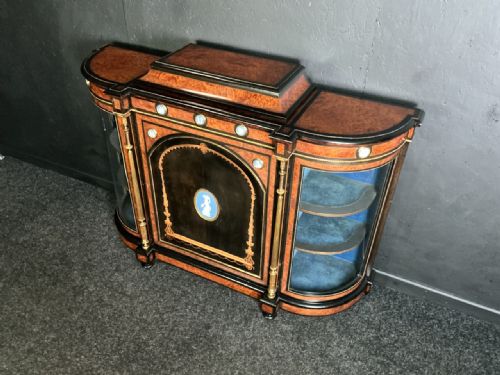
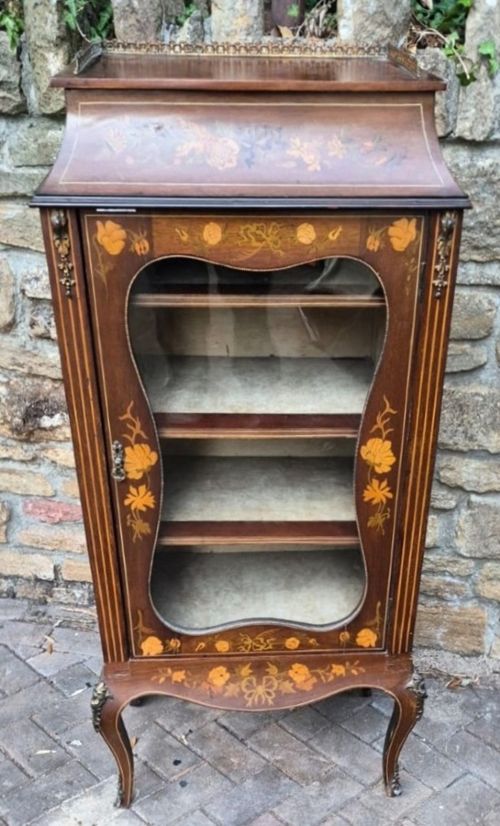
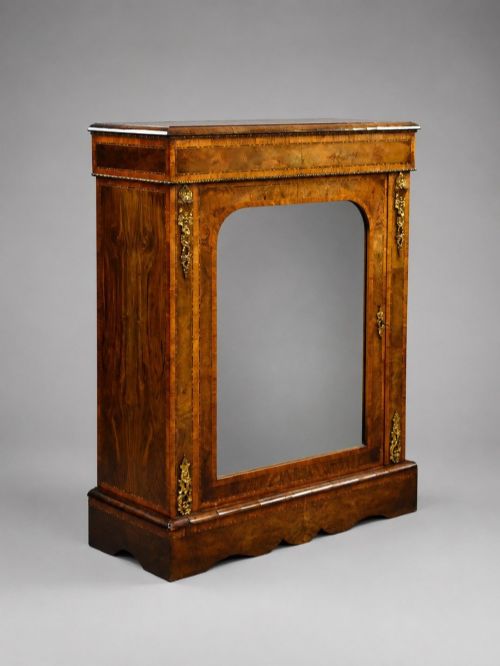
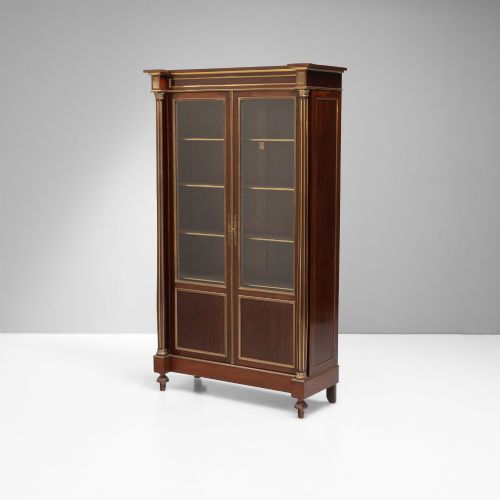
A brass glass display cabinet takes many shapes across nineteenth and twentieth century production, ranging from tall freestanding vitrines and narrow bookcases to countertop shop counters and low pier cabinets. The most frequent examples met here follow French revival tastes like Louis XV and Louis XVI styles, alongside domestic English walnut and mahogany pieces designed to showcase collections.
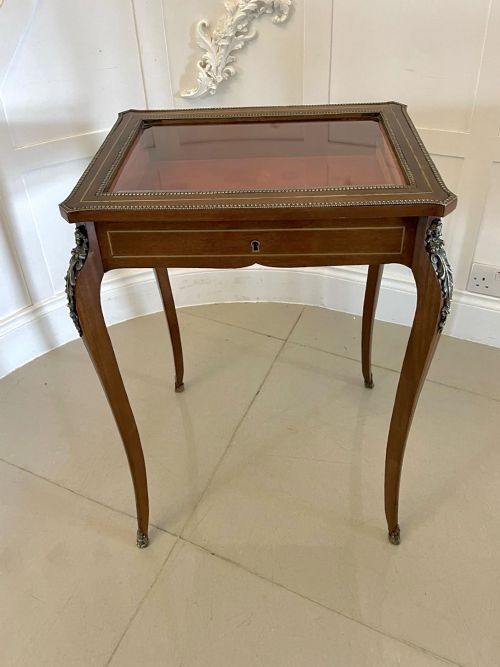
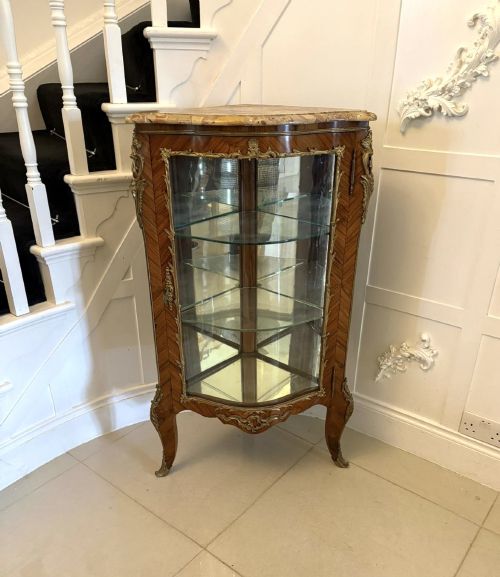
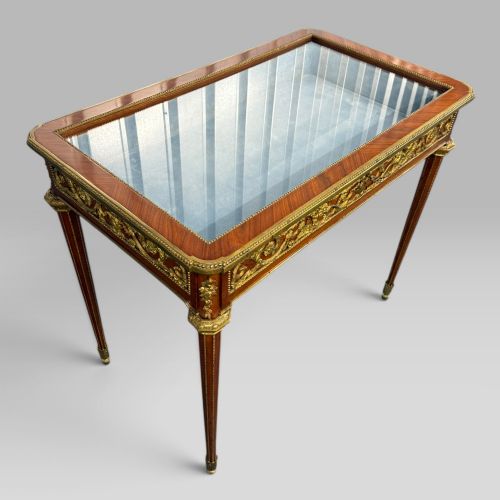
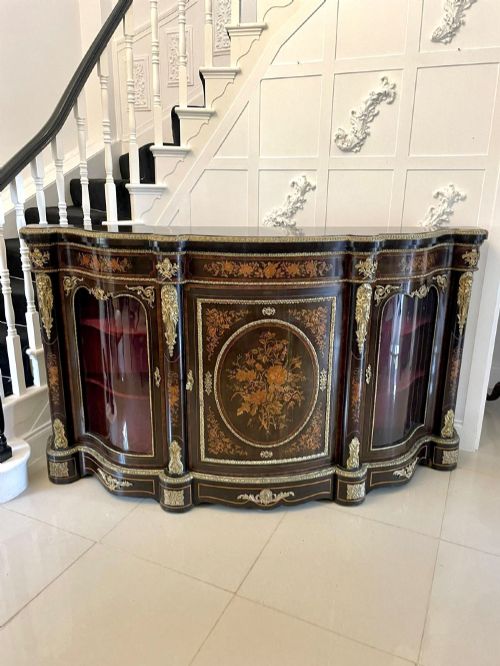
Makers and workshops across France and England adopted diverse structural forms to house precious goods, producing serpentine corner cabinets, flat-fronted sideboards, and glazed tables known as bijouterie cabinets. These items emerged from periods spanning the Victorian era through the Edwardian years and into the nineteen-thirties, using glass panels to protect contents while maintaining visibility from all angles.
Materials and Technique
Cabinet makers constructed the primary carcases from timbers such as mahogany, kingwood, rosewood, walnut, and ebonised wood, frequently incorporating marquetry panels, floral inlay, or Boulle work into the exterior surfaces. Structural frames support glazed doors and side panels, sometimes topped with shaped marble slabs.
Gilded bronze ormolu and cast brass mounts border the glass panes, frame the doors, and accent the corners and legs of these cabinets. Joinery methods unite solid woods and veneered surfaces to support heavy glass structures and metal decorative elements.
Brass Glass Display Cabinet Retail Price Guide 2026
Typical asking prices for brass glass display cabinet among the pieces listed under this phrase on Sellingantiques today, from the lower quarter to the upper quarter. They describe what is for sale here now, not the wider market.
Shop display counters from the nineteen-twenties sometimes retain the original brass merchant plates from store fitters.
Distinctions in Standard
The standard of a brass glass display cabinet rests upon the crispness of its metal mounts and the selection of timber veneers. Finely chased ormolu, complex floral marquetry inlay, and carefully matched wood grains distinguish workshop pieces from standard commercial production.
Structural refinement shows in the fitting of curved serpentine glass doors, the precision of brass stringing, and the weight of the marble tops where fitted. Finer examples display meticulous attention to interior linings and hidden secondary woods.
François Linke·Paul Sormani·F. Sage & Co.
The Brass Glass Display Cabinet Glossary
- Vitrine
- A glass-fronted cabinet designed specifically for the display of porcelain, curiosities, or decorative objects. These cases often feature glazed sides to maximise light penetration.
- Ormolu
- Gilded bronze mounts applied to furniture for decorative effect. The technique involves treating metal with a gold amalgam before firing.
- Bijouterie table
- A shallow glazed display table used for holding small personal ornaments and jewellery. These pieces lift on slender legs with brass framing.
- Marquetry
- Decorative veneer work formed by fitting pieces of coloured wood, shell, or ivory into a wooden background. This technique creates pictorial or geometric patterns across cabinet doors.
- Pier cabinet
- A narrow cabinet built to stand against the wall space between windows. Victorian examples frequently utilise burr walnut and ebonised timber.
Brass Glass Display Cabinet: Frequently Asked Questions
What fits inside a bijouterie table?
These shallow glass-topped tables suit small flat objects like pocket watches, medals, ribbons, and delicate jewellery. The glazed lid protects the contents from dust while allowing close inspection from above.
Collectors often line the interior base with velvet or fabric to cushion the items resting inside. Their compact footprint works well in drawing rooms as accent furniture.
How do I date an Edwardian vitrine?
Edwardian cabinets generally date from the period between nineteen hundred and nineteen ten, showing lighter proportions than their Victorian predecessors. They frequently incorporate mahogany frames with delicate brass inlay and simplified classical revival motifs.
Construction methods inside the cabinet, such as machine-sawn backboards and modern hinge fixings, help confirm this early twentieth-century timeline. Comparing the veneer types to documented pieces from the same decade provides further clarity.
Where should I place a pier cabinet?
A pier cabinet fits naturally against narrow wall spaces, particularly the wall section situated between two large windows. Their slender proportions prevent them from dominating a room while providing vertical storage.
Keeping these cabinets away from direct sunlight protects both the timber veneers and any fabric linings inside. Their enclosed glass shelving keeps dust away from displayed porcelain and glassware.