


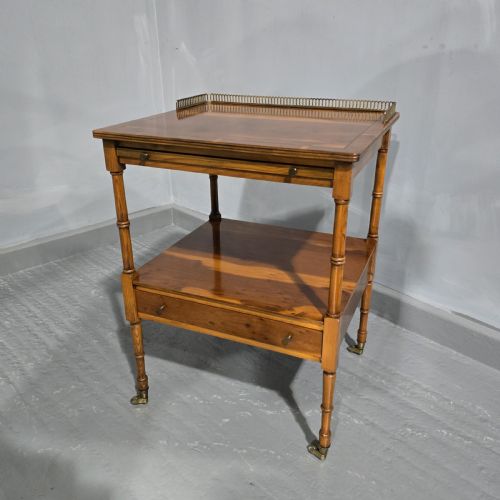


Brass Gallery Accent Table
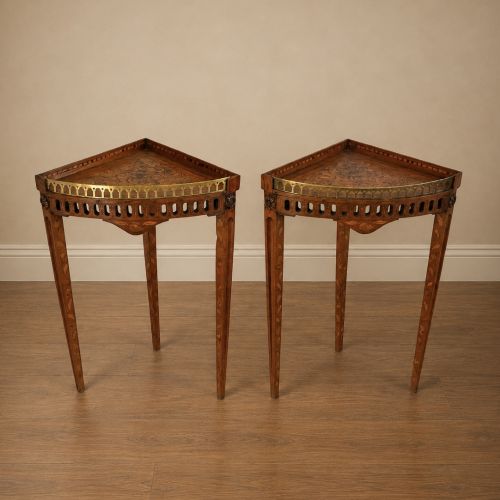
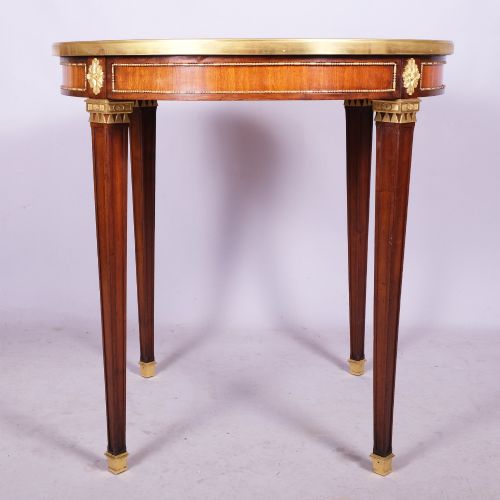
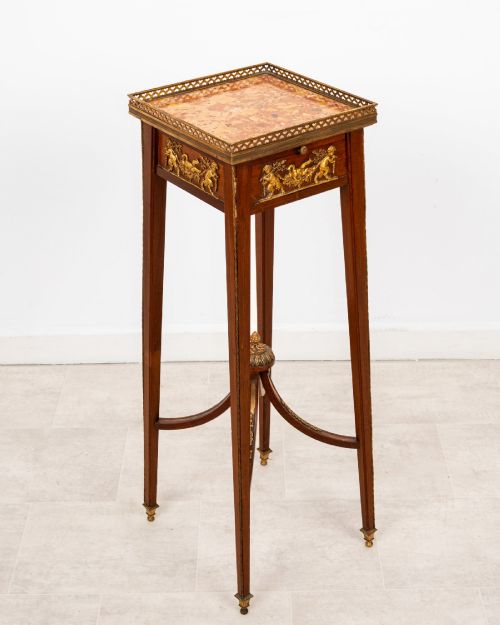
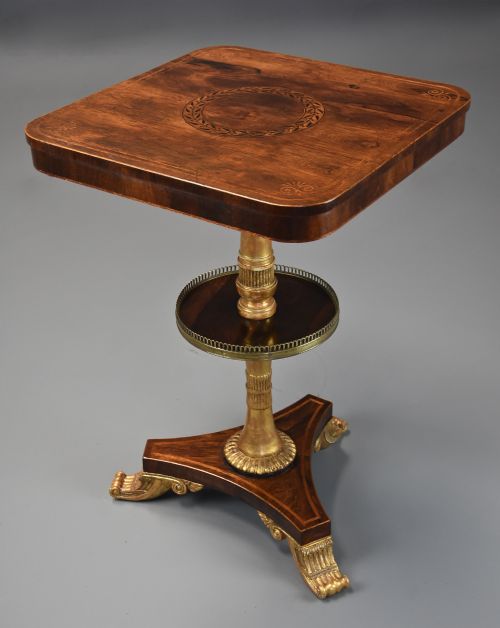
A brass gallery accent table brings functional elegance to a room, defined by its raised metal border designed to keep small items secure.
Brass Gallery Accent Table
A brass gallery accent table encompasses a diverse group of small furnishings, including side tables, occasional tables, bouillotte tables, and gueridons. These pieces frequently emerge from nineteenth-century French and Edwardian workshops, utilising forms tailored for drawing rooms and boudoirs.
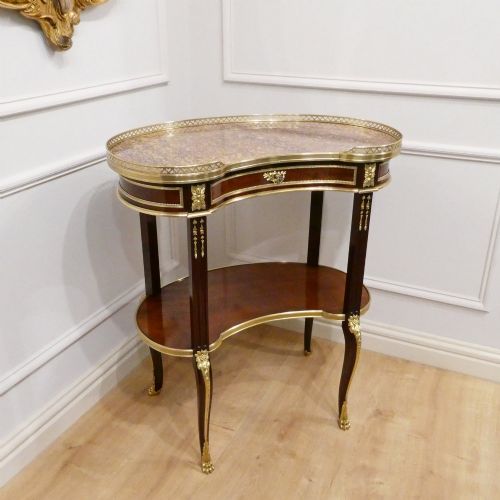
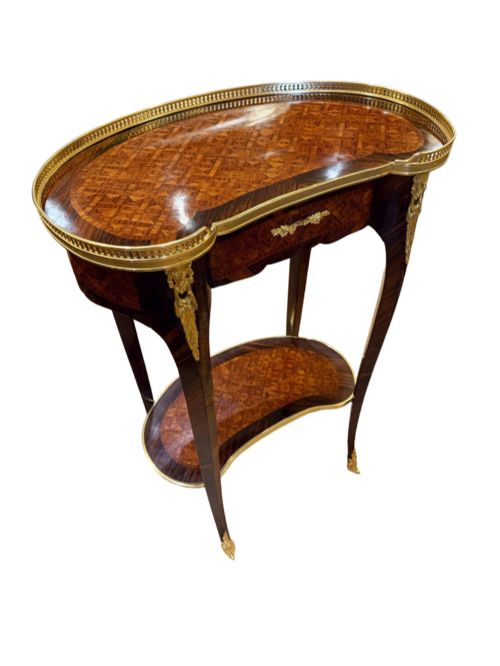
The defining characteristic across these examples is the raised metal rim bordering the surface, historically intended to prevent rolling objects from falling. Buyers encountering this selection will frequently find circular marble tops, kidney-shaped surfaces, and tiered étagères framed by delicate brass railings.
Materials and Construction
Cabinetmakers combined dense hardwoods such as mahogany, satinwood, rosewood, kingwood, and walnut with decorative veneers arranged in parquetry or marquetry patterns. Ormolu mounts and fine brass galleries were integrated to edge tabletops and accent structural joints.
Insert tops of white or rouge marble, onyx, and inset porcelain plaques provide weight and a smooth utility surface. Joinery relies on traditional framing techniques suited to supporting stone slabs and intricate wood inlays.
The listings show materials spanning mahogany, satinwood, rosewood, and kingwood paired with white and rouge marble.
Distinctions in Execution
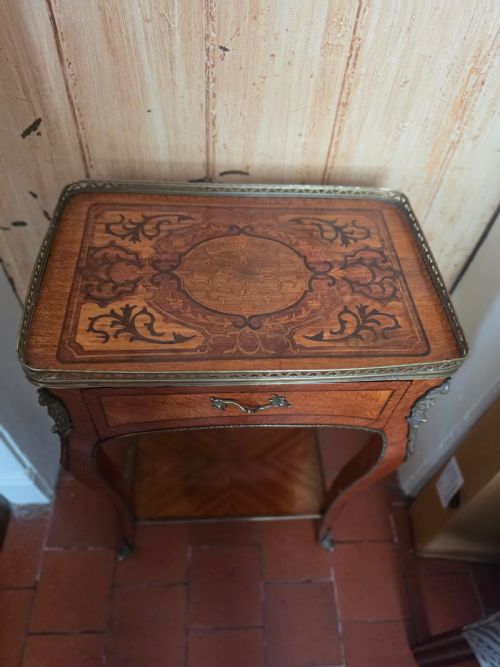
Quality rests in the crispness of the brass casting and the precision of the gallery fixings, where finer examples feature pierced or detailed fretwork securely fitted to the tabletop. The complexity and execution of timber inlays, from geometric parquetry to elaborate floral marquetry, separate standard production from master craftsmanship.
The integration of materials dictates the overall finish, particularly in how seamlessly marble or onyx slabs are recessed into wooden frames and how effectively ormolu mounts complement the primary timber.
Maison Millet·François Linke·George Bullock·A Hugnet Paris·Haentgos Freres Paris
The Brass Gallery Accent Table Glossary
- Brass gallery
- A low raised metal railing fitted around the edge of a tabletop. This feature serves both a decorative function and a practical purpose by retaining small objects.
- Bouillotte table
- A small circular occasional table featuring a raised gallery, traditionally used for playing the card game bouillotte. These typically incorporate candle arms or a marble top.
- Ormolu
- Gilt bronze mounted onto furniture as a decorative embellishment. The technique involves applying a gold amalgam to bronze before firing.
- Marquetry
- Decorative woodwork where pieces of veneer are assembled to form picture-like pictorial designs. Craftsmen use varied timber species to achieve natural colour contrasts.
Brass Gallery Accent Table: Frequently Asked Questions
What is a brass gallery?
A brass gallery is a miniature metal fence fixed around the perimeter of a tabletop. Its primary function was to prevent dice, cards, or small vessels from sliding off the surface.
Over time, this practical fixture evolved into a purely decorative accent that defines the silhouette of many nineteenth-century French and English tables.
Where should I place an accent table?
These tables suit placement beside seating arrangements, in hallways, or as bedside stands where a compact surface is required. Their finished backs and detailed galleries allow them to stand independently within a room.
Avoid positioning heavy objects on pieces with delicate tiered structures or slender legs designed primarily for decorative display.
How do I care for marble tops?
Marble surfaces require gentle cleaning with a damp cloth and mild, pH-neutral soap to preserve the polish and prevent staining. Acidic liquids like wine or citrus juice should be wiped away immediately to avoid etching the stone.
Polishing paste formulated for natural stone can be applied periodically to maintain the surface sheen.
How do I distinguish French and English styles?
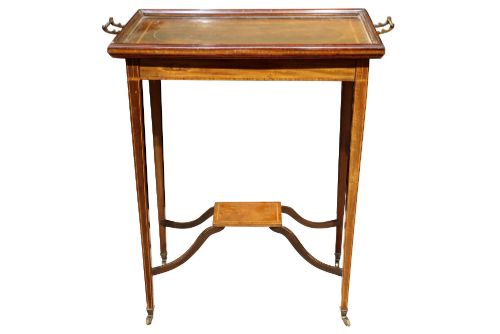
French pieces from this selection frequently incorporate gueridon forms, extensive ormolu mounts, and rouge or white marble inserts framed by pierced brass galleries. English variants tend to utilise rich mahogany or satinwood with refined stringing and simpler occasional table proportions.
Both traditions, however, frequently cross-pollinated design ideas during the nineteenth century.