


Brass Font Paraffin Lamp
A brass font paraffin lamp brings warm period light and heavy metal craftsmanship into a room, offering genuine Victorian utility for a modern mantelpiece.
Brass Font Paraffin Lamp
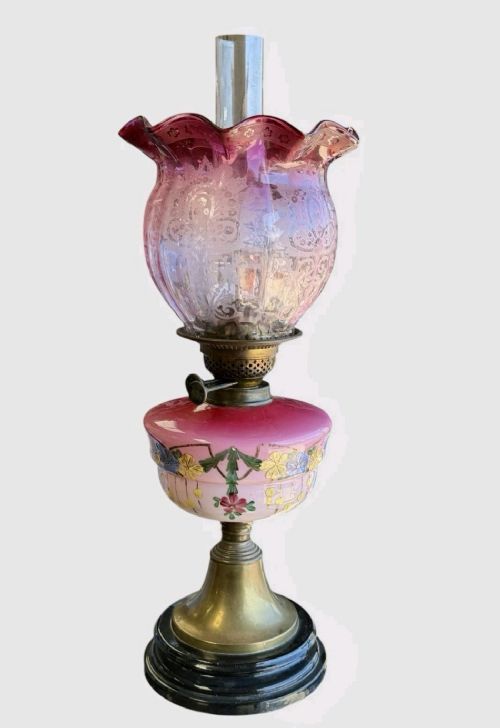
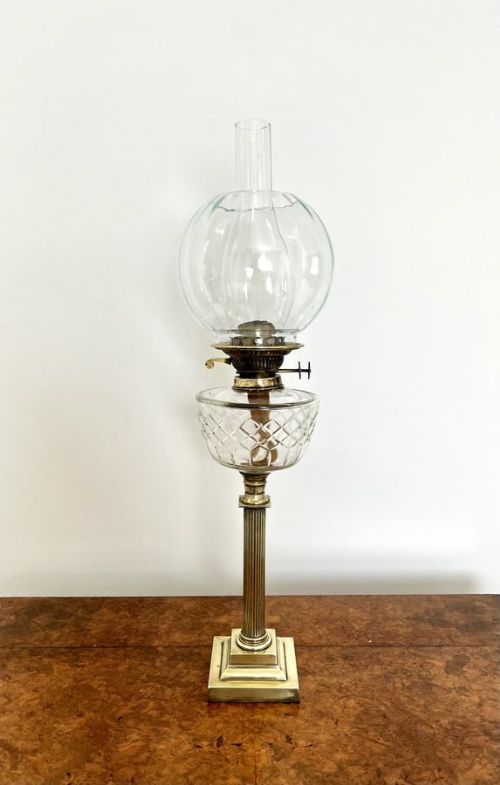
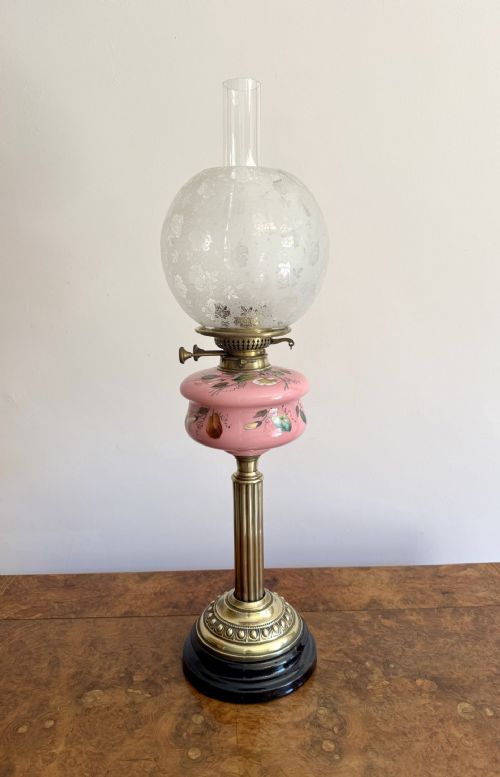
A brass font paraffin lamp combines a metal fuel reservoir with columns, ceramic bases, or telescopic stands originating from the Victorian era and the early twentieth century. Buyers seeking this phrase encounter table models and floor lamps featuring glass fonts in cranberry, blue, pink, and green.
The selections span from simple cottage table lamps to elaborate Corinthian column designs and Anglo-Burmese carved wooden standards. Most examples date from the nineteenth century, utilising brass alongside contrasting materials to support decorative or hand-painted glass burners.
Materials and construction
Makers constructed these lamps by mounting cast or spun brass fonts onto heavy metal columns, slate bases, or carved padouk and teak timber. The fuel reservoirs frequently employ coloured, milk, or cranberry glass, sometimes decorated with hand-painted motifs or cut geometric patterns.
Telescopic mechanisms and adjustable brass stems allowed users to alter the height of the light source during the nineteenth century. Glass shades, whether etched, plain, or matching the coloured font, completed the upper assembly above the metal burner.
Listings feature brass combined with cranberry glass, slate, milk glass, and hand-painted glass across the Victorian and Edwardian periods.
Distinctions in quality
Quality separates simple utility wares from ambitious parlour pieces through the weight of the brass casting and the complexity of the column design. Corinthian capitals, heavy stepped bases, and telescopic mechanisms demand greater skill from the metalworker than plain domestic standards.
The integration of materials also defines the upper tier, where cut glass, cased cranberry glass, or hand-painted bowls meet substantial metal mounts. Simpler cottage lamps rely on straightforward brass and glass combinations without decorative columns or adjustable stems.
Young's Special
The Brass Font Paraffin Lamp Glossary
- Font
- The oil or paraffin reservoir of the lamp, typically formed from blown glass, milk glass, or brass.
- Corinthian column
- A classical architectural column style frequently utilised for the stem of Victorian metal oil lamps. It adds significant weight and formal presence to the piece.
- Cranberry glass
- A rich red-pink transparent glass created by adding gold chloride to the molten batch. It appears frequently in Victorian lamp fonts and shades.
- Anglo-Burmese
- A design style combining British Victorian forms with intricate Southeast Asian carving, seen in teak and padouk lamp standards. These pieces merge heavy brass fittings with detailed woodwork.
- Telescopic
- An adjustable stem mechanism allowing the lamp height to be raised or lowered. This engineering feature is found on superior nineteenth-century floor and table models.
Brass Font Paraffin Lamp: Frequently Asked Questions
How do I date a brass oil lamp?
Examine the materials, column styles, and manufacturing marks to establish a period. Victorian examples often feature heavy brass castings, Corinthian columns, or cranberry glass fonts.
Later pieces move into the early twentieth century with simpler cottage forms or different colour palettes on the glass bowls.
Can I still burn paraffin in these lamps?
These historical pieces are generally acquired as decorative objects or conversation pieces for a room. Restoring them for active paraffin use requires careful inspection of the burner mechanism and fuel reservoir.
Many collectors prefer to display them unlit to preserve the original glass fonts and brass patination.
What is an Anglo-Burmese lamp?
An Anglo-Burmese lamp incorporates carved exotic timbers like padouk and teak alongside traditional brass fittings. This style reflects nineteenth-century craftsmanship that blended British domestic forms with overseas woodwork.
They stand out among standard brass and glass pieces due to their heavily carved wooden standards.
How do I clean nineteenth-century brass?
Preserving the natural age and dark patination of old brass is standard practice among antique collectors. Aggressive polishing removes the historic surface character built up over the decades.
A gentle dust with a soft dry cloth is usually sufficient for regular maintenance of the metal columns and bases.