

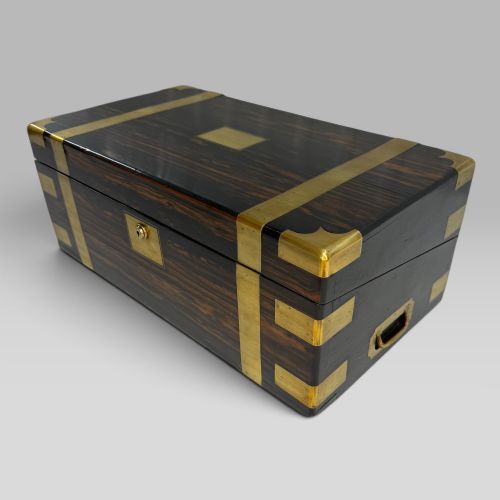
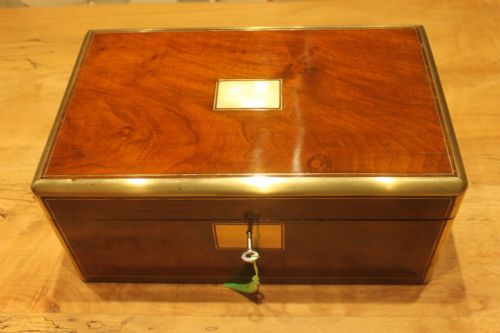
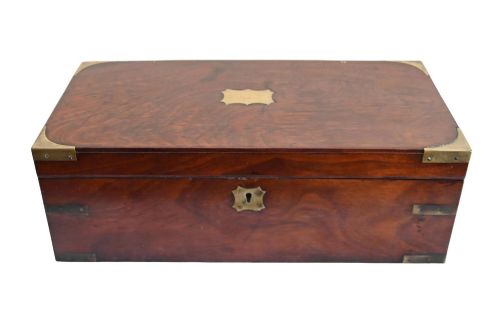
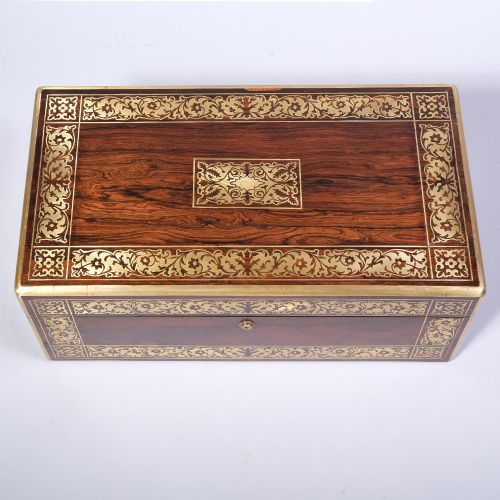
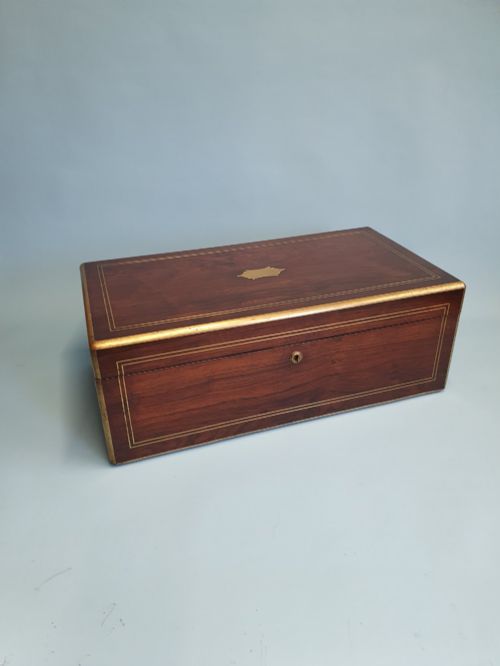
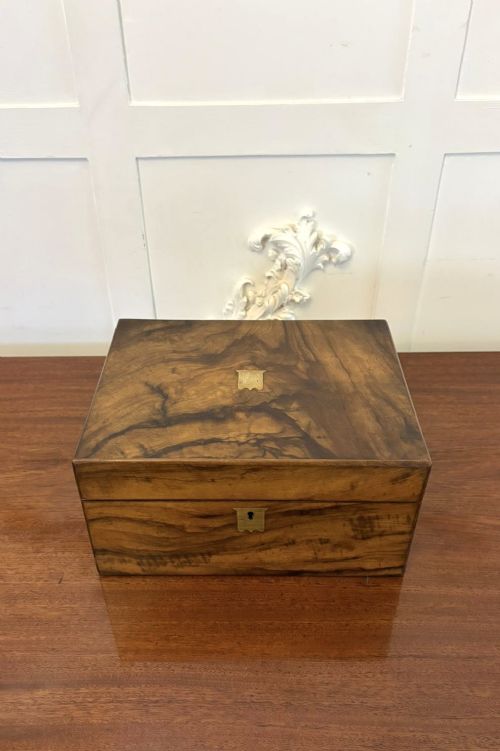


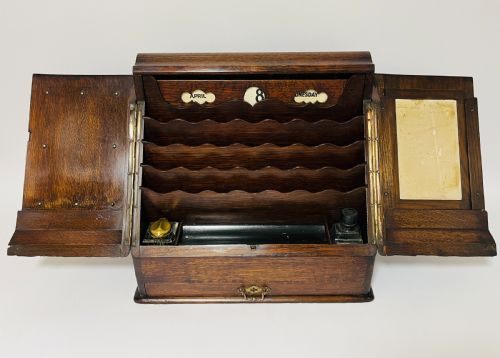


Brass Fitted Stationery Box
A brass fitted stationery box is a desk accessory built to hold correspondence, papers, and pens, designed to keep a desk orderly.
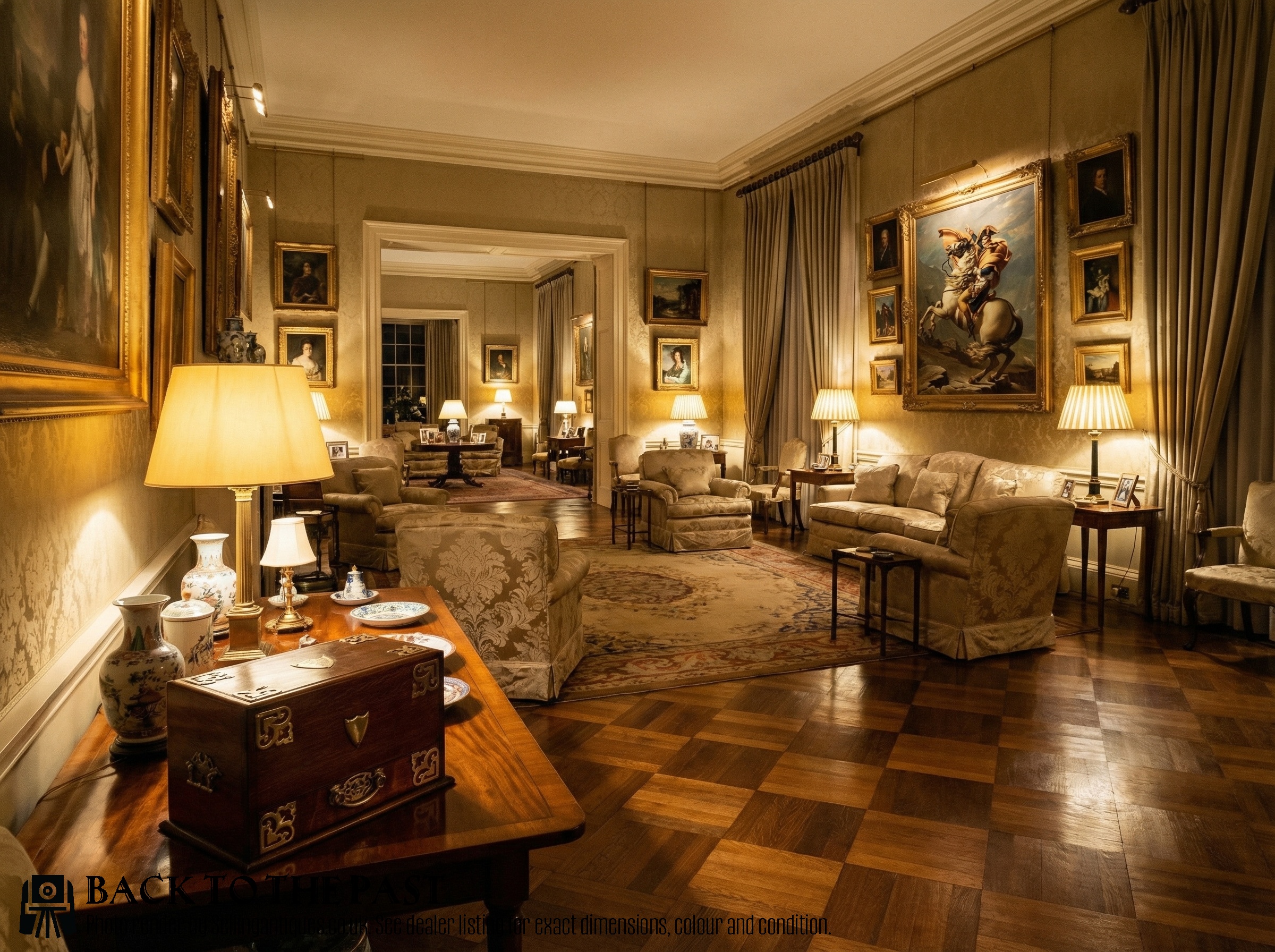
Brass Fitted Stationery Box
When you search for a brass fitted stationery box, you encounter pieces designed to hold correspondence and writing materials in home offices and studies. These items range from compact campaign pieces to substantial Victorian cabinets.
Materials span from dense hardwoods like mahogany and oak to richly figured veneers such as burr walnut and rosewood. Brass mounts, inlays, and corner brackets unify these diverse forms by protecting edges and reinforcing joints.
Construction and materials
Cabinet makers constructed these boxes using solid timbers and decorative veneers over secondary woods, applying brass for structural reinforcement and decoration. Brass appears as strapwork, corner bounds, inlays, and escutcheons secured with tiny pins.
Interiors often feature fitted compartments, secret drawers, and leather writing surfaces designed for travel or stationary desk use. Locks by makers such as Bramah secure the contents, integrating metalwork directly into the woodwork.
Brass Fitted Stationery Box Retail Price Guide 2026
Typical asking prices for brass fitted stationery box among the pieces listed under this phrase on Sellingantiques today, from the lower quarter to the upper quarter. They describe what is for sale here now, not the wider market.
Listings demonstrate periods spanning from the Georgian era through the Victorian period to the 1920s, utilising brass, oak, mahogany, rosewood, and burr walnut.
Assessing quality and craftsmanship
Quality rests upon the selection of timber veneers, such as figured burr walnut or rosewood, matched across the lid and sides. Superior examples display precise brass inlay and tightly joined corner bounds rather than surface-level applications.
Internal complexity dictates distinction within this group, separating simple storage containers from fully fitted writing slopes with secret drawers and leather surfaces. The integration of robust locking mechanisms and original hardware completes the standard.
The Brass Fitted Stationery Box Glossary
- Writing Slope
- A desk accessory with an inclined lid designed to hold paper and provide a flat surface for handwriting. Inside, compartments organise inkwells, pens, and smaller stationery.
- Stationery Cabinet
- An upright piece of furniture featuring doors or drop-fronts to organise letters and envelopes. These structures frequently incorporate tiered internal slots for paper storage.
- Bramah Lock
- A high-security locking mechanism invented by Joseph Bramah, commonly found on better-quality nineteenth-century boxes. It uses a cylindrical key with longitudinal slits to engage internal sliders.
- Campaign Box
- Portable furniture built for travel, featuring recessed brass handles and reinforced brass corners to withstand rough handling. These items were used by officers and travellers on the move.
- Escutcheon
- A protective metal plate surrounding a keyhole. On these boxes, brass escutcheons prevent the surrounding wood from wearing down through repeated use of the key.
Brass Fitted Stationery Box: Frequently Asked Questions
What is a brass fitted stationery box?
A brass fitted stationery box is a desk container designed for holding paper, envelopes, and writing implements. These pieces rely on brass corners and hinges for structural durability.
They appear in various forms, including upright cabinets, sloped desks, and flat correspondence boxes, utilising timbers like oak, mahogany, and burr walnut.
How were writing slopes used?
Writing slopes provided a portable desk surface for writing letters before the widespread use of fitted household writing desks. The slanted lid created a comfortable angle for handwriting.
Lifting the slope revealed compartments for inkwells, sealing wax, pens, and private papers secured by a lock.
How do I date a wooden box?
Dating relies on timber selection, construction methods, and the style of the brass hardware. Georgian examples often use mahogany with simple brass stringing, while Victorian pieces favour burr walnut and heavy brass binding.
Internal fittings and locking mechanisms also offer clues, as patent locks appeared increasingly through the nineteenth century.
Are these boxes suitable for daily use?
These boxes function well for modern desk organisation, holding letters, notebooks, and small supplies. Their internal compartments suit the storage of stationery items.
Care should be taken to protect antique wood finishes and leather surfaces from moisture and direct heat sources.