
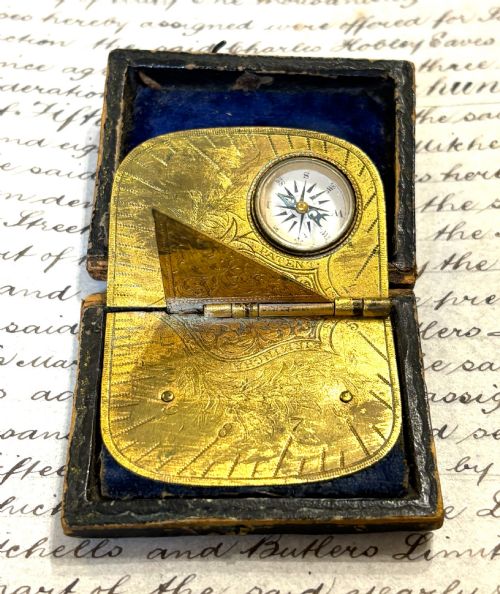
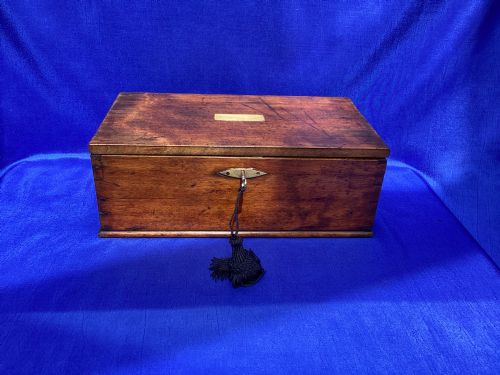


Brass Fitted Instrument Case
These brass fitted instrument case examples house precision equipment in robust timber, offering a tangible link to historical measurement, navigation, and science.
Brass Fitted Instrument Case
When you search for a brass fitted instrument case, you encounter sturdy enclosures designed to protect delicate scientific, nautical, and medical tools during transport and storage.
The versions most frequently met on this page span the Georgian, Victorian, and Edwardian periods, constructed primarily as timber boxes equipped with secure metal hardware.
These pieces encompass various categories including medical collectables, scientific instruments, and measuring devices, each tailored to a specific professional discipline.
Materials and construction methods
Makers utilised dense hardwoods such as mahogany to construct the structural shell, ensuring durability against knocks and environmental changes.
Brass corners, hinges, and carrying handles were integrated to reinforce the edges and secure the lid, reflecting practical engineering needs.
Interiors frequently featured fitted compartments lined with velvet or leather to cradle delicate glass and metal instruments securely.
Some nineteenth-century surveyors measured the county with standard yards while keeping their tea safely stowed nearby.
Assessing craftsmanship and design
Quality rests upon the precision of the interior fitted compartments and the robustness of the exterior timber joinery, which indicate the original investment in the piece.
The sophistication of the maker's hardware, including flush-fitting brass handles and well-engraved maker plates, separates standard utility boxes from high-status scientific equipment.
Holtzapffel and Co·L Casella and Co·John Millikin·A Hurlimann Paris·Swift and Son·Francis West·John Lilley and Son·WF Stanley
The Brass Fitted Instrument Case Glossary
- Mahogany
- A durable tropical hardwood commonly utilised for the exterior construction of scientific boxes.
- Velvet
- A plush woven fabric frequently applied as a protective lining inside instrument compartments.
- Hydrometer
- A measuring instrument used to determine the specific gravity of liquids, often found complete in cased sets.
- Artificial horizon
- An optical device used in navigation to measure altitude when the natural horizon is obscured.
- Cartography
- The study and practice of making maps, associated with draughtsman tool sets housed in fitted cases.
Brass Fitted Instrument Case: Frequently Asked Questions
What instruments go inside these cases?
These boxes typically house scientific, medical, and navigational equipment such as microscopes, hydrometers, and surveying levels. Each case was tailored specifically to hold its original contents securely.
Over time, the contents occasionally became separated from the outer housing, leaving empty fitted compartments designed for precise tools.
How do I date a wooden instrument box?
Dating relies upon the style of the timber joinery, the design of the brass hardware, and any maker inscriptions found on the interior or instruments. Georgian and Victorian examples display distinct construction traits.
Examining the typeface of engraved maker signatures also helps narrow down the period of manufacture.
Why are some cases lined with velvet?
Velvet linings cushioned delicate brass and glass components against shock and vibration during travel. This soft barrier prevented the precision instruments from scratching.
Such meticulous internal fitting demonstrates the high value placed on the scientific equipment inside.
Were these cases made for travel?
Yes, many of these enclosures served surveyors, doctors, and maritime officers who required their instruments in the field. The brass fittings provided the necessary strength for frequent transit.
Robust locking mechanisms and recessed handles ensured the contents remained safe in demanding environments.