


Brass Fitted Campaign Drawers
Brass fitted campaign drawers are portable travel furniture built for officers on the move, prized for their flush hardware and sectional design.
Brass Fitted Campaign Drawers
When you search for brass fitted campaign drawers, you encounter utilitarian travel pieces designed to withstand the rigours of military relocation and colonial service. The pieces listed here span the eighteenth, nineteenth, and early twentieth centuries, featuring distinct iterations ranging from military chests and secretaire cabinets to smaller writing slopes and apothecary boxes.
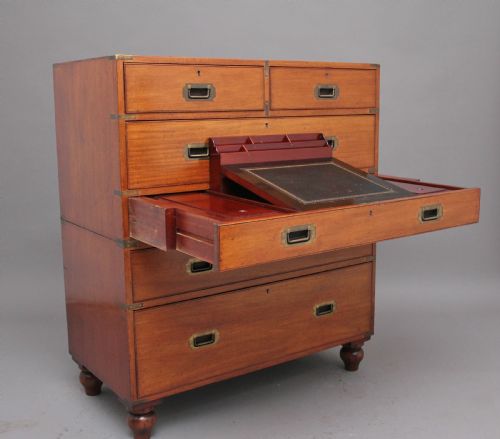
The version you are most likely to meet on this page is the Victorian mahogany or teak military chest, typically constructed in two separate sections for ease of transport. These items frequently display recessed brass handles and corner brackets designed to prevent snagging during transit.
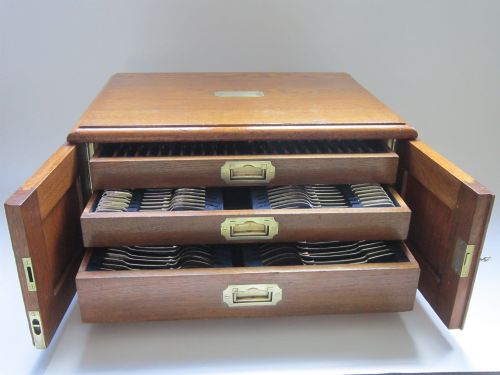
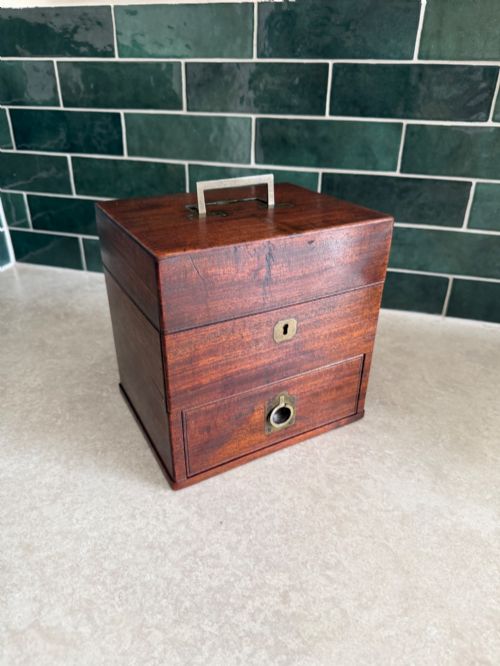
Alongside standard chests, the selection encompasses specialised travel furniture such as camphorwood secretaire chests, workshop banks of drawers, and fitted canteens. Each form reflects the specific logistical demands of nineteenth-century officers and travellers who required secure, organised storage away from permanent homes.
Materials and construction
Makers utilised dense, resilient timbers capable of enduring fluctuating climates, relying primarily on mahogany, teak, walnut, and camphorwood. These hardwoods were often selected for their stability and resistance to warping in colonial environments.
Brass fittings, including flush-fitting drop handles, corner braces, and binding straps, were meticulously integrated into the woodwork to protect vulnerable edges and joints. Drawers typically incorporated secret compartments and internal writing surfaces to maximise utility within a compact footprint.
Listings here feature nineteenth-century and early twentieth-century examples constructed from mahogany, teak, walnut, pitch pine, and camphorwood.
Distinctions in quality
Quality rests upon the precision of the joinery and the integration of the brass hardware into the timber substrate. Superior examples display tightly fitted flush brasswork and sound internal carcase construction that maintains structural integrity across sectional divides.
The grade of timber and the complexity of the interior fitments further separate standard utilitarian trunks from officer-commissioned pieces. Finer items feature well-figured mahogany or teak veneers, concealed locking mechanisms, and secondary woods of equal standard within the drawer linings.
The Brass Fitted Campaign Drawers Glossary
- Secretaire chest
- A cabinet incorporating a fitted writing drawer with a drop-front desk surface and small pigeonholes. This hybrid form allowed officers to manage correspondence while on active service.
- Flush brass
- Hardware inset level with the wooden surface so that nothing catches during loading and movement. This technique defines genuine campaign furniture.
- Camphorwood
- An aromatic tropical timber frequently utilised for campaign chests to deter insects. Its distinctive scent protected stored garments and documents.
- Writing slope
- A portable slant-topped box that opens to reveal a leather-lined writing surface and compartments for ink and paper. These items often include secret drawers operated by hidden latches.
Brass Fitted Campaign Drawers: Frequently Asked Questions
What makes campaign furniture different from standard furniture?
Campaign furniture is specifically engineered for portability, breaking down into modular sections with recessed hardware to prevent damage during transit.
These pieces were built for military officers and officials who needed durable, practical storage that could travel easily across land and sea.
Why do many campaign chests come in two sections?
Two-part construction allowed heavy chests of drawers to be separated into manageable loads for pack animals, wagons, and ship cargo holds.
Each section locks securely onto the other using brass brackets and pins when assembled at a destination.
How do I identify the wood used in a campaign chest?
Examination of the grain, colour, and weight reveals whether a piece utilises mahogany, teak, walnut, camphorwood, or pitch pine. Tropical hardwoods like teak and mahogany offer high density and natural resistance to humidity.
Secondary woods inside drawer linings often provide additional clues regarding the workshop origin and period of manufacture.
Were all campaign drawers made for the military?
While many pieces originated for army officers on colonial posting, similar travel furniture served diplomats, explorers, and civilian travellers.
The style persisted into the twentieth century for industrial and domestic use long after active military campaigns ceased utilising sectional chests.
How should I care for antique brass fitted furniture?
Maintain stable indoor humidity levels to prevent the dense hardwoods from shrinking or expanding against the fitted brass mounts.
Clean surfaces gently with appropriate wood waxes and avoid abrasive polishes on the brass hardware to preserve the natural patina.