



Brass Fire Rail Guard
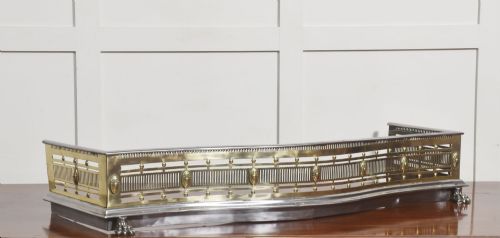
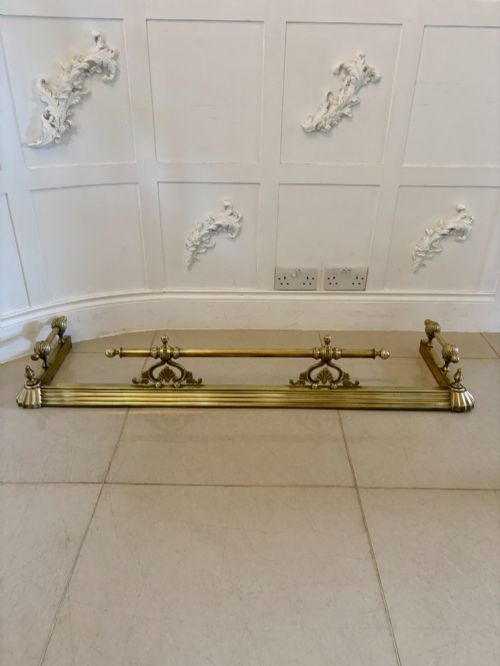
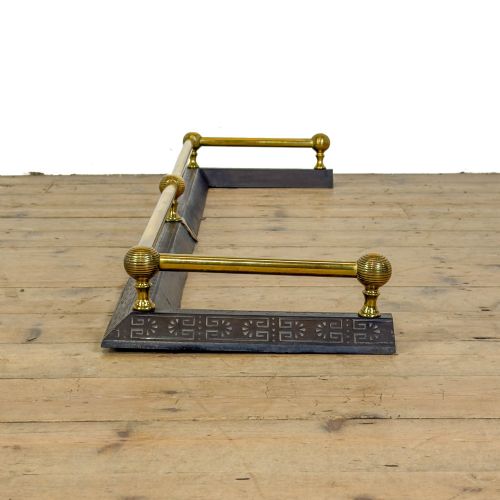
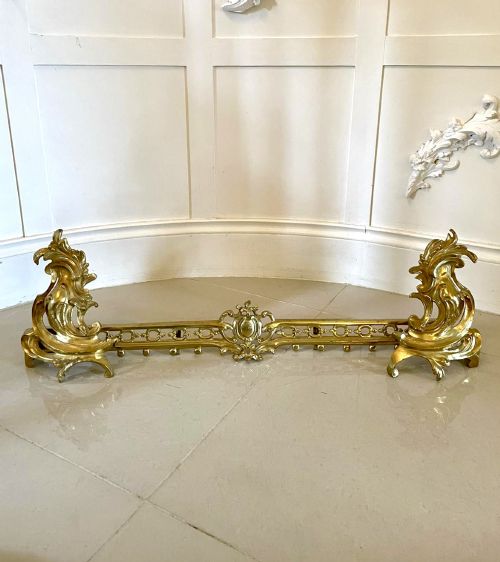
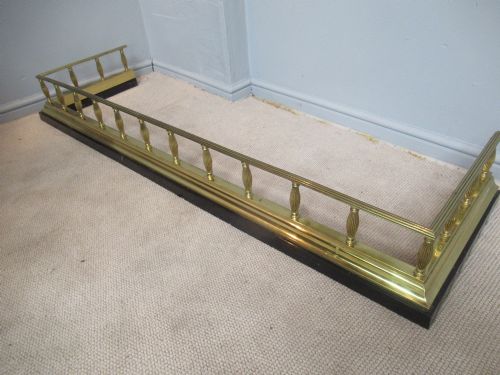
These brass fire rail guard pieces anchor the hearth with functional metalwork designed to protect the room from wandering embers.
Brass Fire Rail Guard
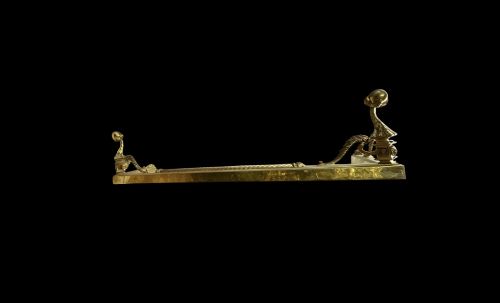
A brass fire rail guard encompasses heavy hearth fenders, adjustable fire kerbs, and nursery guards featuring prominent metal rails. Pieces span the Victorian, Edwardian, and Georgian periods, alongside early twentieth-century examples.
The most common formats on this page are extendable hearth fenders and nursery fire guards equipped with brass top rails or nappy rails for airing clothes. These hearth accessories combine structural iron or steel frames with polished brass detailing.
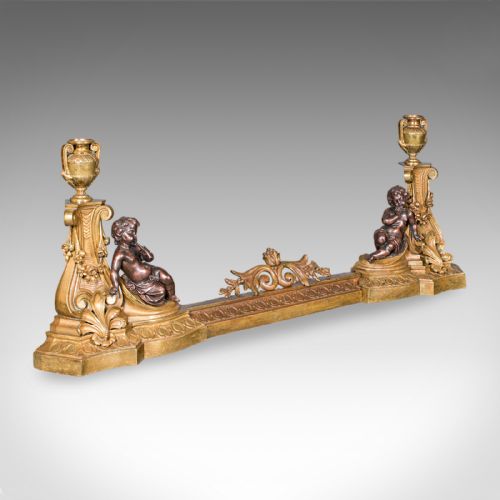
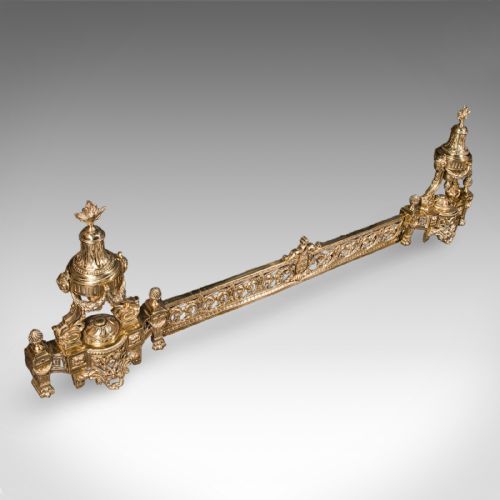
Formations range from simple scrolled frames to elaborate Louis XVI neoclassical designs and French rococo styles. Many examples incorporate wire mesh panels or pierced metalwork designed to sit securely around the fireplace opening.
Materials and construction
Construction relies heavily on combinations of brass, cast iron, and steel, utilising heavy gauge components for structural stability around the hearth. Gilded brass and gilt bronze appear alongside standard polished brass to create decorative surface finishes.
Wire mesh and perforated sheet metal integrate into frames to form protective fire guards, while adjustable mechanisms allow certain fenders to fit varied hearth widths. Solid cast brass elements and applied lions or decorative scrolls provide weight and ornament.
Listings feature brass, iron, steel, and wire mesh across Victorian, Edwardian, Georgian, and early twentieth-century periods.
Distinctions in quality
Quality rests on the weight of the metal gauge and the precision of the assembly, distinguishing heavy cast pieces from lighter stamped sheet metal. Robust construction in the frame and substantial thickness in the brass rail separate superior examples from standard utility items.
The sophistication of the decorative work, such as finely pierced steel panels, well-defined casting in lions or scrolls, and properly functioning adjustable extension mechanisms, elevates the standing of a piece.
The Brass Fire Rail Guard Glossary
- Fender
- A low metal guard placed around the hearth to contain sparks and rolling logs. These frames define the fireplace perimeter.
- Nursery guard
- A tall protective screen enclosed in wire mesh with a top rail, historically used to keep children safely away from open flames.
- Nappy rail
- A horizontal metal bar integrated into a fire guard or fender specifically intended for drying garments and infant laundry. This dual-purpose rail is a common feature on nineteenth-century designs.
- Kerb
- The structural border or surround of the hearth, often synonymous with an adjustable fender. It creates a defined barrier between fire and room.
- Gilt bronze
- Metal alloy treated with a gold-coloured finish or mercury gilding to provide a decorative surface. This material appears on ornate French-influenced styles.
Brass Fire Rail Guard: Frequently Asked Questions
What is a brass fire rail guard used for?
These pieces serve a dual purpose around the fireplace, acting as a protective barrier against sparks while also holding rails for containment or warming.
Nursery variants prevent children and fabrics from getting too close to the flames, whereas hearth fenders frame the opening neatly.
How do I measure for a fender?
Measure the width and depth of your hearth space carefully, taking note of whether the piece is adjustable.
Many nineteenth-century examples feature extending mechanisms that allow minor adjustments to fit specific hearth dimensions.
Are these pieces adjustable?
Several examples on this page include adjustable mechanisms designed to alter the overall width of the fender.
Fixed models require precise measurement of the fireplace surround before placement on the hearth.
What periods do these guards come from?
The selection includes pieces spanning the Georgian, Victorian, and Edwardian eras, alongside early twentieth-century examples.
Stylistic influences range from plain utilitarian forms to ornate French rococo and Louis XVI neoclassical designs.