




Brass Figural Clock
A brass figural clock brings sculptural presence to a room, combining timekeeping with classical figures, cherubs or animals cast in metal.
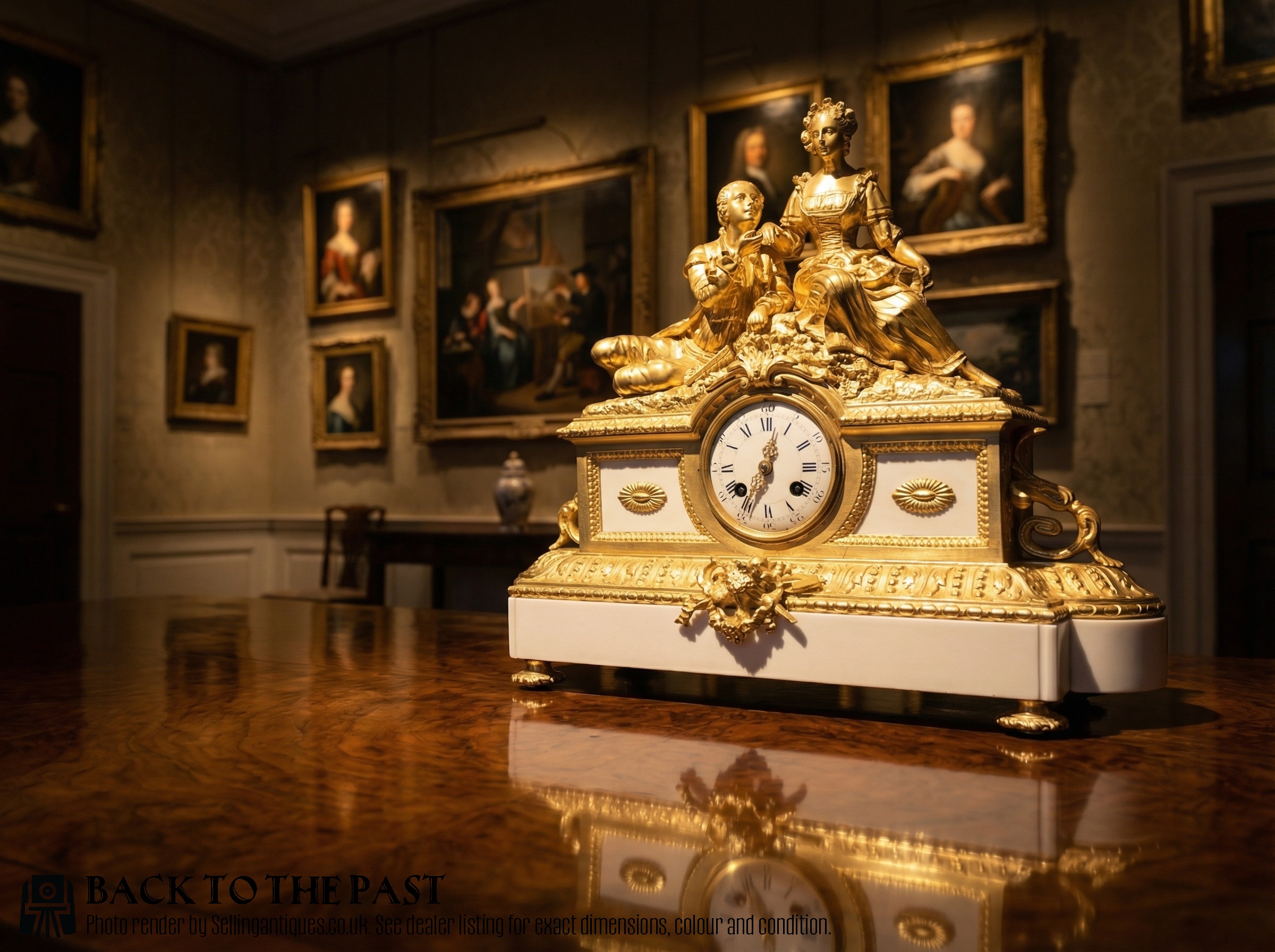
Brass Figural Clock
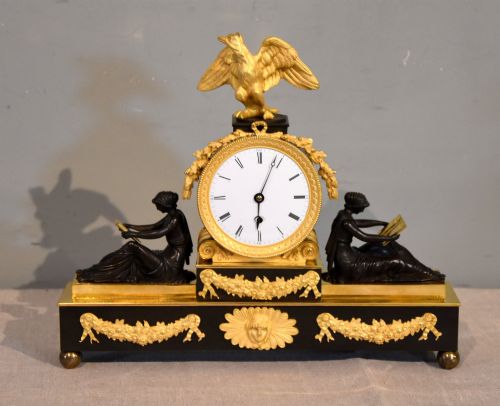
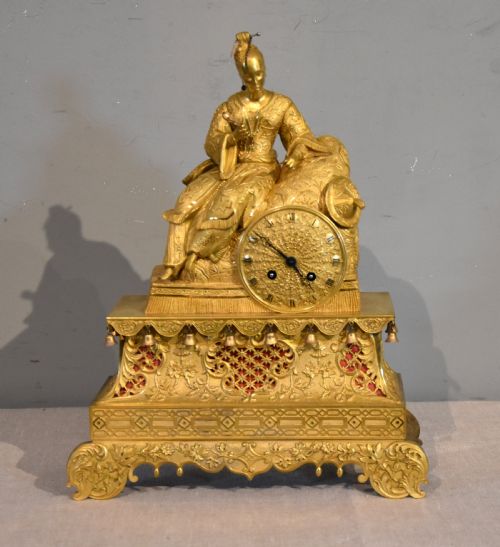
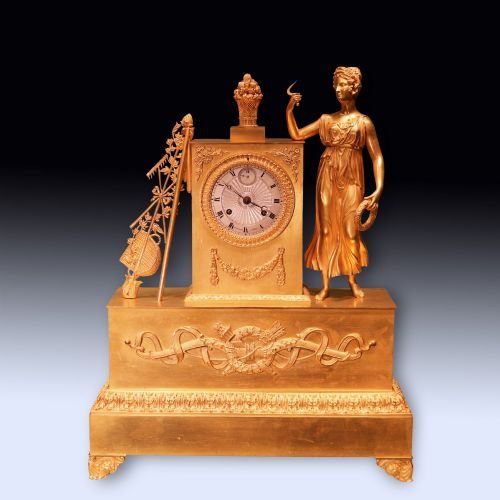
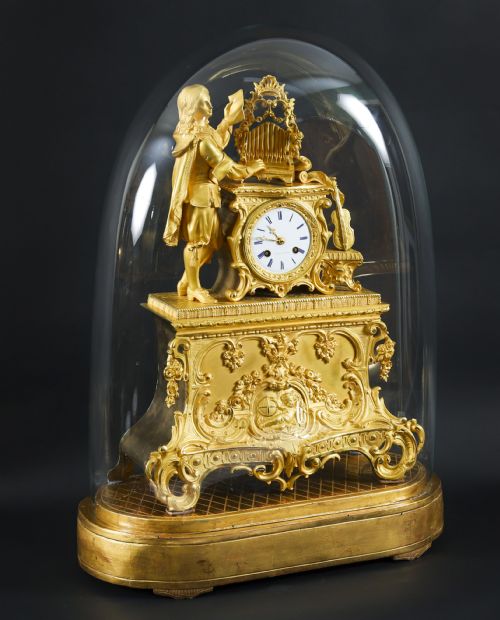
A brass figural clock is a table or mantel timepiece that integrates human, animal or mythological figures into its case design. When you search for this phrase, you find examples spanning the Regency and Victorian periods, often taking the form of mantel clocks or three-piece clock sets.
The objects on this page originate predominantly from French and English workshops. French pieces frequently display Empire, Rococo Revival or Neoclassical styles, while English examples often use fusee movements housed in gilt bronze or brass cases.
How they were made
Makers constructed these clocks using cast metals such as brass, gilt bronze, ormolu and spelter, frequently mounting them on marble, onyx or bronze plinths. Dial faces incorporate materials like enamel, glass, porcelain and hand-painted details.
Internal mechanisms rely on eight-day striking movements, bell-striking systems, or chain and double fusee gear trains. Many pieces pair these metal cases with decorative elements including glass domes and carved alabaster.
Listings feature clocks from the Regency, Victorian, and 19th-century periods, utilising gilt bronze, ormolu, marble, and porcelain.
What varies in quality
Movement execution also dictates the standing of a piece. Signed mechanisms by established makers and complex fusee movements represent a higher standard of production than standard commercial timepieces.
Baetens London·Canaillor of Paris·Japy Freres·Leroy Paris·John Bennett Cheapside London·James Murray London·Henry Berkeley Square London·Perigal and Duterrau·Bently and Beck London·F Marti·Freres Raingo·P.H. Mourey
The Brass Figural Clock Glossary
- Ormolu
- Gilded bronze produced through a mercury amalgamation process. This technique gives the metal a deep, warm yellow lustre common on French clock cases.
- Fusee
- A conical pulley used in spring-driven clocks to maintain equal power as the mainspring unwinds. It is a hallmark of better English timepieces.
- Clock garniture
- A set comprising a central clock flanked by matching ornaments such as vases or candelabra. These sets were designed to sit together on a mantelpiece.
- Spelter
- A zinc alloy used as a cheaper alternative to bronze for figural castings. It is softer and takes plating less deeply than gilt bronze.
- Silk suspension
- A method of hanging the pendulum by a silk thread used in older French clocks. It requires careful handling and adjustment.
Brass Figural Clock: Frequently Asked Questions
What is a figural clock?
A figural clock is a timepiece where the case incorporates sculpted human figures, animals, cherubs or allegorical subjects. These sculptures form an integral part of the overall design rather than sitting as separate ornaments.
They appear across various nineteenth-century styles, combining functional clockwork with decorative bronze, brass or marble sculpture.
How do I wind an antique clock?
Most mechanical clocks on this page use a key inserted into winding holes on the dial face. Turn the key gently until you feel resistance, taking care not to over-wind the mainspring.
Eighty-day movements require winding at regular weekly intervals to maintain accurate timekeeping and keep the striking train functioning correctly.
What is a clock garniture?
A clock garniture is a matched set consisting of a central mantel clock accompanied by two side pieces, such as urns or candelabra. These matched groupings were popular for decorating drawing room mantelpieces.
Each piece in the set shares identical materials, casting styles and decorative motifs like ormolu mounts or marble bases.
How do I distinguish French and English movements?
English makers frequently utilised chain or gut-line fusee movements housed in heavy brass plates. These systems regulate power delivery very precisely across the running cycle.
French makers tended to use spring-driven barrel movements, often stamped with factory marks like Japy Freres or F Marti, operating with a pendulum behind the dial.