

Brass Desk Box
A brass desk box combines utilitarian function with handsome cabinetry, offering sturdy storage for correspondence and writing implements.
Brass Desk Box
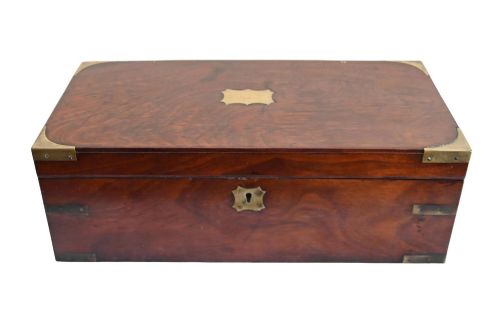
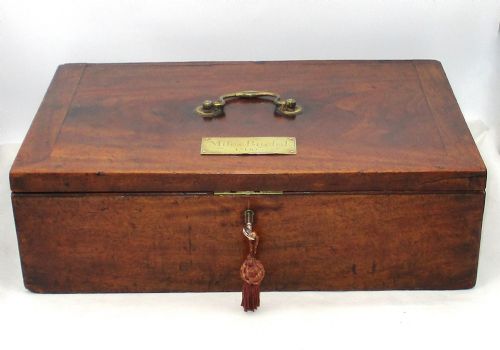
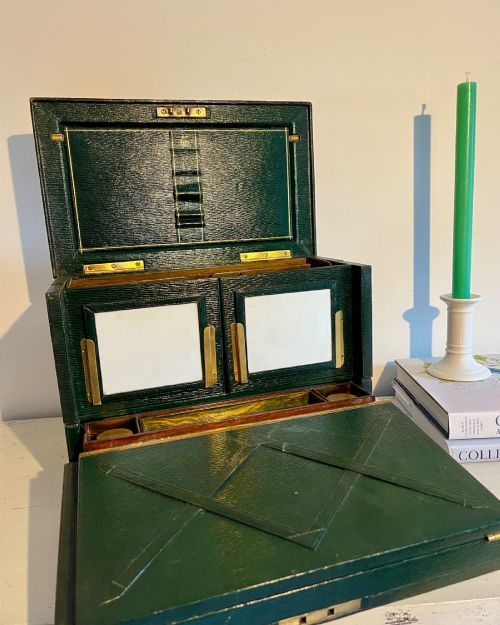
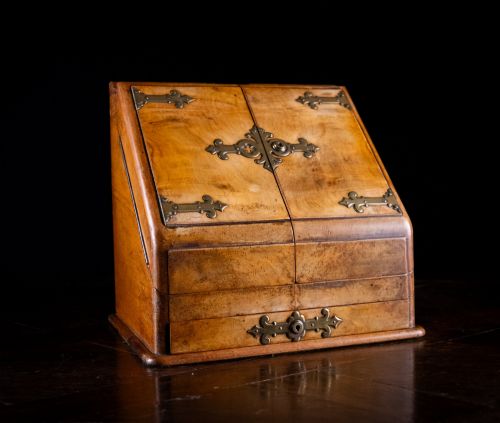
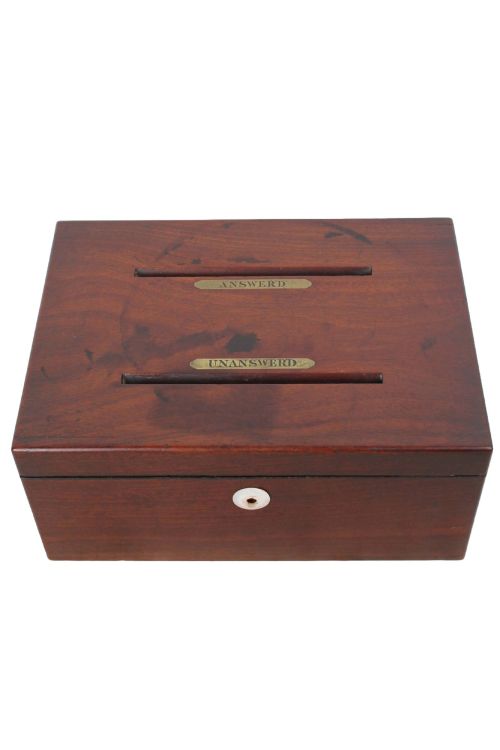
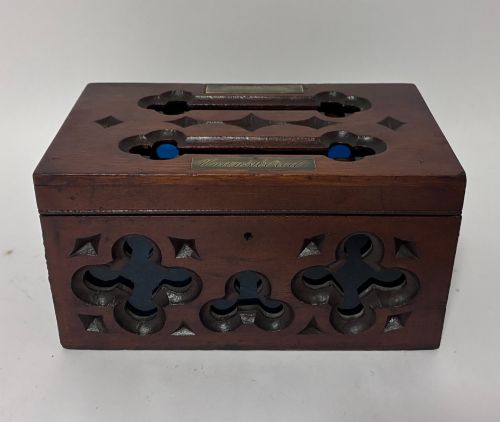
A brass desk box encompasses a broad category of desktop containers designed for letters, stationery, and writing tools. When you search for a brass desk box, you will encounter diverse forms including campaign writing slopes, correspondence letter boxes, and stationery cabinets spanning the Georgian, Victorian, and Edwardian periods.
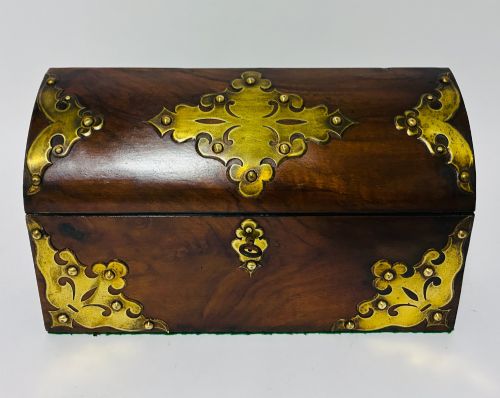
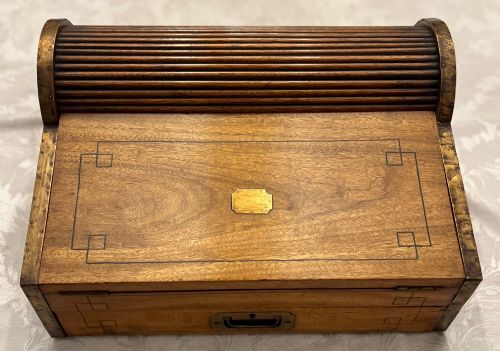
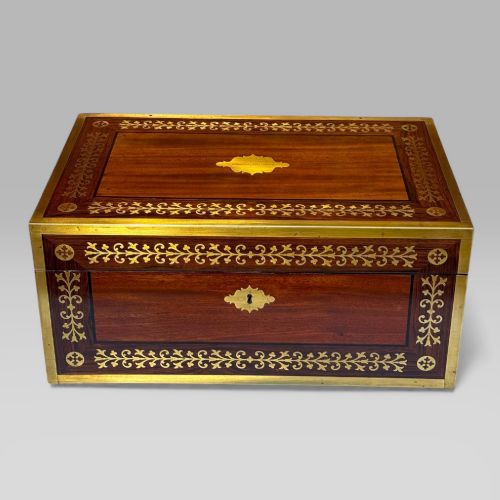
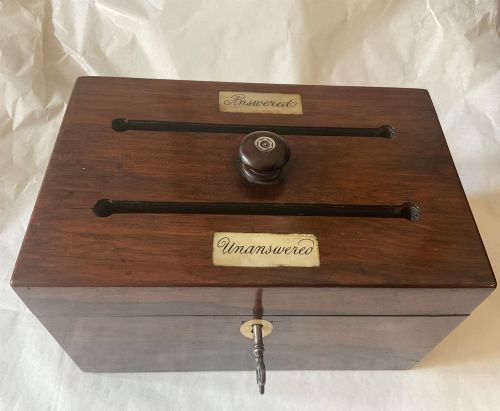
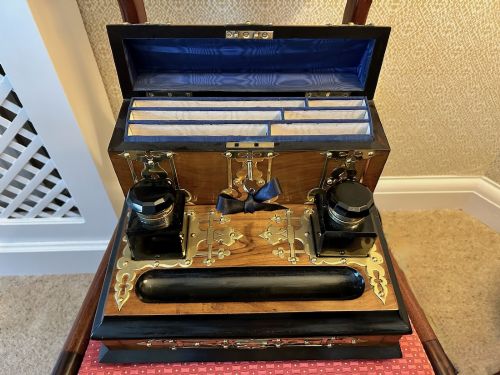
The most common pieces on this page are Victorian and nineteenth-century examples built from dense hardwoods like mahogany, walnut, and rosewood. These range from heavy brass-bound military campaign boxes to decorative table boxes featuring inlaid brass strapwork and escutcheons.
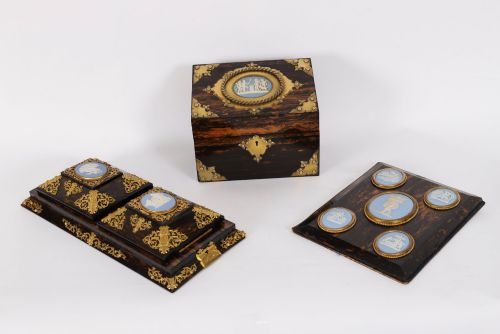
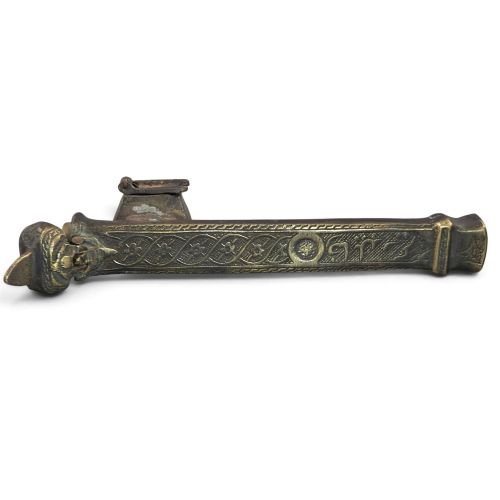
Beyond traditional writing slopes, the selection includes specialised accessories such as ink stands, pen boxes, and document containers. Each form reflects the meticulous correspondence habits of past eras, engineered to keep personal and official papers orderly upon a desk.
Materials and construction
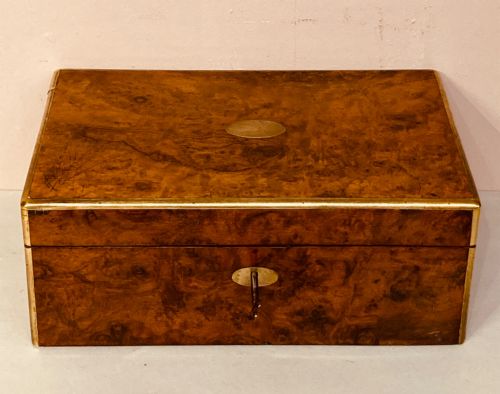
Cabinetmakers constructed these pieces using sturdy foundational woods such as mahogany, oak, and camphor, frequently veneered with highly figured burr walnut, rosewood, or coromandel. The selection of dense timbers ensured the box could withstand frequent travel and heavy daily desktop use.
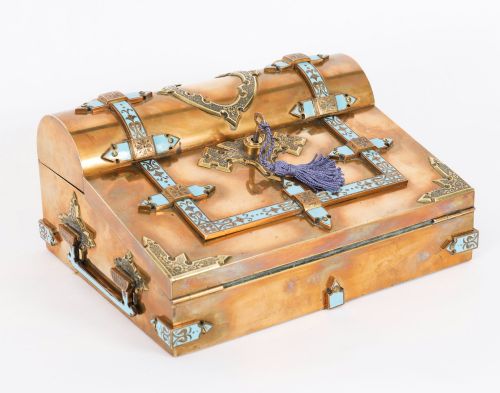
Solid brass provided structural reinforcement and decoration through corner braces, strapwork, carrying handles, and intricate cut inlay. Brass stringing and marquetry were meticulously set into the wooden surfaces, while internal fittings often incorporated tooled leather, glass inkwells, and velvet linings.
Several boxes still retain their original working keys, saving future owners from the frustration of locked compartments.
Quality and craftsmanship
The distinction between ordinary and superior examples lies in the precision of the cabinetry and the weight of the metal mounts. Finer pieces feature heavily cast brass fittings secured with neatly aligned screws, flush-fitting campaign handles, and seamless mitred joints in the timber.
Material selection significantly influences the tier of the piece, with richly figured burr walnut, amboyna, and meticulously cut brass inlay commanding greater artisanal skill. Original working locks, matching keys, and intact fitted interiors with secret compartments further elevate the standard of construction.
The Brass Desk Box Glossary
- Campaign slope
- A portable writing desk built for travel, featuring brass corners and flush handles for durability during transport.
- Escutcheon
- A protective brass plate surrounding a keyhole, often shaped as a shield or decorative cartouche.
- Stationery box
- An upright desktop cabinet designed to hold envelopes, writing paper, and correspondence neatly in tiered compartments.
- Stringing
- Thin inlaid lines of contrasting wood or brass used to outline panels and geometric borders on the box exterior.
- Lap desk
- A compact portable writing surface hinged to open and reveal storage space for paper and writing implements.
Brass Desk Box: Frequently Asked Questions
What is a brass desk box?
A brass desk box is a portable or stationary container used historically for holding writing materials, letters, and important documents. These pieces combine wooden cabinetry with protective or decorative brass mounts, corners, and inlay.
Originating largely from the Georgian and Victorian eras, they were essential desktop accessories for homes, offices, and travel.
How were campaign boxes used?
Campaign boxes were built for officers and travellers on the move, designed to withstand rough transport conditions. Their robust brass corners and recessed handles protected the wood from heavy impact.
When opened, the hinged lid of a slope conversion laid flat to provide a stable writing surface complete with compartments for ink and nibs.
How do I date a wooden desk box?
Dating these boxes relies on observing the timber species, construction methods, and hardware styles. Earlier Georgian pieces often use solid mahogany or flamed veneers with simple brass escutcheons, whereas Victorian examples frequently showcase elaborate coromandel, burr walnut, and extensive brass inlay.
Internal design, such as the shape of inkwell bottles and the presence of secret drawers, also helps narrow down the period of manufacture.
How do I care for a vintage desk box?
Maintaining a wooden box involves keeping it away from direct sunlight and sudden temperature shifts to prevent timber splitting and veneer lifting. Regular dusting with a soft, dry cloth preserves the polished finish.
Brass elements can be gently cleaned with a specialised metal polish, taking care to avoid getting liquids on the surrounding wood or leather interiors.