

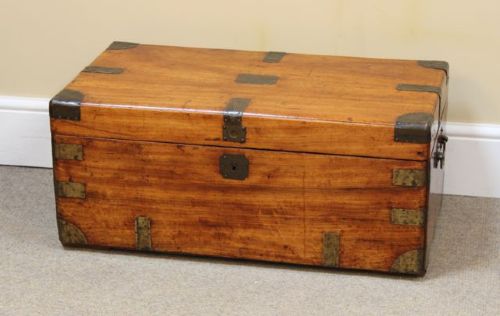
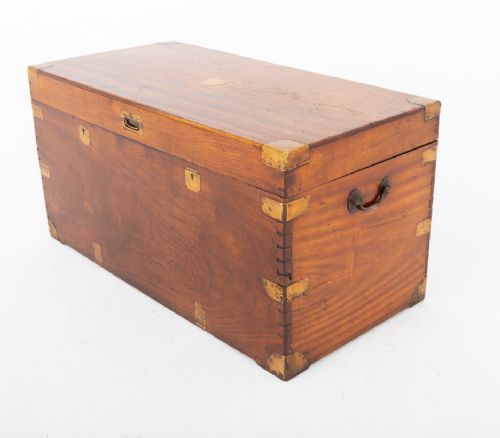
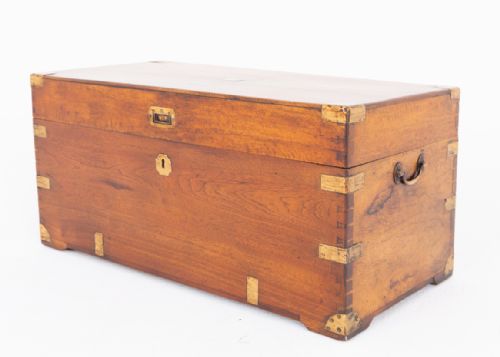
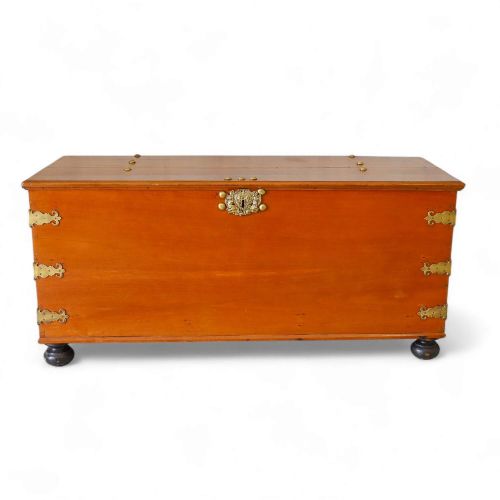



Brass Cornered Storage Trunk
A brass cornered storage trunk is a robust wooden chest reinforced for travel, offering practical storage with distinct historical character.
Brass Cornered Storage Trunk
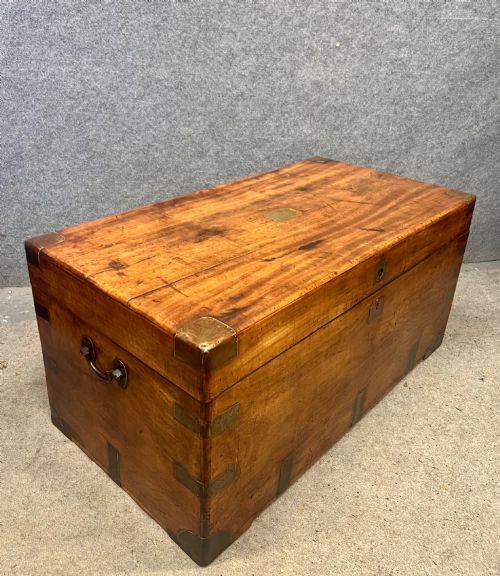
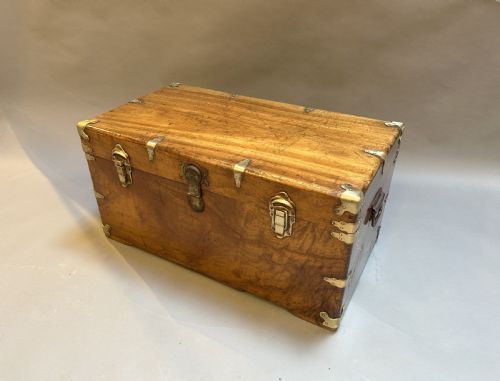
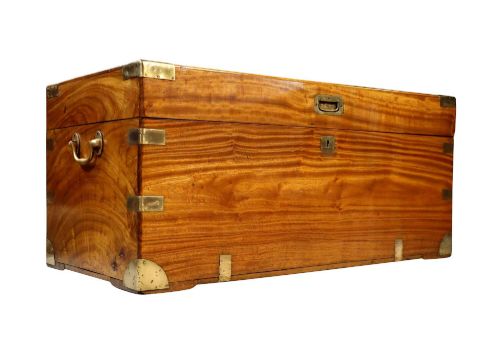
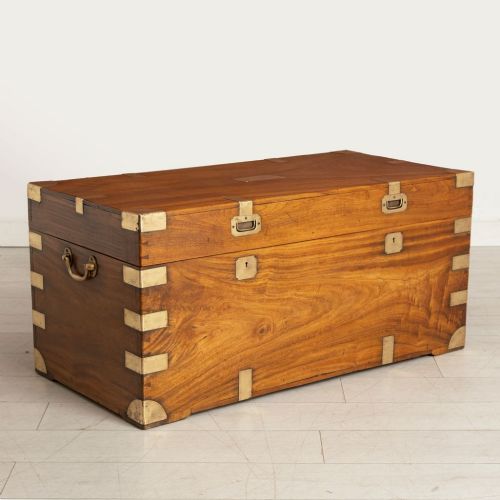
When you examine a brass cornered storage trunk, you find sturdy wooden chests designed for rigorous transport by officers and merchants. The pieces on this page span the nineteenth century and the early twentieth century, showing strong connections to military and colonial campaigns.
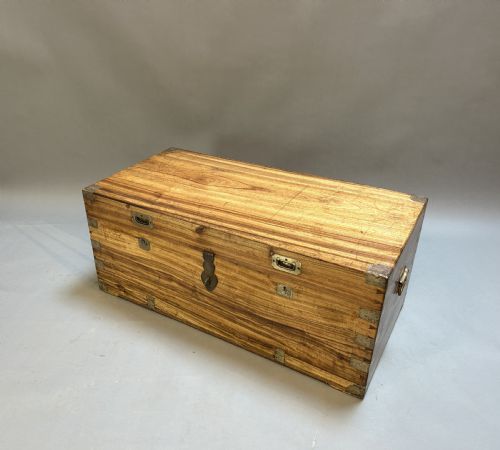
The most common form you meet here is the camphor wood chest, alongside examples in teak, oak, and hardwood. These items served practical purposes during travel across distant territories, featuring hinged lift-up tops and substantial proportions.
Makers constructed these trunks to withstand arduous journeys by land and sea. The integration of metal hardware protected the vulnerable edges from heavy knocks during transit.
Materials and Construction
Carpenters utilised dense timber such as camphor wood and teak, valued for their durability and resistance to pests in tropical climates. Oak and walnut also appear in these listings, providing alternative structural integrity for travelling coffers.
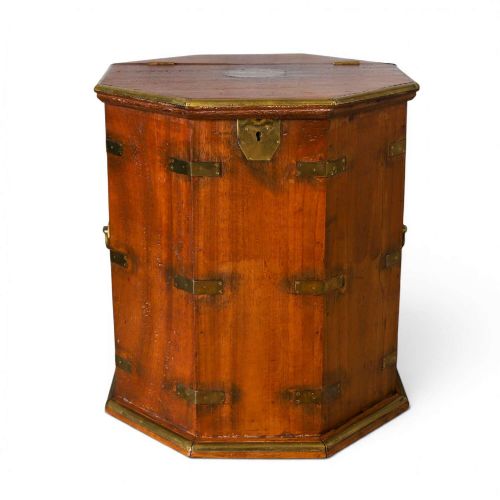
Heavy brass corners, straps, and binding reinforce the wooden joints against the stresses of movement. Craftsmen secured these metal plates with numerous small screws or rivets, ensuring the corners remained rigid under impact.
The listings on this site feature nineteenth-century pieces constructed primarily from camphor wood, teak, and oak, alongside metal-bound utilitarian boxes.
Distinctions in Quality
The refinement of the brass hardware and the tightness of the joinery set the superior pieces apart from standard travelling containers. Finer examples retain patinated timber with well-figured grain, alongside robust handles and locks that functioned reliably on campaign.
Subtleties in proportion, such as the scale of a petite trunk versus a large merchants chest, reflect the original commissioner's requirements. Quality rests in the integrity of the timber and the precision with which the metal reinforcement integrates into the wooden body.
The Brass Cornered Storage Trunk Glossary
- Campaign trunk
- A portable chest built in sections or fitted with carrying handles for military officers on active service. These pieces frequently feature recessed hardware to prevent snagging.
- Camphor wood
- An aromatic timber native to Asia, prized for its insect-repellent properties and distinct scent. It forms the primary material for many nineteenth-century chests.
- Teak
- A dense, durable tropical hardwood capable of withstanding extreme humidity and rough handling. It appears frequently on merchant and military trunks.
- Brass bound
- A method of reinforcing wooden corners and edges with strips of brass sheet. This technique protected the trunk from heavy impacts during transit.
- Cofer
- A traditional term for a strongbox or chest used for storing valuables or clothing. These heavy containers often included lift-up lids and iron or brass fastenings.
Brass Cornered Storage Trunk: Frequently Asked Questions
What is a brass cornered storage trunk used for?
These chests serve as practical storage containers for blankets, clothing, and household items in modern interiors.
Their robust construction allows them to function effectively as coffee tables or blanket boxes at the foot of a bed.
How do I care for camphor wood?
Keep the timber away from direct heat sources and strong sunlight to prevent the natural wood from drying out or splitting.
Occasional light conditioning maintains the lustre of the grain without damaging the historical surface.
Were these trunks made for military use?
Many of these pieces were constructed specifically for officers and officials travelling across the British Empire. The reinforced corners and sturdy handles were essential for frequent transport on ships and carriages.
Other examples served merchants and craftsmen as durable travelling storage for goods and tools.
How can I tell the period of a chest?
Nineteenth-century pieces often display hand-cut dovetail joints and specific configurations of brass strapping that evolved over decades. Examining the type of wood, such as camphor or teak, and the style of the hardware provides clear clues to the manufacturing era.
Construction details and internal fittings help distinguish early Victorian campaign items from later twentieth-century travel luggage.